Admit rate has ranged 61%–70% over the last 5 years — notably volatile. Source: IPEDS via Urban Institute.
Acceptance & SAT from Common Data Set / IPEDS; net price, earnings & graduation from the U.S. Dept. of Education College Scorecard. Figures lag ~1–2 years — verify with the school.
Abilene Christian University is a private, faith-based institution in West Texas that operates with the conviction that faith and intellect are not just compatible but mutually enriching. It’s a place where students are promised to be 'fully known and deeply loved' within a close-knit community, while pursuing one of 185+ areas of study across business, health professions, and distinctive programs like Deaf & Hard of Hearing Studies. The vibe is earnest, supportive, and deeply Texan, offering a rigorous Christian liberal arts education with a practical bent toward career preparation.
Admission requirements
Test-optional — scores considered if submitted
Required
High school transcript
Grade point average
TOEFL (non-native English)
Considered (not required)
Class rank
Test scores (SAT/ACT)
College-prep program
Demonstrated competencies
Source: IPEDS Admissions survey (2022) via Urban Institute. Covers formal factors only — it does not reflect essays, extracurriculars, or other holistic criteria.
More details
Undergrad enrollment
3,195
In-state tuition
$44,200
Out-of-state tuition
$44,200
Campus Housing
60% of students
Average Aid Package
$40,885
Demonstrated Interest
Not considered
6-Year Graduation Rate
65%
Median Earnings (10yr)
$55,736
First-Year Scholarships
Up to $22,000/year
First-Year Retention Rate
81%
Regular Decision Deadline
February 1
Outcomes & value
Outcomes & value
Median earnings (10 yr)
$55,736
Value (earnings ÷ net price)
2.1×
Median debt at graduation
$24,250
Graduation rate
59%
First-year retention
81%
Reducing loan balance (3 yr)
70%
Pell (lower-income) share
22%
First-gen share (among federal-aid recipients)
24%
Financial health
3.0 / 3.0Meets the federal financial-responsibility standard
U.S. Dept. of Education Financial Responsibility Composite Score (FY2022-23). Scale −1.0 to 3.0; ≥1.5 meets the standard. Reported for private nonprofit & for-profit institutions only — public universities are state-backed and not scored, so this is a stability signal, not a ranking.
Top-earning majors
Median earnings by field of study (highest credential), ~2 years after completion.
Registered Nursing, Nursing Administration, Nursing Research and Clinical Nursing$58,522
Finance and Financial Management Services$57,318
Teacher Education and Professional Development, Specific Subject Areas$44,747
Business Administration, Management and Operations$44,170
Teacher Education and Professional Development, Specific Levels and Methods$42,905
Campus & location
Campus safety
On-campus violent crimes (2024)
1
Per 1,000 students
0.19
On-campus criminal offenses classed as violent (murder/non-negligent manslaughter, rape, robbery, aggravated assault) for the most recent reported year. Source: U.S. Dept. of Education Campus Safety and Security (Clery Act). Counts reflect what’s reported to the school, and urban campuses often report more partly due to non-student incidents nearby — read alongside campus size and setting, not as a standalone safety verdict.
Climate
Pleasant days / yr
101
Summer high
96°F
Winter low
38°F
Annual rain
20.7"
Annual snow
3.3"
Natural-hazard risk
Relatively Moderate
Pleasant days counts days per year with a mean temperature of 55–75°F, a high at or below 90°F, a low at or above 45°F, and little precipitation — a transparent comfort measure, not a weighting we invented. Computed from Open-Meteo ERA5 daily history (2019–2023). Natural-hazard risk is the county’s composite rating from the FEMA National Risk Index.
Deep dive — research, future-scholar output & economic mobility▾
Research output
Institutional h-index
421
Scholarly works
3,175
Institutional research volume and impact from OpenAlex. The h-index reflects large research universities and will be low for teaching-focused liberal-arts colleges — not a measure of undergraduate quality.
Economic mobility
Mobility rate
1.4%
Bottom → top quintile
27%
From bottom quintile
5%
Mobility rate = the share of students who both start in the bottom household-income quintile and reach the top quintile; bottom → top is that chance conditional on starting at the bottom. Source: Opportunity Insights Mobility Report Cards (Chetty, Friedman, Saez, Turner & Yagan). Reflects 1980–82 birth cohorts, so it’s directional, not current.
Quick answers
What is the acceptance rate at Abilene Christian University?
Abilene Christian University's acceptance rate is approximately 66% (Abilene, TX), based on the most recent figures we compiled from public and primary sources.
What SAT score do you need for Abilene Christian University?
Admitted students at Abilene Christian University typically score 1070–1270 on the SAT (the middle-50% range). Scores outside this band are still admitted, especially with strong applications.
How much does Abilene Christian University cost?
At Abilene Christian University, the average net price (after aid) is about $26,182 per year. Actual cost varies with financial aid and residency.
How many undergraduates attend Abilene Christian University?
Abilene Christian University enrolls approximately 3,195 undergraduate students.
Where is Abilene Christian University located?
Abilene Christian University is located in Abilene, TX.
Admissions
ACU's admissions process is best described as moderately selective, offering a tangible pathway for students who align with its mission. The university admits about two-thirds of its applicants, with an of 66% from over 11,000 applications. Those admitted typically present solid academic credentials: the middle 50% SAT range is 1070–1270, the ACT composite range is 19–27, and the average GPA is around 3.55. Notably, the early acceptance rate is higher, at 74.5%, suggesting a potential advantage for students who identify ACU as a clear first choice. The regular decision deadline is February 1. The review is holistic, and according to its , the university explicitly considers status (children of alumni) as part of its evaluation. Demonstrated interest, however, is marked as 'not considered' in the CDS, meaning campus visits or contact with admissions officers are not formal factors.
Earnings = median of students working ~10 years after entry; debt = median of graduates. Value divides 10-yr earnings by one year’s net price — read it as earnings per dollar of annual cost, not a full lifetime ROI; it favors lower-cost schools. Source: U.S. Dept. of Education College Scorecard. Figures lag ~2 years and reflect all students, not your intended major.
Marketing$42,682
Public Relations, Advertising, and Applied Communication$37,568
Criminal Justice and Corrections$31,741
Source: U.S. Dept. of Education College Scorecard (field-of-study earnings). Figures cover graduates who received federal aid and lag ~2 years; not all programs report data.
Academic life at ACU is defined by breadth and a focus on integrating faith with learning. Students can choose from 89 undergraduate degree programs spanning 185+ areas of study. The curriculum is delivered through colleges dedicated to arts and sciences, business, engineering, nursing, and more. The most popular majors cluster in Business, Management, Marketing, and Related Support Services, followed by Health Professions—reflecting a practical, career-oriented student body. Beyond the mainstream, ACU offers distinctive, niche programs that give it character, such as Deaf & Hard of Hearing Studies, Food Management, Child Development, Fashion Merchandising, and Strategic Communication. The university has been recognized by Forbes for its academic strength, and its mission emphasizes preparing students for 'a lifetime of personal impact and growth.' All students and faculty have free access to professional-grade tools like Qualtrics XM for research and data analysis, underscoring a commitment to applied learning.
Life at ACU is intentionally communal and rooted in its Christian identity. The university describes its environment as a 'close-knit community of learners and believers' where the goal is for each student to be 'fully known and deeply loved.' This plays out in a residential campus culture, with 60% of students living in college-owned, -operated, or -affiliated housing. The campus culture actively 'embraces the diversity of people and cultures around the world as a reflection of God’s love and creativity,' supported by cultural student organizations that promote understanding and respect. Student life is designed to integrate living, learning, and faith, guiding students toward 'lives of Christian service.' Beyond the spiritual focus, campus life includes the typical array of student activities, athletics, and Greek life. The location in Abilene, Texas, places the university 370 miles from major metropolitan centers, fostering a self-contained, immersive campus experience.
ACU graduates enter the workforce with solid earning potential, particularly given the university's regional profile and focus on practical majors. The median earnings for graduates ten years after entry is $55,736. The university reports a first-year retention rate of 81%, indicating students are generally satisfied and engaged after their initial year. The four-year graduation rate is 53%, and the six-year rate is 65%. These figures suggest many students take slightly longer than four years to complete their degrees, which is not uncommon at private universities with significant populations of students balancing work, faith activities, and study.
ACU is a private university with a corresponding price tag, but it aggressively uses institutional aid to make attendance feasible for many families. The average annual after aid is $26,182. The university awards substantial financial aid packages, with the average aid package totaling $40,885 and the average need-based scholarship or grant award at $40,619. ACU offers over $33 million in scholarships to incoming first-year students annually, with awards ranging up to $22,000 per year; the regular scholarship deadline is March 1. Financial aid is typically a combination of resources assembled to meet a student's demonstrated need, including grants and scholarships that do not need to be repaid. For students who need to borrow, federal loan options are available, including Direct Unsubsidized Loans that are not based on financial need. The university encourages all families to use its official net price calculator for a personalized estimate.
Abilene Christian University stands out for its unwavering commitment to a specific type of education: one where Christian faith is the explicit framework for all intellectual and community life. This isn't a school with a chapel requirement tacked on; it's a community built around the integration of 'living, learning, and faith.' That mission attracts students seeking a purposeful, values-aligned college experience where they won't have to compartmentalize their spiritual and academic selves. Academically, it pairs this faith foundation with a surprisingly wide and pragmatic array of majors—from nursing and engineering to niche programs like Deaf Studies and Fashion Merchandising—ensuring graduates are prepared for the modern workforce. The result is a unique ecosystem: a supportive, close-knit campus in West Texas that feels insulated from the world but deliberately equips students to go out and engage with it, armed with both a degree and a strong sense of vocation.
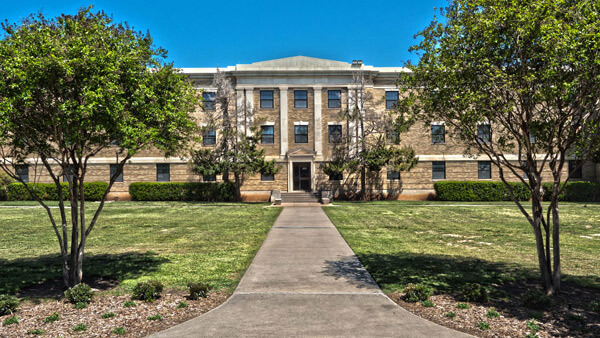
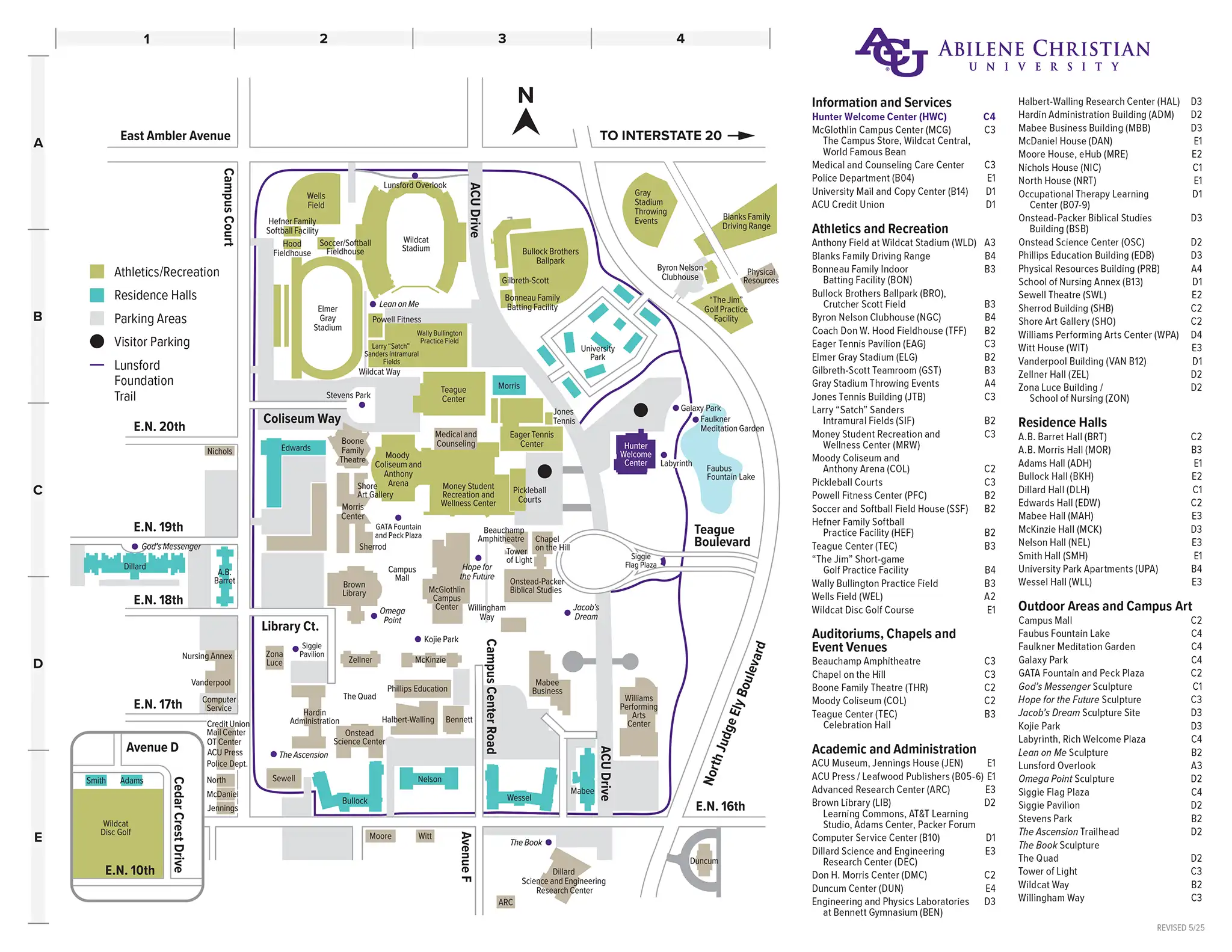
Abilene Christian University seal · sourceAbilene Christian University Campus and Facilities | ACU · sourceCampus Map | Abilene Christian University · sourceAbout ACU | Abilene Christian University · source