Admit rate has ranged 67%–77% over the last 5 years — notably volatile. Source: IPEDS via Urban Institute.
Acceptance & SAT from Common Data Set / IPEDS; net price, earnings & graduation from the U.S. Dept. of Education College Scorecard. Figures lag ~1–2 years — verify with the school.
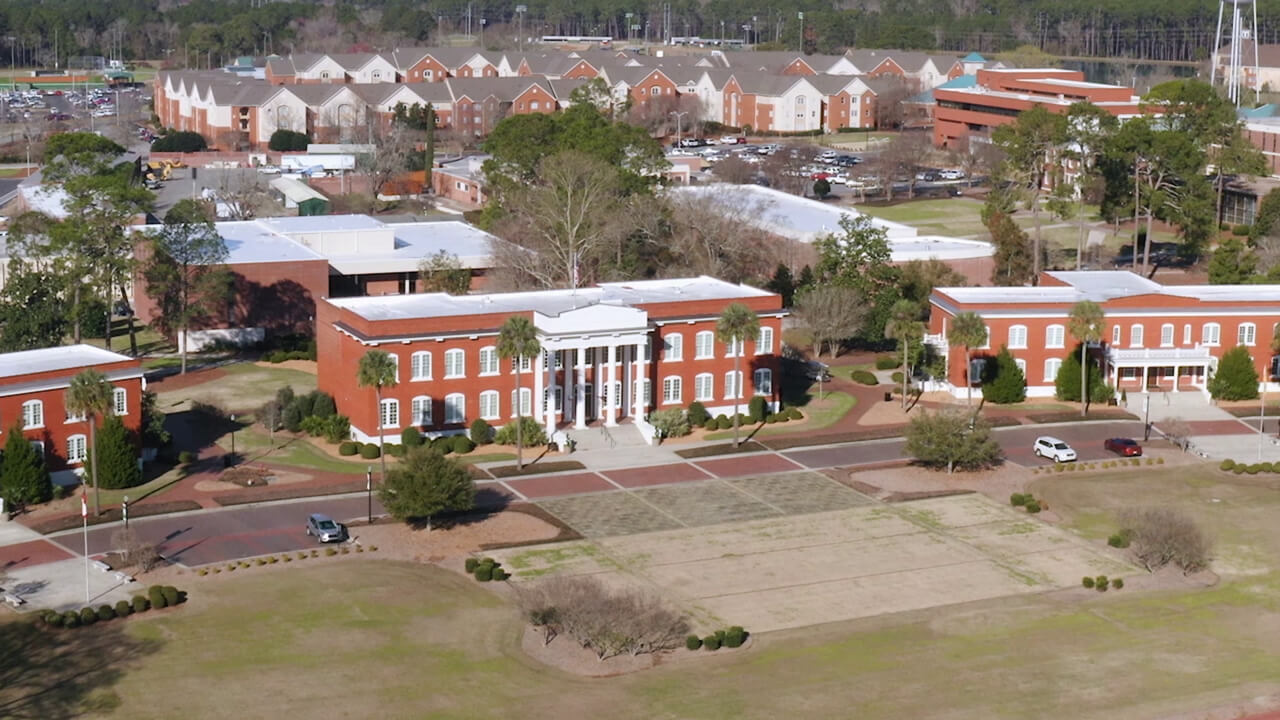
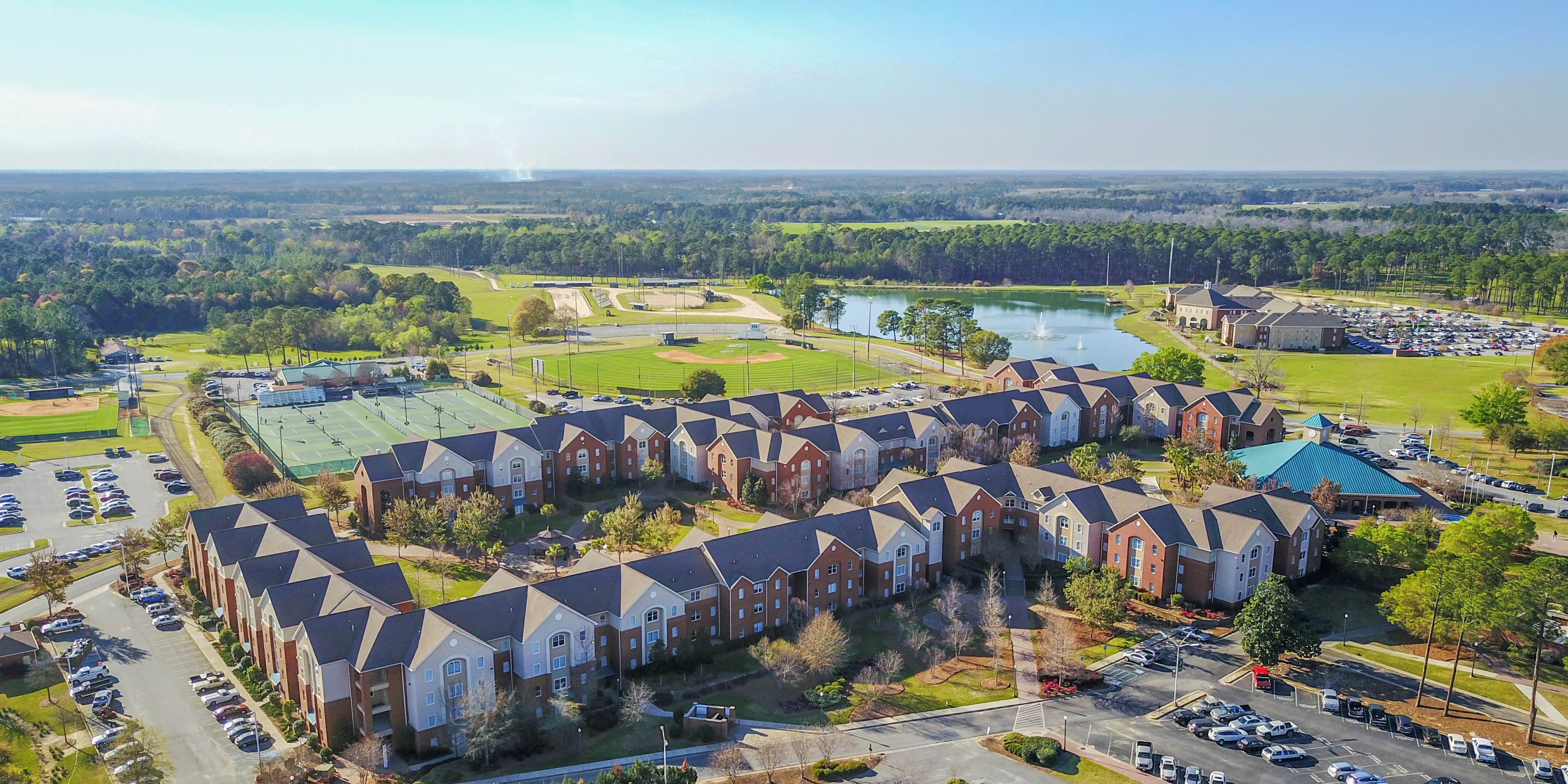
Abraham Baldwin Agricultural College (ABAC) is a small, public institution in Tifton, Georgia, where agriculture and hands-on learning take center stage. With a 76% acceptance rate and a tight-knit campus culture, ABAC offers affordable, practical education—especially in agribusiness, agricultural communication, and natural resources—backed by a 400-acre working farm for real-world experience. While its four-year graduation rate lags at 16%, the college compensates with strong community engagement and a median post-grad salary of $35,495.
Admission requirements
Test-optional — scores considered if submitted
Required
High school transcript
Grade point average
College-prep program
TOEFL (non-native English)
Considered (not required)
Test scores (SAT/ACT)
Source: IPEDS Admissions survey (2022) via Urban Institute. Covers formal factors only — it does not reflect essays, extracurriculars, or other holistic criteria.
More details
Undergrad enrollment
3,208
In-state tuition
$3,268
Out-of-state tuition
$10,588
Campus Size
400 acres (incl. working farm)
4-Year Grad Rate
16%
Signature Programs
Agribusiness, Agricultural Communication
Median Alumni Salary
$35,495
Outcomes & value
Outcomes & value
Median earnings (10 yr)
$34,996
Value (earnings ÷ net price)
5.1×
Median debt at graduation
$16,750
Graduation rate
36%
First-year retention
69%
Reducing loan balance (3 yr)
44%
Pell (lower-income) share
35%
First-gen share (among federal-aid recipients)
34%
Top-earning majors
Median earnings by field of study (highest credential), ~2 years after completion.
Applied Horticulture and Horticultural Business Services$42,123
Agricultural/Animal/Plant/Veterinary Science and Related Fields, Other$41,565
Forestry$36,668
Business/Managerial Economics$32,569
Liberal Arts and Sciences, General Studies and Humanities$28,960
Biology, General
Campus & location
Campus safety
On-campus violent crimes (2024)
3
On-campus criminal offenses classed as violent (murder/non-negligent manslaughter, rape, robbery, aggravated assault) for the most recent reported year. Source: U.S. Dept. of Education Campus Safety and Security (Clery Act). Counts reflect what’s reported to the school, and urban campuses often report more partly due to non-student incidents nearby — read alongside campus size and setting, not as a standalone safety verdict.
Climate
Pleasant days / yr
119
Summer high
91°F
Winter low
46°F
Annual rain
44.6"
Natural-hazard risk
Relatively Low
Pleasant days counts days per year with a mean temperature of 55–75°F, a high at or below 90°F, a low at or above 45°F, and little precipitation — a transparent comfort measure, not a weighting we invented. Computed from Open-Meteo ERA5 daily history (2019–2023). Natural-hazard risk is the county’s composite rating from the FEMA National Risk Index.
Deep dive — research, future-scholar output & economic mobility▾
Research output
Institutional h-index
29
Scholarly works
324
Institutional research volume and impact from OpenAlex. The h-index reflects large research universities and will be low for teaching-focused liberal-arts colleges — not a measure of undergraduate quality.
Economic mobility
Mobility rate
1.5%
Bottom → top quintile
10%
From bottom quintile
15%
Mobility rate = the share of students who both start in the bottom household-income quintile and reach the top quintile; bottom → top is that chance conditional on starting at the bottom. Source: Opportunity Insights Mobility Report Cards (Chetty, Friedman, Saez, Turner & Yagan). Reflects 1980–82 birth cohorts, so it’s directional, not current.
Quick answers
What is the acceptance rate at Abraham Baldwin Agricultural College?
Abraham Baldwin Agricultural College's acceptance rate is approximately 76% (Tifton, GA), based on the most recent figures we compiled from public and primary sources.
What SAT score do you need for Abraham Baldwin Agricultural College?
Admitted students at Abraham Baldwin Agricultural College typically score 860–1080 on the SAT (the middle-50% range). Scores outside this band are still admitted, especially with strong applications.
How much does Abraham Baldwin Agricultural College cost?
At Abraham Baldwin Agricultural College, the average net price (after aid) is about $6,842 per year. Actual cost varies with financial aid and residency.
How many undergraduates attend Abraham Baldwin Agricultural College?
Abraham Baldwin Agricultural College enrolls approximately 3,208 undergraduate students.
Where is Abraham Baldwin Agricultural College located?
Abraham Baldwin Agricultural College is located in Tifton, GA.
Admissions
ABAC’s admissions process is somewhat selective, with a 76% acceptance rate (2,040 admits from 2,694 applications in 2024). policies apply, but submitted scores average SAT 860–1080 or ACT 12–14 in core sections. The college emphasizes accessibility, requiring only minimal thresholds (SAT 380 EBRW/360 Math or ACT 12 English/Reading). No early decision plan exists, aligning with its straightforward, minimally difficult entrance approach.
ABAC’s academic identity is rooted in agriculture and experiential learning, with the School of Agriculture and Natural Resources as its largest division (1,500+ students). The college offers , including standout bachelor’s degrees like . Small class sizes and a provide hands-on training, while broader disciplines in arts and sciences round out its catalog. Students praise the and practical focus, though resources lean heavily toward ag-related fields.
Earnings = median of students working ~10 years after entry; debt = median of graduates. Value divides 10-yr earnings by one year’s net price — read it as earnings per dollar of annual cost, not a full lifetime ROI; it favors lower-cost schools. Source: U.S. Dept. of Education College Scorecard. Figures lag ~2 years and reflect all students, not your intended major.
$25,658
Source: U.S. Dept. of Education College Scorecard (field-of-study earnings). Figures cover graduates who received federal aid and lag ~2 years; not all programs report data.
Life at ABAC revolves around community and agriculture. With 50+ clubs, including FFA and equestrian teams, the college fosters niche interests alongside traditions like farm-based learning. The 400-acre campus doubles as a lab for ag students, while events and intramurals keep the vibe lively. Instagram posts highlight peanut farming and livestock management, underscoring ABAC’s rural character. Though small, the campus punches above its weight with robust engagement—think leadership workshops, rodeos, and a tight-knit “Stallion” identity.
ABAC’s four-year graduation rate is just 16%, but its six-year median alumni salary ($35,495) reflects solid ROI for its low-cost programs. Retention rates are near national averages (69% freshman persistence), with high-impact practices like internships boosting outcomes. Career services highlight agribusiness placements, though data on specific employment sectors is sparse. The college touts rising three-year retention rates as a sign of improving support systems.
ABAC is a budget-friendly option, with in-state tuition at $3,268 and out-of-state at $10,588. The average after aid is $6,923, thanks to federal grants ($6,030), state aid ($3,178), and institutional support ($3,303). Pell Grants cover ~$5,952 for eligible students. Calculators estimate total in-state attendance at $13,318, making ABAC one of Georgia’s most affordable four-year schools.
ABAC carves a niche as Georgia’s ag-education workhorse—think dirt-under-your-nails learning, not theory. Its 400-acre farm and 76% acceptance rate make agribusiness accessible, while $6,923 net costs appeal to budget-conscious students. Though graduation rates lag, the college’s hands-on ethos and median $35K alumni salary validate its practical focus. For future farmers, ranchers, or ag communicators, ABAC delivers unpretentious, boots-on-the-ground training—with rodeos and peanut harvests as extracurriculars.
Abraham Baldwin Agricultural College logo · sourceHome | Abraham Baldwin Agricultural College · sourceAbraham Baldwin Agricultural College - Wikipedia · sourceResidence Life and Housing | Abraham Baldwin Agricultural College · source