Loading…
← All schools
Adult and Community Education-Hudson
Columbus, OHpublicccsoh.us
Acceptance
100%
Avg net price
$14,915
Earnings (10 yr)
$51,551
Admit rate has ranged 89%–100% over the last 5 years — notably volatile. Source: IPEDS via Urban Institute.
Acceptance & SAT from Common Data Set / IPEDS; net price, earnings & graduation from the U.S. Dept. of Education College Scorecard. Figures lag ~1–2 years — verify with the school.
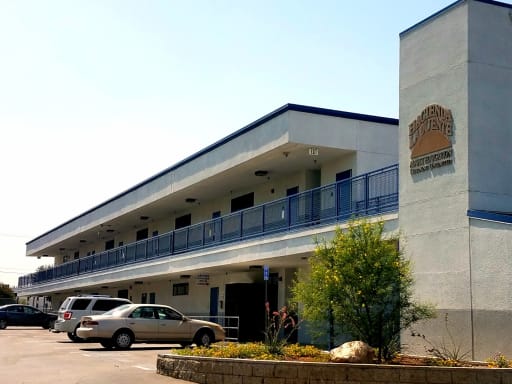
Adult and Community Education-Hudson is not a traditional college but a public, open-access community education program embedded within a school district in Columbus, Ohio. It operates on a fundamentally different model: there is no formal admissions gatekeeping, no degree-granting curriculum, and its mission is purely to provide non-credit enrichment and skill-building to the local community. This is a place for lifelong learning, not a path to a bachelor's degree, which explains its 100% acceptance rate and the non-traditional outcomes of its participants.
Admission requirements
Test-blind — scores not considered
Required
- High school transcript
Source: IPEDS Admissions survey (2022) via Urban Institute. Covers formal factors only — it does not reflect essays, extracurriculars, or other holistic criteria.
More details
- Undergrad enrollment
- 67
- Application Fee
- $0
- Graduation Rate
- 0%
- Standardized Tests
- Not required
- Average Starting Age
- 33.3 years
- Median Earnings (10yr)
- $51,551
- Grant/Scholarship Aid Recipients
- 74%
Outcomes & value
Outcomes & value
- Median earnings (10 yr)
- $51,551
- Value (earnings ÷ net price)
- 3.5×
- Median debt at graduation
- $14,750
- Reducing loan balance (3 yr)
- 29%
- Pell (lower-income) share
- 72%
- First-gen share (among federal-aid recipients)
- 55%
Earnings = median of students working ~10 years after entry; debt = median of graduates. Value divides 10-yr earnings by one year’s net price — read it as earnings per dollar of annual cost, not a full lifetime ROI; it favors lower-cost schools. Source: U.S. Dept. of Education College Scorecard. Figures lag ~2 years and reflect all students, not your intended major.
Campus & location
Campus safety
- On-campus violent crimes (2024)
- 0
On-campus criminal offenses classed as violent (murder/non-negligent manslaughter, rape, robbery, aggravated assault) for the most recent reported year. Source: U.S. Dept. of Education Campus Safety and Security (Clery Act). Counts reflect what’s reported to the school, and urban campuses often report more partly due to non-student incidents nearby — read alongside campus size and setting, not as a standalone safety verdict.
Climate
- Pleasant days / yr
- 88
- Summer high
- 83°F
- Winter low
- 27°F
- Annual rain
- 45.5"
- Annual snow
- 20.1"
- Natural-hazard risk
- Relatively High
Pleasant days counts days per year with a mean temperature of 55–75°F, a high at or below 90°F, a low at or above 45°F, and little precipitation — a transparent comfort measure, not a weighting we invented. Computed from Open-Meteo ERA5 daily history (2019–2023). Natural-hazard risk is the county’s composite rating from the FEMA National Risk Index.
Quick answers
- What is the acceptance rate at Adult and Community Education-Hudson?
- Adult and Community Education-Hudson's acceptance rate is approximately 100% (Columbus, OH), based on the most recent figures we compiled from public and primary sources.
- How much does Adult and Community Education-Hudson cost?
- At Adult and Community Education-Hudson, the average net price (after aid) is about $14,915 per year. Actual cost varies with financial aid and residency.
- How many undergraduates attend Adult and Community Education-Hudson?
- Adult and Community Education-Hudson enrolls approximately 67 undergraduate students.
- Where is Adult and Community Education-Hudson located?
- Adult and Community Education-Hudson is located in Columbus, OH.
Admissions
Admissions at Adult and Community Education-Hudson is a misnomer; the process is one of open registration, not selective evaluation. Every source confirms an of 100%, a figure that underscores its mission of universal access. There is no application fee, and standardized test scores are not required for entry. The process is designed for minimal barriers, catering explicitly to adult learners who may be returning to education or seeking new skills. The rate—the percentage of admitted students who enroll—is exceptionally high, reported at 100% for the most recent cycle and averaging 93.84% over time, suggesting that those who express interest are highly motivated to follow through. This is not a place for demonstrated interest in the collegiate sense; it's a community resource where signing up is the only prerequisite.
Compare Adult and Community Education-Hudson
vs University of Minnesota-Morrisvs University of Wisconsin-Parksidevs Minot State Universityvs Northeastern Illinois University
See colleges similar to Adult and Community Education-Hudson →Sources
- Common Data Set | Office of Institutional Research - Brown University
- Common Data Set: Home
- Common Data Set - University Decision Support
- [PDF] Common Data Set 2024-2025 - Hobart and William Smith Colleges
- Institution Data Profile - Adult and Community Education-Hudson
- Common Data Set | Simmons University
- Adult and Community Education-Hudson Acceptance Rate and SAT ...
- Adult & Community Education - Hudson - Niche
- Adult and Community Education-Hudson | My Future
- Adult and Community Education-Hudson Acceptance Rate