Loading…
← All schools
Albany BOCES-Adult Practical Nursing Program
Albany, NYpubliccapitalregionboces.org
Avg net price
$23,506
Earnings (10 yr)
$47,733
Acceptance & SAT from Common Data Set / IPEDS; net price, earnings & graduation from the U.S. Dept. of Education College Scorecard. Figures lag ~1–2 years — verify with the school.
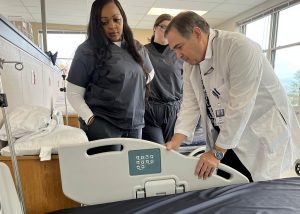
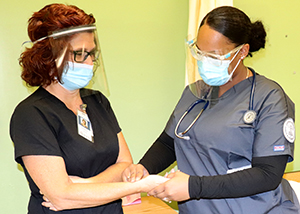
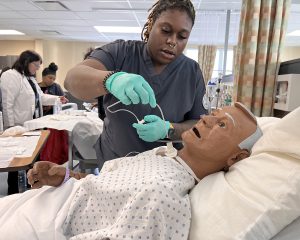
The Albany BOCES-Adult Practical Nursing Program is a singular institution: a hyper-focused, no-frills career accelerator that turns adults into Licensed Practical Nurses in as little as 10 months. This isn't a traditional college campus but a dedicated technical center where every lecture and clinical hour is laser-targeted at passing the NCLEX-PN and landing a job. With a 100% acceptance rate for qualified applicants and a culture built around adult learners juggling life responsibilities, it represents a direct, efficient pipeline into the high-demand healthcare field of Upstate New York.
More details
- Undergrad enrollment
- 187
- Sole Major
- Licensed Practical Nurse Training (LPN)
- Student Body
- 132 full-time undergraduate students
- Early Decision
- Not offered
- Program Length
- 10 months (full-time) or 18 months (part-time)
- Graduation Rate
- 74%
- Total Program Cost
- $27,715
- Demonstrated Interest
- Not considered
- Median Earnings (10yr)
- $47,733
Outcomes & value
Outcomes & value
- Median earnings (10 yr)
- $47,733
- Value (earnings ÷ net price)
- 2.0×
- Median debt at graduation
- $9,500
- Reducing loan balance (3 yr)
- 39%
- Pell (lower-income) share
- 71%
- First-gen share (among federal-aid recipients)
- 52%
Earnings = median of students working ~10 years after entry; debt = median of graduates. Value divides 10-yr earnings by one year’s net price — read it as earnings per dollar of annual cost, not a full lifetime ROI; it favors lower-cost schools. Source: U.S. Dept. of Education College Scorecard. Figures lag ~2 years and reflect all students, not your intended major.
Campus & location
Campus safety
- On-campus violent crimes (2024)
- 0
On-campus criminal offenses classed as violent (murder/non-negligent manslaughter, rape, robbery, aggravated assault) for the most recent reported year. Source: U.S. Dept. of Education Campus Safety and Security (Clery Act). Counts reflect what’s reported to the school, and urban campuses often report more partly due to non-student incidents nearby — read alongside campus size and setting, not as a standalone safety verdict.
Climate
- Pleasant days / yr
- 87
- Summer high
- 82°F
- Winter low
- 22°F
- Annual rain
- 46.7"
- Annual snow
- 37.9"
- Natural-hazard risk
- Relatively Moderate
Pleasant days counts days per year with a mean temperature of 55–75°F, a high at or below 90°F, a low at or above 45°F, and little precipitation — a transparent comfort measure, not a weighting we invented. Computed from Open-Meteo ERA5 daily history (2019–2023). Natural-hazard risk is the county’s composite rating from the FEMA National Risk Index.
Quick answers
- How much does Albany BOCES-Adult Practical Nursing Program cost?
- At Albany BOCES-Adult Practical Nursing Program, the average net price (after aid) is about $23,506 per year. Actual cost varies with financial aid and residency.
- How many undergraduates attend Albany BOCES-Adult Practical Nursing Program?
- Albany BOCES-Adult Practical Nursing Program enrolls approximately 187 undergraduate students.
- Where is Albany BOCES-Adult Practical Nursing Program located?
- Albany BOCES-Adult Practical Nursing Program is located in Albany, NY.
Admissions
Admissions here are defined by accessibility and a clear, sequential gatekeeping process, not by competitive selectivity. The program reports a 100% , meaning it admits all applicants who fulfill the stated requirements. The primary barrier to entry is not a committee's judgment but the applicant's ability to navigate a practical checklist. Applications for the full-time daytime program are accepted through a published deadline—August 14, 2026, for the 2026-27 school year—and successful admission is explicitly "contingent upon a qualifying TEAS entrance" exam score. The process is streamlined for adult career-changers; there is no early decision option. Demonstrated interest, a factor at many traditional colleges, is not a consideration here—the focus is purely on meeting the technical prerequisites for the nursing curriculum.
- Acceptance Rate: 100%
- Application Deadline: August 14 for the upcoming school year.
- Key Requirement: A qualifying score on the TEAS (Test of Essential Academic Skills) entrance exam.
- Early Decision: Not offered.
- Demonstrated Interest: Not considered.
Compare Albany BOCES-Adult Practical Nursing Program
vs United States Coast Guard Academyvs SUNY College at Potsdamvs Lincoln Universityvs Coppin State University
See colleges similar to Albany BOCES-Adult Practical Nursing Program →Sources
- Adult Practical Nursing (PN) - Albany
- Albany BOCES-Adult Practical Nursing Program - DFR Report HTML
- Enroll now in the adult Practical Nursing program
- Common Data Set: Home
- Albany BOCES - Adult Practical Nursing Program
- Practical Nursing
- Albany BOCES-Adult Practical Nursing Program
- Register now for the Capital Region BOCES adult Practical ...
- Dozens of Adults Enrolled in the Capital Region BOCES ...
- Albany BOCES-Adult Practical Nursing Program