Admit rate has ranged 59%–75% over the last 5 years — notably volatile, though the latest figure above (53%) falls outside that window. Source: IPEDS via Urban Institute.
Acceptance & SAT from Common Data Set / IPEDS; net price, earnings & graduation from the U.S. Dept. of Education College Scorecard. Figures lag ~1–2 years — verify with the school.
Albany College of Pharmacy and Health Sciences (ACPHS) is a hyper-specialized, urban campus laser-focused on launching careers in the health professions. With a curriculum rooted in the sciences and a student body of just under 500 undergraduates, it’s a place where pre-pharmacy intensity meets a surprisingly tight-knit community. The payoff is tangible: graduates command some of the highest median earnings in the country, a testament to the direct career pipeline its programs provide.
Admission requirements
Test-optional — scores considered if submitted
Required
High school transcript
Grade point average
Letters of recommendation
TOEFL (non-native English)
Considered (not required)
Class rank
Test scores (SAT/ACT)
College-prep program
Source: IPEDS Admissions survey (2022) via Urban Institute. Covers formal factors only — it does not reflect essays, extracurriculars, or other holistic criteria.
More details
Undergrad enrollment
481
In-state tuition
$41,475
Out-of-state tuition
$41,475
Early Decision
Not offered
Graduation Rate
68%
Demonstrated Interest
Not considered
Median Earnings (10yr)
$131,426
Regular Decision Deadline
May 1
Outcomes & value
Outcomes & value
Median earnings (10 yr)
$131,426
Value (earnings ÷ net price)
4.4×
Median debt at graduation
$25,500
Graduation rate
68%
First-year retention
86%
Reducing loan balance (3 yr)
87%
Pell (lower-income) share
29%
First-gen share (among federal-aid recipients)
22%
Financial health
2.3 / 3.0Meets the federal financial-responsibility standard
U.S. Dept. of Education Financial Responsibility Composite Score (FY2022-23). Scale −1.0 to 3.0; ≥1.5 meets the standard. Reported for private nonprofit & for-profit institutions only — public universities are state-backed and not scored, so this is a stability signal, not a ranking.
Top-earning majors
Median earnings by field of study (highest credential), ~2 years after completion.
Clinical/Medical Laboratory Science/Research and Allied Professions$63,005
Pharmacy, Pharmaceutical Sciences, and Administration$28,598
Source: U.S. Dept. of Education College Scorecard (field-of-study earnings). Figures cover graduates who received federal aid and lag ~2 years; not all programs report data.
Campus & location
Campus safety
On-campus violent crimes (2024)
4
Per 1,000 students
4.67
On-campus criminal offenses classed as violent (murder/non-negligent manslaughter, rape, robbery, aggravated assault) for the most recent reported year. Source: U.S. Dept. of Education Campus Safety and Security (Clery Act). Counts reflect what’s reported to the school, and urban campuses often report more partly due to non-student incidents nearby — read alongside campus size and setting, not as a standalone safety verdict.
Climate
Pleasant days / yr
86
Summer high
82°F
Winter low
22°F
Annual rain
46.9"
Annual snow
37.8"
Natural-hazard risk
Relatively Moderate
Pleasant days counts days per year with a mean temperature of 55–75°F, a high at or below 90°F, a low at or above 45°F, and little precipitation — a transparent comfort measure, not a weighting we invented. Computed from Open-Meteo ERA5 daily history (2019–2023). Natural-hazard risk is the county’s composite rating from the FEMA National Risk Index.
Deep dive — research, future-scholar output & economic mobility▾
Research output
Institutional h-index
153
Scholarly works
3,352
Institutional research volume and impact from OpenAlex. The h-index reflects large research universities and will be low for teaching-focused liberal-arts colleges — not a measure of undergraduate quality.
Economic mobility
Mobility rate
3.4%
Bottom → top quintile
85%
From bottom quintile
4%
Mobility rate = the share of students who both start in the bottom household-income quintile and reach the top quintile; bottom → top is that chance conditional on starting at the bottom. Source: Opportunity Insights Mobility Report Cards (Chetty, Friedman, Saez, Turner & Yagan). Reflects 1980–82 birth cohorts, so it’s directional, not current.
Quick answers
What is the acceptance rate at Albany College of Pharmacy and Health Sciences?
Albany College of Pharmacy and Health Sciences's acceptance rate is approximately 53% (Albany, NY), based on the most recent figures we compiled from public and primary sources.
What SAT score do you need for Albany College of Pharmacy and Health Sciences?
Admitted students at Albany College of Pharmacy and Health Sciences typically score 1110–1380 on the SAT (the middle-50% range). Scores outside this band are still admitted, especially with strong applications.
How much does Albany College of Pharmacy and Health Sciences cost?
At Albany College of Pharmacy and Health Sciences, the average net price (after aid) is about $29,882 per year. Actual cost varies with financial aid and residency.
How many undergraduates attend Albany College of Pharmacy and Health Sciences?
Albany College of Pharmacy and Health Sciences enrolls approximately 481 undergraduate students.
Where is Albany College of Pharmacy and Health Sciences located?
Albany College of Pharmacy and Health Sciences is located in Albany, NY.
Admissions
Admissions at ACPHS are fairly competitive, with an of 53%. The middle 50% SAT range for admitted students is 1110–1380, and the middle 50% ACT range is 23–31. The college is , meaning submission of SAT or ACT scores is not required for admission, though scores can still be submitted if they strengthen an application. The average high school GPA of admitted students is 3.52. The college does not have an Early Decision program, and demonstrated interest is not considered in the admissions process. The regular application deadline is May 1.
Earnings = median of students working ~10 years after entry; debt = median of graduates. Value divides 10-yr earnings by one year’s net price — read it as earnings per dollar of annual cost, not a full lifetime ROI; it favors lower-cost schools. Source: U.S. Dept. of Education College Scorecard. Figures lag ~2 years and reflect all students, not your intended major.
The academic identity of ACPHS is singular and unwavering: every program is designed to prepare students for careers in health sciences. Undergraduate, graduate, and doctoral degrees are offered, with the most popular majors falling under Health Professions and Related Programs and Biological and Biomedical Sciences. The curriculum is rooted in the sciences and emphasizes hands-on learning and clinical experiences. A notable feature is the college's affiliation with Albany Law School, which provides expanded academic and research opportunities for students. The Health Sciences BS program, for example, is designed to offer more than a strong foundation in basic sciences; it integrates behavioral health and patient-centered care. The college also offers programs in business, criminal justice, and pre-med, all through the lens of health sciences.
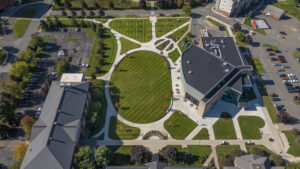
Life at ACPHS revolves around a compact, urban campus of just 481 undergraduates, fostering a close-knit and supportive community. The college actively works to build a diverse, equitable, and inclusive campus environment. Student life is centered on connecting, growing, and making lasting memories, with opportunities provided through student activities and organizations. Greek life exists in the form of co-ed fraternities, which offer community and camaraderie without gender barriers, welcoming all students passionate about professional development. The social scene is acknowledged by some students as being limited, with few major athletic events and modest nightlife, a reflection of the college's intense professional focus and small size. Campus housing costs an average of $13,100 per year.
The professional focus of an ACPHS education pays off decisively in postgraduate earnings. The median salary for alumni is reported at $62,685, and graduates earn a median of $112,685 six years after enrollment—a figure roughly 158% above the national median. Other sources report average early-career earnings of about $95,000 and median earnings five years after graduation of $115,118. The four-year graduation rate is 32%, while the overall graduation rate is strong. The most common career paths for graduates are in health professions and related programs, as well as biological and biomedical sciences.
The total at ACPHS, including tuition and fees of $42,325 and room and board of $13,100, is $55,425. The average —the cost after aid and scholarships—is $29,882. The college offers a range of financial aid options, including institutional scholarships and grants. Students must demonstrate unmet financial need to qualify for , which the college determines by deducting federal aid and other resources from the cost of attendance. ACPHS offers housing grants to qualified entering first-year students who demonstrate exceptional financial need, provided they reside in campus dormitories. The college provides a Net Price Calculator to help families estimate their net price and aid eligibility, though these results are estimates and do not guarantee actual aid awards.
ACPHS stands out as a rare breed: a tiny, specialized health sciences college that delivers outsized financial returns. It’s not a traditional liberal arts school with a pre-med track; it’s a professional training ground where every academic offering is filtered through the lens of pharmacy, medicine, research, and public health. This singular focus creates an environment of like-minded, career-driven students, which explains both the limited social scene and the remarkable earnings outcomes. The affiliation with Albany Law School provides unique interdisciplinary opportunities, and the co-ed fraternities reflect a modern, inclusive approach to Greek life. For a student certain of a health professions path, ACPHS offers a direct, no-frills pipeline to a high-paying career, wrapped in the support of a small urban community.
Albany College of Pharmacy and Health Sciences seal · sourceCampus - Albany College of Pharmacy and Health Sciences · sourceHome - Albany College of Pharmacy and Health Sciences · sourceAlbany College of Pharmacy and Health Sciences - Wikipedia · source