Admit rate has ranged 48%–67% over the last 5 years — notably volatile, though the latest figure above (74%) falls outside that window. Source: IPEDS via Urban Institute.
Acceptance & SAT from Common Data Set / IPEDS; net price, earnings & graduation from the U.S. Dept. of Education College Scorecard. Figures lag ~1–2 years — verify with the school.
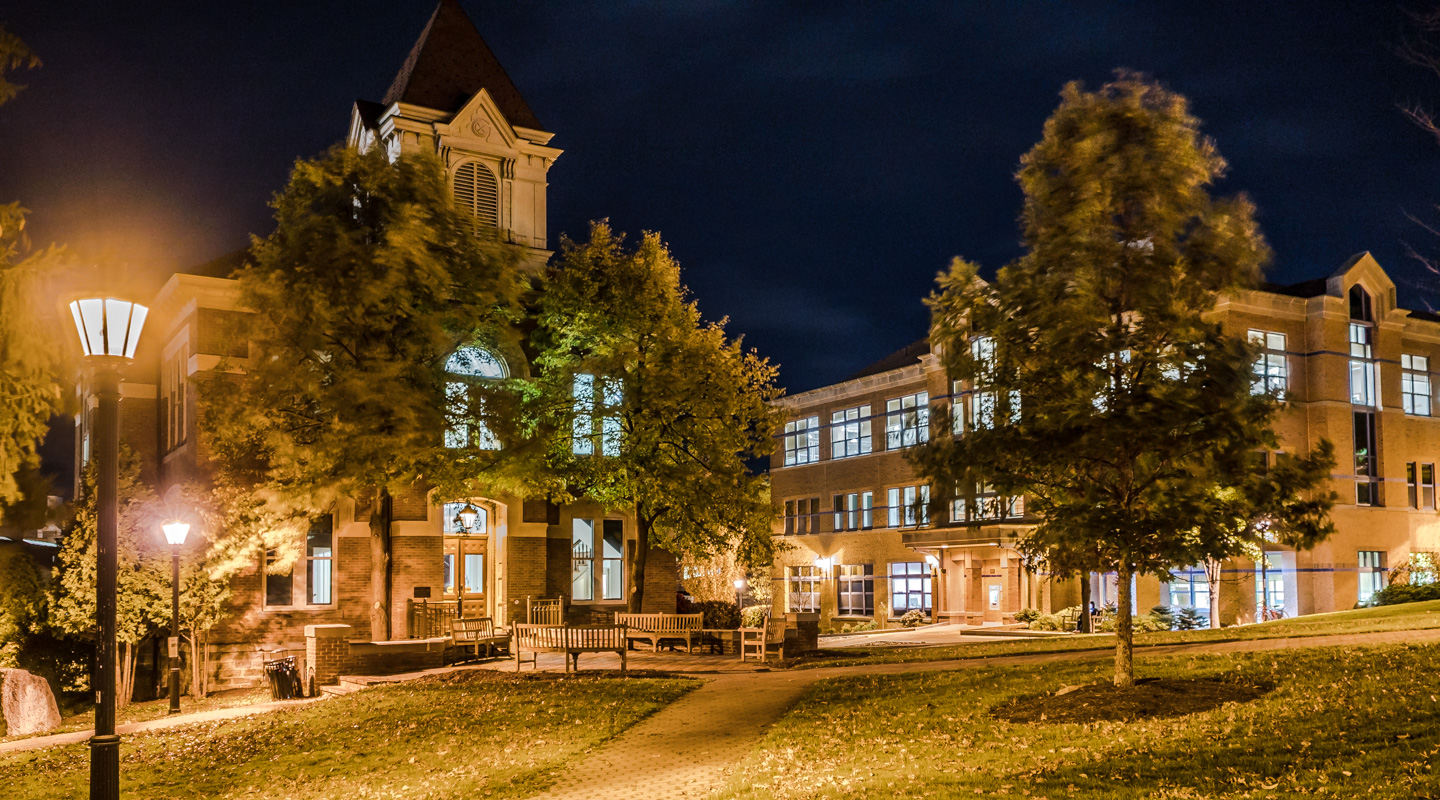
Alfred University is a small, private institution in rural western New York that operates with a distinctive, almost contradictory, dual identity. It is simultaneously a nationally renowned powerhouse for art and design—home to the New York State College of Ceramics—and a scrappy, hands-on liberal arts and engineering school where students are encouraged to cobble together cross-disciplinary majors. The vibe is creative, communal, and unpretentious, defined by a 13:1 student-faculty ratio and a campus culture that leans heavily on its own traditions and student-run organizations.
Admission requirements
Test-optional — scores considered if submitted
Required
High school transcript
Letters of recommendation
Demonstrated competencies
TOEFL (non-native English)
Considered (not required)
Grade point average
Class rank
Test scores (SAT/ACT)
College-prep program
Source: IPEDS Admissions survey (2022) via Urban Institute. Covers formal factors only — it does not reflect essays, extracurriculars, or other holistic criteria.
More details
Undergrad enrollment
1,423
In-state tuition
$41,500
Out-of-state tuition
$41,500
Graduation Rate
57%
On-Campus Housing
~90%
First-Year Retention
78%
Demonstrated Interest
Not considered
Student-Faculty Ratio
13:1
Median Earnings (10yr)
$54,897
Early Decision Deadline
November 15
Outcomes & value
Outcomes & value
Median earnings (10 yr)
$54,897
Value (earnings ÷ net price)
2.1×
Median debt at graduation
$26,000
Graduation rate
57%
First-year retention
78%
Reducing loan balance (3 yr)
71%
Pell (lower-income) share
39%
First-gen share (among federal-aid recipients)
25%
Financial health
3.0 / 3.0Meets the federal financial-responsibility standard
U.S. Dept. of Education Financial Responsibility Composite Score (FY2022-23). Scale −1.0 to 3.0; ≥1.5 meets the standard. Reported for private nonprofit & for-profit institutions only — public universities are state-backed and not scored, so this is a stability signal, not a ranking.
Top-earning majors
Median earnings by field of study (highest credential), ~2 years after completion.
Mechanical Engineering$60,523
Ceramic Sciences and Engineering$55,964
Communication and Media Studies$29,685
Criminal Justice and Corrections$29,685
Allied Health Diagnostic, Intervention, and Treatment Professions$29,685
Biology, General$28,960
Campus & location
Campus safety
On-campus violent crimes (2024)
1
Per 1,000 students
0.50
On-campus criminal offenses classed as violent (murder/non-negligent manslaughter, rape, robbery, aggravated assault) for the most recent reported year. Source: U.S. Dept. of Education Campus Safety and Security (Clery Act). Counts reflect what’s reported to the school, and urban campuses often report more partly due to non-student incidents nearby — read alongside campus size and setting, not as a standalone safety verdict.
Climate
Pleasant days / yr
94
Summer high
75°F
Winter low
20°F
Annual rain
40.7"
Annual snow
51.6"
Natural-hazard risk
Relatively Low
Pleasant days counts days per year with a mean temperature of 55–75°F, a high at or below 90°F, a low at or above 45°F, and little precipitation — a transparent comfort measure, not a weighting we invented. Computed from Open-Meteo ERA5 daily history (2019–2023). Natural-hazard risk is the county’s composite rating from the FEMA National Risk Index.
Deep dive — research, future-scholar output & economic mobility▾
Research output
Institutional h-index
145
Scholarly works
6,168
Institutional research volume and impact from OpenAlex. The h-index reflects large research universities and will be low for teaching-focused liberal-arts colleges — not a measure of undergraduate quality.
Economic mobility
Mobility rate
1.5%
Bottom → top quintile
23%
From bottom quintile
7%
Mobility rate = the share of students who both start in the bottom household-income quintile and reach the top quintile; bottom → top is that chance conditional on starting at the bottom. Source: Opportunity Insights Mobility Report Cards (Chetty, Friedman, Saez, Turner & Yagan). Reflects 1980–82 birth cohorts, so it’s directional, not current.
Quick answers
What is the acceptance rate at Alfred University?
Alfred University's acceptance rate is approximately 74% (Alfred, NY), based on the most recent figures we compiled from public and primary sources.
What SAT score do you need for Alfred University?
Admitted students at Alfred University typically score 1095–1310 on the SAT (the middle-50% range). Scores outside this band are still admitted, especially with strong applications.
How much does Alfred University cost?
At Alfred University, the average net price (after aid) is about $25,620 per year. Actual cost varies with financial aid and residency.
How many undergraduates attend Alfred University?
Alfred University enrolls approximately 1,423 undergraduate students.
Where is Alfred University located?
Alfred University is located in Alfred, NY.
Admissions
Alfred's admissions process is moderately selective and notably straightforward. The university accepts the Common Application and maintains a policy. For the Fall 2023 entering class, the university reported 3,844 applicants, with 2,844 admitted and 415 enrolled. The rate—the percentage of admitted students who choose to enroll—was approximately 14.6% for that cycle. The indicates that Alfred considers several factors in its admissions decisions. Academic rigor, GPA, and the application essay are rated as "important." Standardized test scores, class rank, recommendations, extracurricular activities, and talent/ability are "considered." Notably, the university does not consider demonstrated interest, interviews, or status in its evaluations. Alfred offers an Early Decision plan with a November 15 deadline, though the specific for this pool is not detailed in the provided sources. The admitted student profile shows a middle 50% SAT range of 1095–1310 and an ACT range of 24–30, with an average high school GPA of 3.5.
Earnings = median of students working ~10 years after entry; debt = median of graduates. Value divides 10-yr earnings by one year’s net price — read it as earnings per dollar of annual cost, not a full lifetime ROI; it favors lower-cost schools. Source: U.S. Dept. of Education College Scorecard. Figures lag ~2 years and reflect all students, not your intended major.
Natural Resources Conservation and Research$26,896
Marketing$22,667
Source: U.S. Dept. of Education College Scorecard (field-of-study earnings). Figures cover graduates who received federal aid and lag ~2 years; not all programs report data.
The academic experience at Alfred is defined by its unique structure and its celebrated niche. The university is organized into four schools: the College of Liberal Arts & Sciences, the Inamori School of Engineering, the Graduate School, and the New York State College of Ceramics (which includes the School of Art and Design). This last component is Alfred's crown jewel—a state-supported unit that provides significant resources and has made the university a global epicenter for ceramic art, glass science, and material engineering.
Students, known as Saxons, are actively encouraged to combine majors across these schools, fostering an interdisciplinary culture. Popular majors include Fine/Studio Arts, Mechanical Engineering, Psychology, and Business Administration. The student-to-faculty ratio is 13:1, supporting the hands-on, experiential learning model the university promotes. The curriculum emphasizes a well-rounded education, with the university stating that this approach helps students 'gain a competitive edge in the job market.'
Life in the small village of Alfred (population around 4,000) is intensely campus-centric. Approximately 90% of students live in college-owned, -operated, or -affiliated housing. The social and cultural calendar is largely driven by over 80 student organizations and clubs. Media is student-run, with AUTV, the Fiat Lux newspaper, and WALF 89.7 FM radio station. Traditions anchor the experience, beginning with a four-day 'Welcome Week' designed to help new students settle in. The campus regularly hosts world-class music events, gallery openings, theater productions, and guest speakers, transforming the rural setting into a surprisingly vibrant hub for creative discovery. Athletics are available at the NCAA Division III level. The overall atmosphere is one of a close-knit, self-sufficient community where students create much of their own fun and engagement.
Alfred's outcomes show a university where persistence pays off, though the path may take longer than four years. The first-year retention rate is reported at 78%. The six-year graduation rate is 63%. Post-graduate earnings data shows a positive trajectory: according to Niche, median earnings one year after graduation are $35,756, which grow to $55,674 after five years. The College Scorecard reports that 59% of students earn more than a typical high school graduate six years after enrolling. Alfred's institutional data highlights that 99% of graduates from its sister institution, Alfred State (a distinct college), are employed or continuing their education, though this specific figure is not cited for Alfred University itself in the provided sources.
Alfred University is a private institution with a published total annual cost (tuition, fees, room, and board) of approximately $63,800. However, the university emphasizes affordability through institutional aid. A significant 76.34% of students receive financial aid, with the average aid package reported as $38,342. The —the average cost after grants and scholarships are applied—varies across sources, with figures reported at $29,340 and $26,127. The university provides a Net Price Calculator for personalized estimates and states its goal is to 'make education affordable by offering a variety of awards based on academic achievement, financial need, creativity, and personal characteristics.' The financial aid offerings include federal Direct PLUS Loans, which are credit-based and not need-based. The provided sources do not indicate that Alfred University has a policy of meeting 100% of demonstrated financial need without loans.
Alfred University stands out precisely because it refuses to fit neatly into a single category. It is not just a liberal arts college, not just an engineering school, and not just an art school—it is all three, operating under one intimate, rural roof. This creates a singular culture where a mechanical engineering major might share a dormitory and a worldview with a ceramic sculpture major, each influencing the other's approach to materials, form, and function. The presence of the state-funded College of Ceramics provides a level of specialized facility and faculty expertise in glass and ceramics that is unmatched at the undergraduate level nationally, drawing a deeply committed cohort of artists and materials scientists. Yet, for all this prestige in a niche field, the overall atmosphere remains unassuming and collaborative, not cutthroat. The university's identity is built on this productive tension between world-class specialization in the arts and a broad, flexible, hands-on approach to everything else. It's a place for students who want to be serious about their craft—whether that's poetry, physics, or porcelain—without taking themselves too seriously, and who thrive in a community they have to actively build.
Alfred University seal · sourceSchools & Colleges | Alfred University · sourceAlfred University | Campus Tour with Ben Buess · sourceSummer & Winter (Allen) Terms | Alfred University · source