Admit rate has ranged 59%–75% over the last 5 years — notably volatile, though the latest figure above (55%) falls outside that window. Source: IPEDS via Urban Institute.
Acceptance & SAT from Common Data Set / IPEDS; net price, earnings & graduation from the U.S. Dept. of Education College Scorecard. Figures lag ~1–2 years — verify with the school.
Allegheny College is a small, residential liberal arts college in Meadville, Pennsylvania, that demands intellectual synthesis from its students. Its signature requirement—a self-designed major paired with a minor in an unrelated discipline—forces a kind of academic cross-training that defines the Allegheny experience. The campus vibe is collaborative and all-in, with every undergraduate living on campus and a dense network of over 100 clubs and organizations fostering a tight-knit community focused on purpose and outcomes.
Admission requirements
Test-optional — scores considered if submitted
Required
High school transcript
Grade point average
Letters of recommendation
College-prep program
TOEFL (non-native English)
Considered (not required)
Class rank
Test scores (SAT/ACT)
Source: IPEDS Admissions survey (2022) via Urban Institute. Covers formal factors only — it does not reflect essays, extracurriculars, or other holistic criteria.
More details
Undergrad enrollment
1,156
In-state tuition
$56,550
Out-of-state tuition
$56,550
Graduation Rate
73%
ED Share of Class
~12%
Demonstrated Interest
Considered
Top Merit Scholarship
Up to $43,000
Median Earnings (10yr)
$62,069
On-Campus Housing Requirement
All four years
Average Aid Offer (FAFSA filers)
$50,000
First-Year Students Receiving Aid
100%
Outcomes & value
Outcomes & value
Median earnings (10 yr)
$62,069
Value (earnings ÷ net price)
2.7×
Median debt at graduation
$27,000
Graduation rate
73%
First-year retention
78%
Reducing loan balance (3 yr)
79%
Pell (lower-income) share
28%
First-gen share (among federal-aid recipients)
22%
Financial health
3.0 / 3.0Meets the federal financial-responsibility standard
U.S. Dept. of Education Financial Responsibility Composite Score (FY2022-23). Scale −1.0 to 3.0; ≥1.5 meets the standard. Reported for private nonprofit & for-profit institutions only — public universities are state-backed and not scored, so this is a stability signal, not a ranking.
Top-earning majors
Median earnings by field of study (highest credential), ~2 years after completion.
Mathematics$43,314
Economics$41,087
Political Science and Government$37,363
English Language and Literature, General$33,993
Fine and Studio Arts$32,925
Romance Languages, Literatures, and Linguistics$32,569
Campus & location
Campus safety
On-campus violent crimes (2024)
2
On-campus criminal offenses classed as violent (murder/non-negligent manslaughter, rape, robbery, aggravated assault) for the most recent reported year. Source: U.S. Dept. of Education Campus Safety and Security (Clery Act). Counts reflect what’s reported to the school, and urban campuses often report more partly due to non-student incidents nearby — read alongside campus size and setting, not as a standalone safety verdict.
Climate
Pleasant days / yr
96
Summer high
78°F
Winter low
23°F
Annual rain
49.8"
Annual snow
47.2"
Natural-hazard risk
Relatively Low
Pleasant days counts days per year with a mean temperature of 55–75°F, a high at or below 90°F, a low at or above 45°F, and little precipitation — a transparent comfort measure, not a weighting we invented. Computed from Open-Meteo ERA5 daily history (2019–2023). Natural-hazard risk is the county’s composite rating from the FEMA National Risk Index.
Deep dive — research, future-scholar output & economic mobility▾
Research output
Institutional h-index
263
Scholarly works
4,984
Institutional research volume and impact from OpenAlex. The h-index reflects large research universities and will be low for teaching-focused liberal-arts colleges — not a measure of undergraduate quality.
Economic mobility
Mobility rate
1.3%
Bottom → top quintile
36%
From bottom quintile
4%
Mobility rate = the share of students who both start in the bottom household-income quintile and reach the top quintile; bottom → top is that chance conditional on starting at the bottom. Source: Opportunity Insights Mobility Report Cards (Chetty, Friedman, Saez, Turner & Yagan). Reflects 1980–82 birth cohorts, so it’s directional, not current.
Quick answers
What is the acceptance rate at Allegheny College?
Allegheny College's acceptance rate is approximately 55% (Meadville, PA), based on the most recent figures we compiled from public and primary sources.
What SAT score do you need for Allegheny College?
Admitted students at Allegheny College typically score 1173–1358 on the SAT (the middle-50% range). Scores outside this band are still admitted, especially with strong applications.
How much does Allegheny College cost?
At Allegheny College, the average net price (after aid) is about $22,940 per year. Actual cost varies with financial aid and residency.
How many undergraduates attend Allegheny College?
Allegheny College enrolls approximately 1,156 undergraduate students.
Where is Allegheny College located?
Allegheny College is located in Meadville, PA.
Admissions
Allegheny operates with a moderately selective admissions process, admitting just over half of its applicants. The college is , explicitly stating it does not require ACT or SAT scores and will instead focus on an applicant's overall high school performance. For those who do submit scores, the middle 50% SAT range is 1173–1358, and the ACT range is 25–30. The average high school GPA of admitted students is around a 3.7. The college offers a binding Early Decision (ED) option with a November 30 deadline; students admitted via ED with a 3.5+ unweighted GPA are guaranteed a minimum merit scholarship of $40,000 annually. A second, binding ED round is also offered. Early Decision admits made up about 12% of a recent first-year class. The college also has an Early Admission program for highly qualified high school juniors who wish to start college a year early. Demonstrated interest is a factor Allegheny considers in its admissions decisions, as indicated in the section C7.
Earnings = median of students working ~10 years after entry; debt = median of graduates. Value divides 10-yr earnings by one year’s net price — read it as earnings per dollar of annual cost, not a full lifetime ROI; it favors lower-cost schools. Source: U.S. Dept. of Education College Scorecard. Figures lag ~2 years and reflect all students, not your intended major.
Neurobiology and Neurosciences
$30,771
International Relations and National Security Studies$30,409
Source: U.S. Dept. of Education College Scorecard (field-of-study earnings). Figures cover graduates who received federal aid and lag ~2 years; not all programs report data.
Allegheny's academic identity is built on deliberate interdisciplinary study, enforced by its unique graduation requirement: every student must complete a major and a minor in two different academic divisions. This structure is designed to cultivate intellectual flexibility and the ability to connect ideas across fields. The curriculum is organized into divisions: Interdisciplinary Studies; Language, Literature, and Culture; Mathematics and Natural Sciences; and Social Sciences. Popular majors include Economics, English Language and Literature, Communication, Biochemistry, and Mathematics. The college offers distinctive programs like an interdisciplinary science major that integrates biology, chemistry, and physics, as well as majors in Community and Justice Studies, Communication, Film, and Theatre, and Computer Science. The academic culture encourages students to let their passions shape their purpose through these combined paths of study.
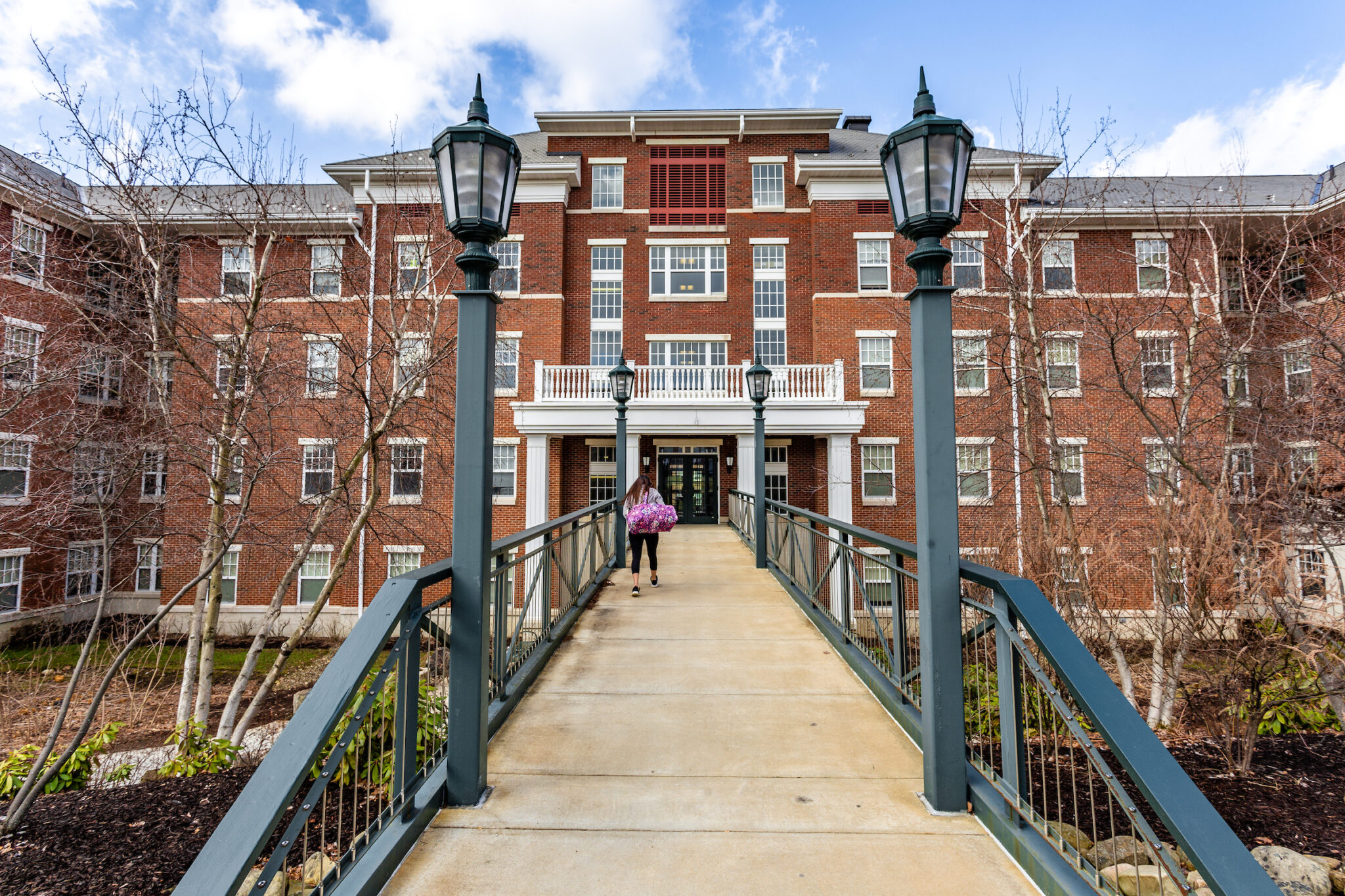
Life at Allegheny is intensely residential and community-oriented. The college requires all undergraduate students to live on campus for all four years, creating a 24/7 living-learning environment. Approximately 90% of students live in college-owned, -operated, or -affiliated housing. This policy fosters a dense campus culture supported by more than 100 student clubs and organizations, ranging from student government to special interest groups. A dedicated Life Design Office exists to guide students in "crafting intentional lives of purpose, growth, and connection." The campus social scene includes Greek life, with about 28% of women participating in sororities. The overall vibe, as promoted by the college, is one of a vibrant, explorative community where daily life is filled with campus culture and activities.
Allegheny promotes strong postgraduate outcomes, with 60% of graduates beginning their careers immediately and 30% going directly to graduate or professional school. The college has a notable track record of producing future PhDs, ranking in the top 4% of U.S. colleges for the percentage of graduates who go on to earn a doctorate in the sciences and in the top 2% specifically in chemistry. According to the canonical figures, the median earnings ten years after entry are $62,069. The college's graduation rate is 73%, and the average time to degree is 4.1 years.
Allegheny is committed to making its education accessible through substantial financial aid. The average aid offer for students who complete the FAFSA is $50,000. In a recent year, 100% of full-time, first-year undergraduates received grant or scholarship aid. The college offers merit scholarships of up to $43,000 annually. For students who apply and are admitted through Early Decision with a 3.5 or higher unweighted GPA, the college guarantees a minimum merit scholarship of $40,000 per year. The average after aid, per the canonical figure, is $22,940. The college offers loans based on demonstrated financial need, including federal direct subsidized loans for eligible students.
Allegheny College stands out for its unwavering commitment to a specific, challenging form of liberal arts education. Its compulsory "major + unrelated minor" structure is more than a suggestion—it's a graduation requirement that forces students to become synthesizers and thinkers who can bridge disparate fields. This creates a distinctive intellectual culture where being "never just one thing" is the norm. Coupled with a 100% residential campus policy, the result is an immersive, all-in community where academic cross-pollination extends into daily life. The college backs this experience with strong outcomes, particularly a remarkable record of producing future science PhDs, proving that its rigorous, interdisciplinary model effectively prepares students for advanced study and meaningful careers.
Allegheny College seal · sourceCampus Map/Directions - Allegheny College Athletics · sourceAbout - Allegheny College · sourceResidence Life - Allegheny College · source