Admit rate has ranged 58%–70% over the last 5 years — notably volatile. Source: IPEDS via Urban Institute.
Acceptance & SAT from Common Data Set / IPEDS; net price, earnings & graduation from the U.S. Dept. of Education College Scorecard. Figures lag ~1–2 years — verify with the school.
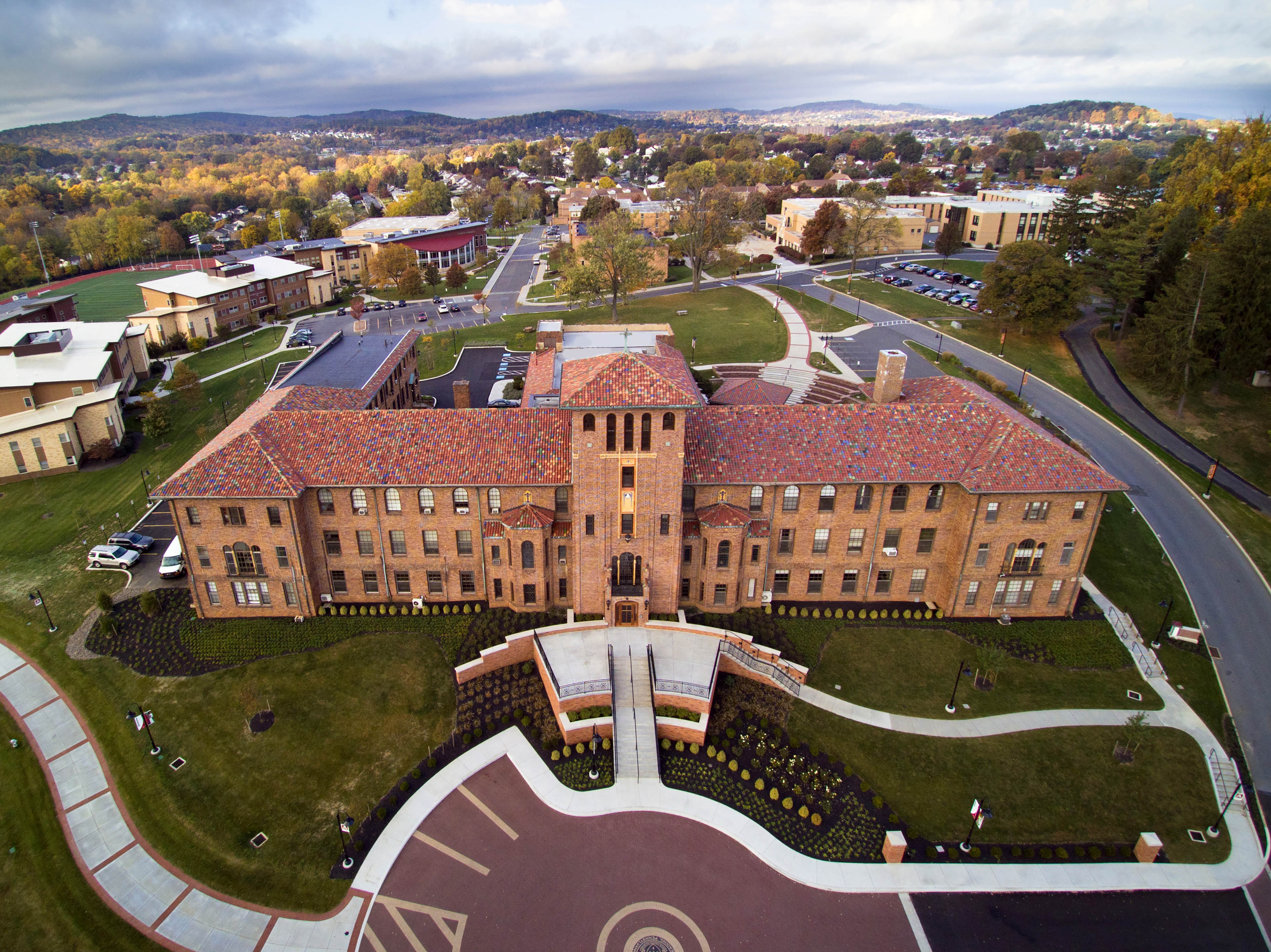
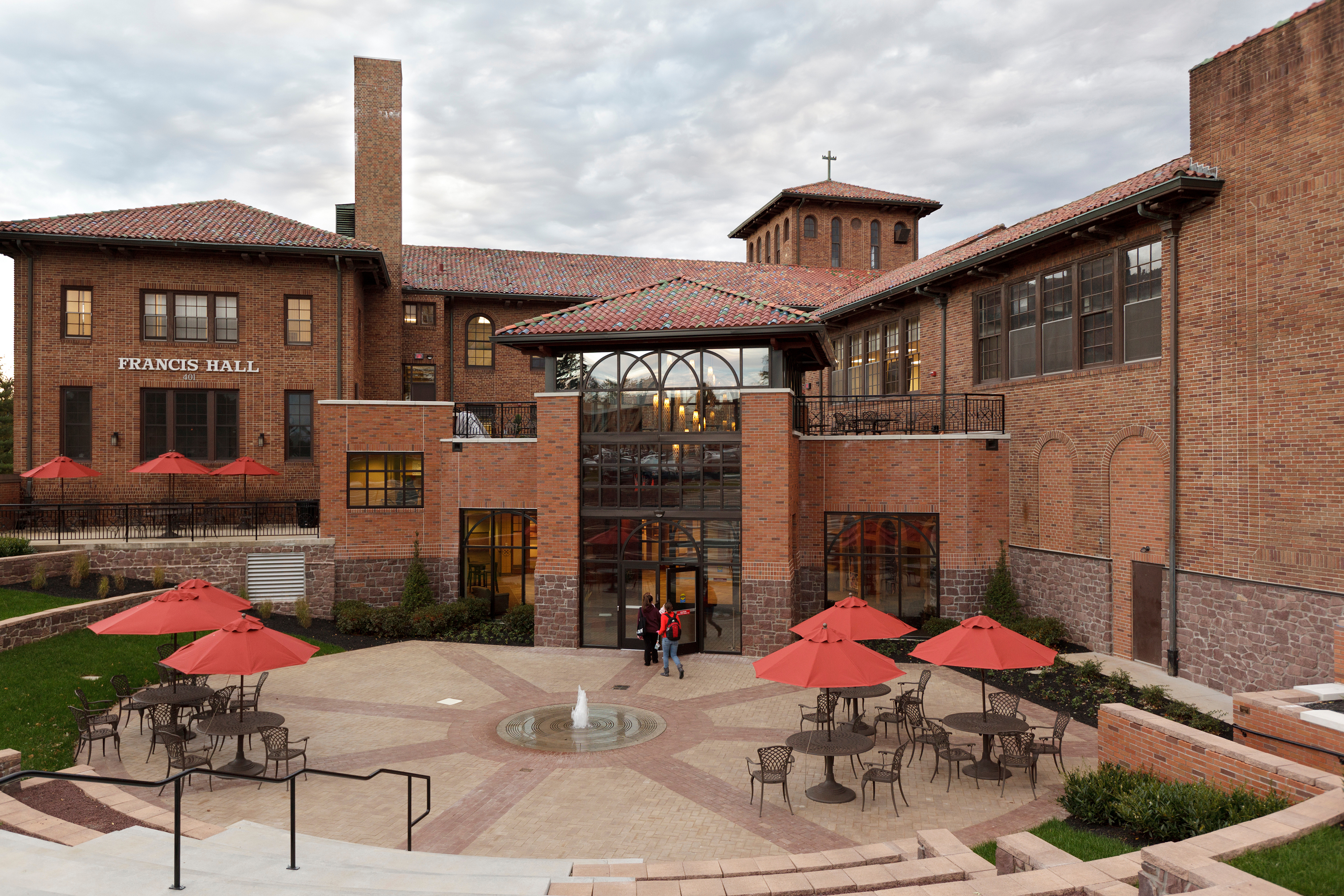
Alvernia University is a small, private Catholic institution in Reading, Pennsylvania, that operates with a distinctly practical, career-focused ethos. It's a place where nursing and health sciences dominate the academic landscape, a rolling admissions policy keeps the gates open, and a significant portion of the student body are athletes or first-generation college-goers. The vibe is community-oriented and hands-on, with a strong emphasis on service and preparing graduates for immediate entry into the workforce.
Admission requirements
Test-optional — scores considered if submitted
Required
High school transcript
Grade point average
Considered (not required)
Class rank
Letters of recommendation
Test scores (SAT/ACT)
College-prep program
TOEFL (non-native English)
Source: IPEDS Admissions survey (2022) via Urban Institute. Covers formal factors only — it does not reflect essays, extracurriculars, or other holistic criteria.
More details
Undergrad enrollment
2,152
In-state tuition
$45,000
Out-of-state tuition
$45,000
Graduation Rate
56%
On-Campus Housing
58%
Most Popular Major
Registered Nursing
Average Aid Package
$35,859
Early Decision Offered
No
Median Earnings (10yr)
$55,055
First-Generation Students
31% (in largest class)
First-Year Student-Athletes
48% (in largest class)
Annual Community Service Hours
Outcomes & value
Outcomes & value
Median earnings (10 yr)
$55,055
Value (earnings ÷ net price)
2.0×
Median debt at graduation
$27,000
Graduation rate
56%
First-year retention
72%
Reducing loan balance (3 yr)
62%
Pell (lower-income) share
36%
First-gen share (among federal-aid recipients)
45%
Financial health
2.4 / 3.0Meets the federal financial-responsibility standard
U.S. Dept. of Education Financial Responsibility Composite Score (FY2022-23). Scale −1.0 to 3.0; ≥1.5 meets the standard. Reported for private nonprofit & for-profit institutions only — public universities are state-backed and not scored, so this is a stability signal, not a ranking.
Top-earning majors
Median earnings by field of study (highest credential), ~2 years after completion.
Registered Nursing, Nursing Administration, Nursing Research and Clinical Nursing$64,553
Accounting and Related Services$45,500
Business Administration, Management and Operations$42,682
Marketing$42,682
Criminal Justice and Corrections$39,832
Communication and Media Studies
Campus & location
Campus safety
On-campus violent crimes (2024)
0
Per 1,000 students
0.00
On-campus criminal offenses classed as violent (murder/non-negligent manslaughter, rape, robbery, aggravated assault) for the most recent reported year. Source: U.S. Dept. of Education Campus Safety and Security (Clery Act). Counts reflect what’s reported to the school, and urban campuses often report more partly due to non-student incidents nearby — read alongside campus size and setting, not as a standalone safety verdict.
Climate
Pleasant days / yr
89
Summer high
85°F
Winter low
28°F
Annual rain
47.6"
Annual snow
17.5"
Natural-hazard risk
Relatively Moderate
Pleasant days counts days per year with a mean temperature of 55–75°F, a high at or below 90°F, a low at or above 45°F, and little precipitation — a transparent comfort measure, not a weighting we invented. Computed from Open-Meteo ERA5 daily history (2019–2023). Natural-hazard risk is the county’s composite rating from the FEMA National Risk Index.
Deep dive — research, future-scholar output & economic mobility▾
Research output
Institutional h-index
40
Scholarly works
427
Institutional research volume and impact from OpenAlex. The h-index reflects large research universities and will be low for teaching-focused liberal-arts colleges — not a measure of undergraduate quality.
Economic mobility
Mobility rate
2.2%
Bottom → top quintile
33%
From bottom quintile
7%
Mobility rate = the share of students who both start in the bottom household-income quintile and reach the top quintile; bottom → top is that chance conditional on starting at the bottom. Source: Opportunity Insights Mobility Report Cards (Chetty, Friedman, Saez, Turner & Yagan). Reflects 1980–82 birth cohorts, so it’s directional, not current.
Quick answers
What is the acceptance rate at Alvernia University?
Alvernia University's acceptance rate is approximately 58% (Reading, PA), based on the most recent figures we compiled from public and primary sources.
What SAT score do you need for Alvernia University?
Admitted students at Alvernia University typically score 1093–1286 on the SAT (the middle-50% range). Scores outside this band are still admitted, especially with strong applications.
How much does Alvernia University cost?
At Alvernia University, the average net price (after aid) is about $28,138 per year. Actual cost varies with financial aid and residency.
How many undergraduates attend Alvernia University?
Alvernia University enrolls approximately 2,152 undergraduate students.
Where is Alvernia University located?
Alvernia University is located in Reading, PA.
Admissions
Alvernia's admissions process is characterized by accessibility and flexibility. The university is less selective, with a 58% acceptance rate for the thousands of applicants it receives. It does not offer Early Decision or Early Action programs, instead relying on a rolling admission process where applications are reviewed continually and students can apply at any time. For the Fall 2026 cycle, the requirement for SAT or ACT test scores has been waived. The middle 50% SAT range for admitted students who do submit scores is 1093–1286, and the university's largest incoming class boasted an average SAT score of over 1090. Of those accepted, only about 13% end up enrolling, resulting in a low rate. The admitted student profile is notably active: a recent record-breaking class was composed of 48% student-athletes and 31% first-generation college students.
Earnings = median of students working ~10 years after entry; debt = median of graduates. Value divides 10-yr earnings by one year’s net price — read it as earnings per dollar of annual cost, not a full lifetime ROI; it favors lower-cost schools. Source: U.S. Dept. of Education College Scorecard. Figures lag ~2 years and reflect all students, not your intended major.
$38,289
Teacher Education and Professional Development, Specific Levels and Methods$37,568
Mental and Social Health Services and Allied Professions$36,717
Source: U.S. Dept. of Education College Scorecard (field-of-study earnings). Figures cover graduates who received federal aid and lag ~2 years; not all programs report data.
Academics at Alvernia are tightly woven with its mission to prepare students for "life, leadership and careers," integrating core values and critical skills into every program. The curriculum is a blend of liberal arts and professional studies, but the academic identity is overwhelmingly defined by health sciences. Registered Nursing is the most popular major, followed by general Health Services/Allied Health/Health Sciences. Data shows that Health is by far the most specialized field, with 349 degrees awarded, dwarfing other areas like Protective Services (29 degrees). This creates a campus culture heavily geared toward practical, clinical, and service-oriented professions. The university promotes real-world learning experiences and problem-solving as central to its academic approach.
Life on Alvernia's campus is active and community-driven. A majority of students (58%) live in college-owned, -operated, or -affiliated housing, with 42% living off-campus. The university fosters an inclusive and welcoming community that it promotes as ideal for international students. Student engagement is high, with a full calendar of activities, dozens of organizations, intramural sports, and leadership opportunities. A cornerstone of the Alvernia experience is community service; student organizations contribute to more than 60,000 hours of community service each year. This ethos of involvement and contribution is a defining feature of the student experience, supported by dedicated offices for student activities and international admissions.
Alvernia's outcomes reflect its mission of serving a broad student population and creating pathways to the workforce. The university has received national recognition for its transformational undergraduate experience, with evaluations based on graduation rates, cost, aid, and alumni salaries. It has climbed significantly in social mobility rankings, now ranking 84 out of 443 in a key indicator that measures the graduation rate of Pell Grant recipients. The six-year graduation rate is reported at 61%. For alumni, earnings grow over time: one year after graduation, median earnings are $54,463, which rises to $59,530 five years after graduation. Some sources cite a median income for graduates as high as $66,956.
Financial accessibility is a key part of Alvernia's pitch. An overwhelming 99% of undergraduates receive some type of financial aid, including scholarships, grants, loans, and work-study. The average aid package is $35,859. After accounting for this aid, the for students is $26,166. The university provides a Net Price Calculator to help families estimate out-of-pocket costs. It's important to note that while aid is nearly universal, the financial aid handbooks detail that Direct Unsubsidized Loans are part of the aid landscape, indicating the university does not have a "no-loan" policy that replaces all loans with grants.
Alvernia University stands out for its unapologetically practical and service-oriented identity. It is not a liberal arts college in the traditional, exploratory sense; it is a career launchpad where health sciences are the undisputed academic engine. This focus creates a cohesive, pre-professional campus culture. Its rolling admissions and high aid rate make it an accessible option for a wide range of students, particularly college students and athletes, who make up a substantial part of its community. The commitment is visible in the numbers: 60,000+ annual service hours and a rapid rise in social mobility rankings show a university invested in hands-on learning and upward trajectory for its students. In a landscape of highly curated student bodies, Alvernia's vibe is less about exclusivity and more about opportunity—providing a direct, values-based education for students ready to work.