Loading…
← All schools
American College of Barbering
Louisville, KYprivate forprofitwww.americancollegeofbarbering.com/
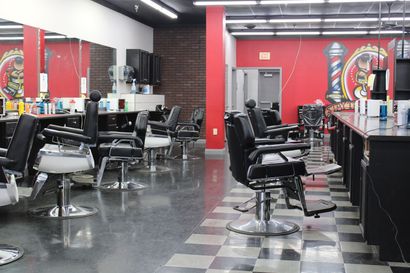
The American College of Barbering is a singular institution: a hyper-focused, open-admission trade school where the campus is the shop floor and the curriculum is the state board exam. Forget dorms and football; here, the student body is a working-age mix of career-changers and first-generation professionals, all training under live clippers in a no-frills, high-stakes environment dedicated to turning out licensed barbers ready to work. It's a direct pipeline from classroom to chair, where success is measured not in GPAs but in passing rates and post-graduation earnings.
More details
- Undergrad enrollment
- 84
- Program Focus
- Barbering/Barber (Award of <2 years)
- Campus Feature
- Student clinic offering $10 haircuts, $6 shaves
- Graduation Rate
- 62.1%
- Student Demographics
- 48.8% White, 38.1% Black, 7.14% Hispanic
- Median Earnings (6yr)
- $14,137
Outcomes & value
Outcomes & value
- Median debt at graduation
- $14,143
- Pell (lower-income) share
- 43%
- First-gen share (among federal-aid recipients)
- 50%
Earnings = median of students working ~10 years after entry; debt = median of graduates. Value divides 10-yr earnings by one year’s net price — read it as earnings per dollar of annual cost, not a full lifetime ROI; it favors lower-cost schools. Source: U.S. Dept. of Education College Scorecard. Figures lag ~2 years and reflect all students, not your intended major.
Financial health
2.7 / 3.0Meets the federal financial-responsibility standard
U.S. Dept. of Education Financial Responsibility Composite Score (FY2022-23). Scale −1.0 to 3.0; ≥1.5 meets the standard. Reported for private nonprofit & for-profit institutions only — public universities are state-backed and not scored, so this is a stability signal, not a ranking.
Campus & location
Campus safety
- On-campus violent crimes (2024)
- 0
On-campus criminal offenses classed as violent (murder/non-negligent manslaughter, rape, robbery, aggravated assault) for the most recent reported year. Source: U.S. Dept. of Education Campus Safety and Security (Clery Act). Counts reflect what’s reported to the school, and urban campuses often report more partly due to non-student incidents nearby — read alongside campus size and setting, not as a standalone safety verdict.
Climate
- Pleasant days / yr
- 94
- Summer high
- 85°F
- Winter low
- 31°F
- Annual rain
- 40.3"
- Annual snow
- 7.9"
- Natural-hazard risk
- Relatively High
Pleasant days counts days per year with a mean temperature of 55–75°F, a high at or below 90°F, a low at or above 45°F, and little precipitation — a transparent comfort measure, not a weighting we invented. Computed from Open-Meteo ERA5 daily history (2019–2023). Natural-hazard risk is the county’s composite rating from the FEMA National Risk Index.
Quick answers
- How much does American College of Barbering cost?
- At American College of Barbering, the average net price (after aid) is about $22,210 per year. Actual cost varies with financial aid and residency.
- How many undergraduates attend American College of Barbering?
- American College of Barbering enrolls approximately 84 undergraduate students.
- Where is American College of Barbering located?
- American College of Barbering is located in Louisville, KY.
Admissions
Admissions at the American College of Barbering operates on a fundamentally different principle than the selective, of a traditional liberal arts college. This is an open admission policy institution, which means that virtually all applicants who meet the basic requirements are accepted. Sources explicitly state the school "has an open admission policy, which means that all students who apply are accepted" and that the is 100%. There is no early decision or early action process; the admissions timeline is driven by program start dates, not binding application rounds. The primary gatekeepers are not admissions officers but state licensing boards—the real selection happens after enrollment, in the form of rigorous practical and written exams required for licensure. The enrolled student population reflects this accessible mission: it is 48.8% White, 38.1% Black or African American, 7.14% Hispanic or Latino, 3.57% Asian, and 2.38% Two or More Races, serving a diverse cross-section of the Louisville and greater Kentucky community seeking a skilled trade.
Academics
Academic life is laser-focused on a single, clear objective: preparing students to pass the Kentucky State Board of Barbering exam and launch a career. The institution's entire academic strength, as noted by one source, "lies in technical precision and preparation for state licensing exams, ensuring that when you finish, you have the confidence to step" into a professional shop. This isn't a place for exploring majors; the curriculum is the barbering craft itself. Training is hands-on from day one, with students progressing through fundamental haircutting, shaving, styling, sanitation, and shop management. The school likely offers scholarships that reward the professional habits essential in the trade, with criteria including "strong grades... good attendance... clear study habits." The program is structured as a career-training award of at least one but less than two academic years, designed for rapid entry into the workforce. There are no general education requirements in the traditional sense—every hour of instruction is geared toward technical mastery and regulatory compliance.
Compare American College of Barbering
See colleges similar to American College of Barbering →Sources
- Common Data Set: Home
- American College of Barbering - Florence Admissions, Costs & ...
- Common Data Set 2023-2024 - Office of Institutional Research
- The Common Data Set: What It Is & How to Use It In ...
- American College of Barbering
- Common Data Set 2022-2023
- American College of Barbering
- American College of Barbering | Class of 2030 Community
- American College of Barbering - Sallie
- American College of Barbering
- American College of Barbering