Loading…
← All schools
American Institute-Clifton
CLIFTON, NJprivate forprofitwww.americaninstitute.edu/
Avg net price
$20,371
Earnings (10 yr)
$28,710
Acceptance & SAT from Common Data Set / IPEDS; net price, earnings & graduation from the U.S. Dept. of Education College Scorecard. Figures lag ~1–2 years — verify with the school.
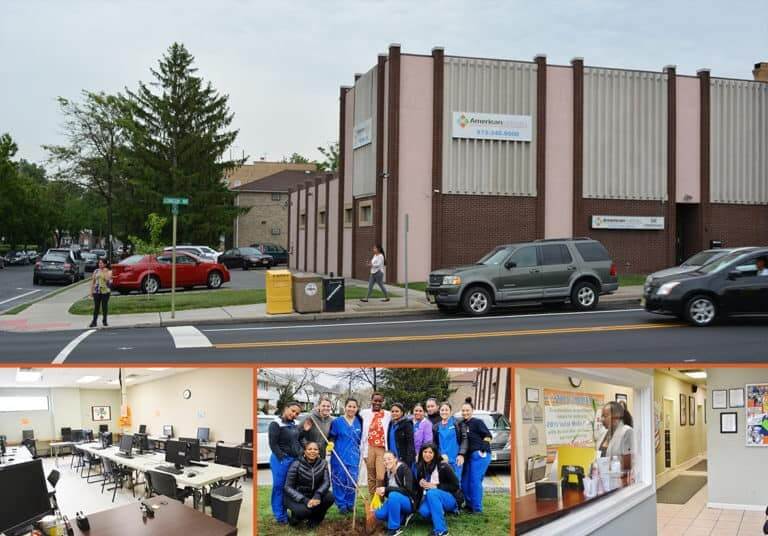
American Institute-Clifton is a for-profit career training school in New Jersey that operates with a fundamentally different logic than a traditional college. Its mission is singular: to get adult students in, trained, and out into specific technical and healthcare fields as quickly as possible. The environment is no-frills and transactional, with outcomes that are starkly pragmatic—modest earnings for graduates against a backdrop of high costs and middling completion rates.
More details
- Undergrad enrollment
- 778
- Campus Type
- Commuter / Career Training
- Top Programs
- IT, Allied Healthcare, Diagnostic Medical Sonography
- Graduation Rate
- 57%
- Student-Faculty Ratio
- 14:1
- Median Earnings (10yr)
- $28,710
Outcomes & value
Outcomes & value
- Median earnings (10 yr)
- $28,710
- Value (earnings ÷ net price)
- 1.4×
- Median debt at graduation
- $11,979
- Reducing loan balance (3 yr)
- 25%
- Pell (lower-income) share
- 86%
- First-gen share (among federal-aid recipients)
- 67%
Earnings = median of students working ~10 years after entry; debt = median of graduates. Value divides 10-yr earnings by one year’s net price — read it as earnings per dollar of annual cost, not a full lifetime ROI; it favors lower-cost schools. Source: U.S. Dept. of Education College Scorecard. Figures lag ~2 years and reflect all students, not your intended major.
Campus & location
Campus safety
- On-campus violent crimes (2024)
- 0
On-campus criminal offenses classed as violent (murder/non-negligent manslaughter, rape, robbery, aggravated assault) for the most recent reported year. Source: U.S. Dept. of Education Campus Safety and Security (Clery Act). Counts reflect what’s reported to the school, and urban campuses often report more partly due to non-student incidents nearby — read alongside campus size and setting, not as a standalone safety verdict.
Climate
- Pleasant days / yr
- 95
- Summer high
- 83°F
- Winter low
- 28°F
- Annual rain
- 41.5"
- Annual snow
- 21"
- Natural-hazard risk
- Relatively High
Pleasant days counts days per year with a mean temperature of 55–75°F, a high at or below 90°F, a low at or above 45°F, and little precipitation — a transparent comfort measure, not a weighting we invented. Computed from Open-Meteo ERA5 daily history (2019–2023). Natural-hazard risk is the county’s composite rating from the FEMA National Risk Index.
Quick answers
- How much does American Institute-Clifton cost?
- At American Institute-Clifton, the average net price (after aid) is about $20,371 per year. Actual cost varies with financial aid and residency.
- How many undergraduates attend American Institute-Clifton?
- American Institute-Clifton enrolls approximately 778 undergraduate students.
- Where is American Institute-Clifton located?
- American Institute-Clifton is located in CLIFTON, NJ.
Admissions
Admissions at American Institute-Clifton is an open door, not a selective gate. The process is designed for accessibility, with multiple sources reporting an of 100% for recent years. This reflects its mission as a provider of adult career education, where the primary barrier to entry is likely the ability to pay or secure financing, not academic pedigree. Standardized test scores like the SAT or ACT are not reported as factors for admission, and the school does not engage in the complex, strategic admissions practices (like Early Decision or evaluating demonstrated interest) common at four-year colleges. The focus is on enrolling students who seek specific vocational training in business, legal, allied healthcare, and diagnostic medical sonography.
Academics
The academic model is pure career training, delivered in a concentrated, hands-on format. Programs are tightly focused on fields where the school sees employer demand: business, legal studies, allied healthcare, and diagnostic medical sonography. A student-faculty ratio of 14:1 suggests the possibility of more direct instruction, though this occurs within a pragmatic, non-residential setting. The school has developed a reputation for specific program strengths; one analysis ranks its information technology program 8th in New Jersey and labels it the 18th best small college in the state. The curriculum is not about exploration or a liberal arts foundation—it's a direct pipeline to a technical credential designed for immediate workforce entry.
Compare American Institute-Clifton
See colleges similar to American Institute-Clifton →Sources
- Common Data Set: Home
- Common Data Set 2025-2026
- Decoding the Common Data Set What You Need to Know for Your College ...
- The Common Data Set: What It Is & How to Use It In College Applications
- Common Data Set: Your Key to Smarter College Decisions
- Common Data Set 2023 – 2024 - Institutional Research and Analytics
- American Institute - Clifton
- Clifton Location Program Offerings - Career Training
- American Institute-Clifton - School Profile - College… - EDsmart Data
- American Institute-Clifton
- American Institute-Clifton - Community College Review