Loading…
← All schools
Ana G. Mendez University
Orlando, FLprivate nonprofitwww.agmu.edu/
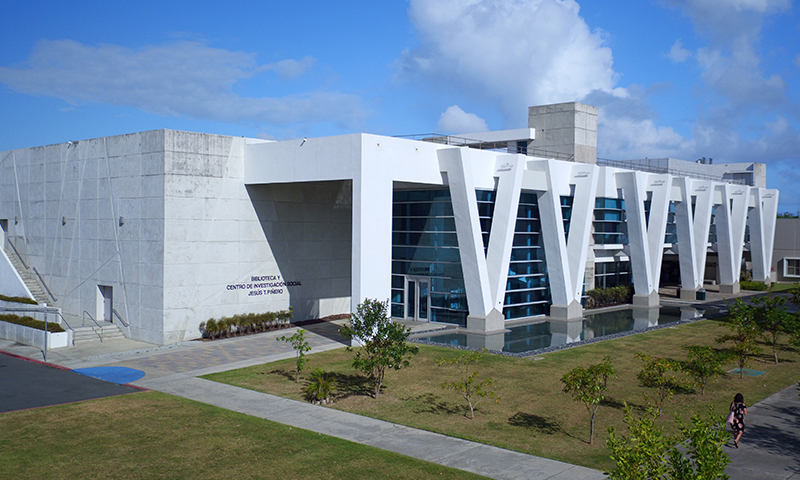
Ana G. Méndez University (AGMU) is a mission-driven institution built on a 75-year legacy in Puerto Rico and a more recent expansion into Florida, primarily serving a Spanish-speaking and bilingual student body. It operates on an open-access model, prioritizing access over selectivity, and offers a sprawling catalog of practical programs from diplomas to doctorates in both English and Spanish. The vibe is less about traditional campus rah-rah and more about providing a supportive, culturally familiar pathway to a credential for working adults and first-generation students.
More details
- Undergrad enrollment
- 4,763
- In-state tuition
- $13,575
- Out-of-state tuition
- $13,575
- First-Year Retention
- 70.2%
- Student-Faculty Ratio
- 34:1
- Female Student Population
- 75.8%
- % Students Receiving Grant Aid
- 87%
Outcomes & value
Outcomes & value
- Median debt at graduation
- $12,188
- First-year retention
- 70%
- Pell (lower-income) share
- 71%
Earnings = median of students working ~10 years after entry; debt = median of graduates. Value divides 10-yr earnings by one year’s net price — read it as earnings per dollar of annual cost, not a full lifetime ROI; it favors lower-cost schools. Source: U.S. Dept. of Education College Scorecard. Figures lag ~2 years and reflect all students, not your intended major.
Financial health
1.5 / 3.0Meets the federal financial-responsibility standard
U.S. Dept. of Education Financial Responsibility Composite Score (FY2022-23). Scale −1.0 to 3.0; ≥1.5 meets the standard. Reported for private nonprofit & for-profit institutions only — public universities are state-backed and not scored, so this is a stability signal, not a ranking.
Campus & location
Campus safety
- On-campus violent crimes (2024)
- 0
- Per 1,000 students
- 0.00
On-campus criminal offenses classed as violent (murder/non-negligent manslaughter, rape, robbery, aggravated assault) for the most recent reported year. Source: U.S. Dept. of Education Campus Safety and Security (Clery Act). Counts reflect what’s reported to the school, and urban campuses often report more partly due to non-student incidents nearby — read alongside campus size and setting, not as a standalone safety verdict.
Climate
- Pleasant days / yr
- 136
- Summer high
- 89°F
- Winter low
- 55°F
- Annual rain
- 55.7"
- Natural-hazard risk
- Relatively High
Pleasant days counts days per year with a mean temperature of 55–75°F, a high at or below 90°F, a low at or above 45°F, and little precipitation — a transparent comfort measure, not a weighting we invented. Computed from Open-Meteo ERA5 daily history (2019–2023). Natural-hazard risk is the county’s composite rating from the FEMA National Risk Index.
Quick answers
- How much does Ana G. Mendez University cost?
- At Ana G. Mendez University, the average net price (after aid) is about $19,775 per year. Actual cost varies with financial aid and residency.
- How many undergraduates attend Ana G. Mendez University?
- Ana G. Mendez University enrolls approximately 4,763 undergraduate students.
- Where is Ana G. Mendez University located?
- Ana G. Mendez University is located in Orlando, FL.
Admissions
AGMU's admissions philosophy is defined by open access. The university reports at or near 100%, with sources citing figures of 100%, 94.87%, and 100% for its various campuses, effectively operating as a non-selective institution. Standardized test scores (SAT/ACT) are not required for admission. The focus is on basic eligibility: applicants must have completed high school or its equivalent. The admissions process does not involve an interview. Given this open-door policy, concepts like Early Decision, demonstrated interest, and rate—common at highly selective schools—are not relevant metrics here. The strategy for applicants is less about competing for a spot and more about ensuring they are academically prepared for college-level work.
Academics
AGMU's academic portfolio is vast, pragmatic, and linguistically flexible, reflecting its mission to serve diverse communities. The university offers a wide range of credentials, from technical diplomas and associate degrees to bachelor's, master's, and doctoral programs. A significant recent expansion added , broadening access for non-Spanish speakers while maintaining a core offering in Spanish and bilingual formats. Popular majors include Business Administration, Management, and Operations. The institution reports a student-faculty ratio of 34:1, indicating typically larger class sizes. Beyond business, the curriculum spans fields like Liberal Arts, Culinary Arts, toxicology, biology, chemistry, engineering, naturopathic medicine, veterinary medicine, and dental medicine. With a total enrollment of over 8,000 students (about 6,000 full-time), AGMU functions as a comprehensive, teaching-focused university where program availability and schedule flexibility are key draws.
Compare Ana G. Mendez University
See colleges similar to Ana G. Mendez University →Sources
- [PDF] Common Data Set 2022-2023 - Vaughn College
- Common Data Set: Home
- Columbia University's Common Data Set
- The Common Data Set: What It Is & How to Use It In College ...
- Common Data Set - The City College of New York - CUNY
- Common Data Set 2024-2025 | University at Albany
- Ana G. Mendez University SAT Scores, ACT ...
- Universidad Ana G Mendez - Cupey Campus Admissions
- Ana G. Mendez University Admissions
- Universidad Ana G- Mendez-Carolina Campus (off-campus)