Admit rate has ranged 49%–91% over the last 5 years — notably volatile. Source: IPEDS via Urban Institute.
Acceptance & SAT from Common Data Set / IPEDS; net price, earnings & graduation from the U.S. Dept. of Education College Scorecard. Figures lag ~1–2 years — verify with the school.
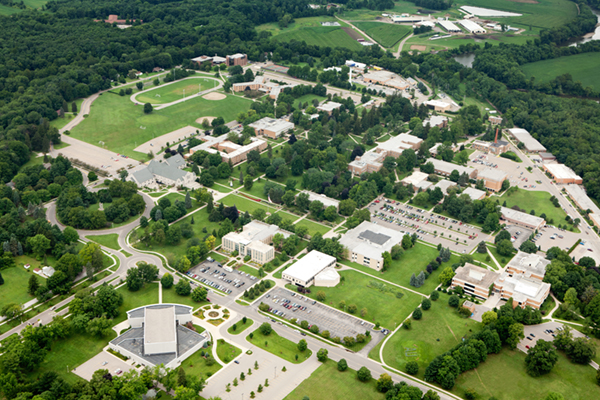
Andrews University is a Seventh-day Adventist institution in Berrien Springs, Michigan, that operates less like a typical liberal arts college and more like a global, faith-driven academic village. Its identity is fundamentally shaped by its religious mission, a strikingly international student body, and a pragmatic academic focus on health sciences, business, and education. The campus rhythm follows a conservative, residential lifestyle where faith, service, and a 'whole-person' approach are woven into everything from the dining hall to the chemistry lab.
Admission requirements
Test-optional — scores considered if submitted
Required
High school transcript
Grade point average
Letters of recommendation
TOEFL (non-native English)
Considered (not required)
Class rank
Test scores (SAT/ACT)
College-prep program
Demonstrated competencies
Source: IPEDS Admissions survey (2022) via Urban Institute. Covers formal factors only — it does not reflect essays, extracurriculars, or other holistic criteria.
More details
Undergrad enrollment
1,224
In-state tuition
$35,056
Out-of-state tuition
$35,056
Graduation Rate
72%
Student-Faculty Ratio
10:1
Median Earnings (10yr)
$53,187
Students Receiving Aid
~99%
First-Year Retention Rate
84%
Outcomes & value
Outcomes & value
Median earnings (10 yr)
$53,187
Value (earnings ÷ net price)
4.2×
Median debt at graduation
$26,000
Graduation rate
72%
First-year retention
83%
Reducing loan balance (3 yr)
50%
Pell (lower-income) share
25%
First-gen share (among federal-aid recipients)
17%
Financial health
2.6 / 3.0Meets the federal financial-responsibility standard
U.S. Dept. of Education Financial Responsibility Composite Score (FY2022-23). Scale −1.0 to 3.0; ≥1.5 meets the standard. Reported for private nonprofit & for-profit institutions only — public universities are state-backed and not scored, so this is a stability signal, not a ranking.
Top-earning majors
Median earnings by field of study (highest credential), ~2 years after completion.
Engineering, General$55,964
Registered Nursing, Nursing Administration, Nursing Research and Clinical Nursing$52,107
Teacher Education and Professional Development, Specific Subject Areas$33,993
Source: U.S. Dept. of Education College Scorecard (field-of-study earnings). Figures cover graduates who received federal aid and lag ~2 years; not all programs report data.
On-campus criminal offenses classed as violent (murder/non-negligent manslaughter, rape, robbery, aggravated assault) for the most recent reported year. Source: U.S. Dept. of Education Campus Safety and Security (Clery Act). Counts reflect what’s reported to the school, and urban campuses often report more partly due to non-student incidents nearby — read alongside campus size and setting, not as a standalone safety verdict.
Climate
Pleasant days / yr
91
Summer high
81°F
Winter low
24°F
Annual rain
45.6"
Annual snow
38.7"
Natural-hazard risk
Relatively Moderate
Pleasant days counts days per year with a mean temperature of 55–75°F, a high at or below 90°F, a low at or above 45°F, and little precipitation — a transparent comfort measure, not a weighting we invented. Computed from Open-Meteo ERA5 daily history (2019–2023). Natural-hazard risk is the county’s composite rating from the FEMA National Risk Index.
Deep dive — research, future-scholar output & economic mobility▾
Research output
Institutional h-index
221
Scholarly works
11,154
Institutional research volume and impact from OpenAlex. The h-index reflects large research universities and will be low for teaching-focused liberal-arts colleges — not a measure of undergraduate quality.
Share of this school’s graduates who go on to earn research doctorates (2010–20), by national rank and per-capita yield (NSF institutional-yield ratio). A signal of a research-oriented student culture — not a causal promise, since it partly reflects who enrolls. Only top producers appear. Source: NSF NCSES, Baccalaureate Origins of U.S. Research Doctorate Recipients.
Economic mobility
Mobility rate
2.4%
Bottom → top quintile
Quick answers
What is the acceptance rate at Andrews University?
Andrews University's acceptance rate is approximately 82% (Berrien Springs, MI), based on the most recent figures we compiled from public and primary sources.
What SAT score do you need for Andrews University?
Admitted students at Andrews University typically score 990–1290 on the SAT (the middle-50% range). Scores outside this band are still admitted, especially with strong applications.
How much does Andrews University cost?
At Andrews University, the average net price (after aid) is about $12,547 per year. Actual cost varies with financial aid and residency.
How many undergraduates attend Andrews University?
Andrews University enrolls approximately 1,224 undergraduate students.
Where is Andrews University located?
Andrews University is located in Berrien Springs, MI.
Admissions
Andrews is a broadly accessible university with an admissions process that emphasizes academic readiness within its faith-based context. The university is less selective, with an of 82% (the canonical figure that overrides other sources). For the fall of 2025, it saw significant growth, with a 13% enrollment increase in its freshmen class.
Admitted students typically present solid academic credentials. The middle 50% SAT range is 990–1290, and the middle 50% ACT range is 20–28. The university sets clear minimums for regular admission: ACT scores of 20 and above in all skills, or SAT scores of 530 in Evidence-Based Reading & Writing and 520 in Math. While not hyper-competitive, the process is structured, with an average admitted student GPA around 3.64.
The admissions office does not appear to prioritize 'demonstrated interest' in the way elite private colleges do; the is the authoritative source for such factor ratings, though specific CDS data for Andrews was not provided in the snippets. The rate—the percentage of admitted students who enroll—is described as low, with one source noting 7% of those accepted ended up enrolling at a similarly named institution (though this may refer to 'St. Andrews University,' a different school).
Earnings = median of students working ~10 years after entry; debt = median of graduates. Value divides 10-yr earnings by one year’s net price — read it as earnings per dollar of annual cost, not a full lifetime ROI; it favors lower-cost schools. Source: U.S. Dept. of Education College Scorecard. Figures lag ~2 years and reflect all students, not your intended major.
26%
From bottom quintile
9%
Mobility rate = the share of students who both start in the bottom household-income quintile and reach the top quintile; bottom → top is that chance conditional on starting at the bottom. Source: Opportunity Insights Mobility Report Cards (Chetty, Friedman, Saez, Turner & Yagan). Reflects 1980–82 birth cohorts, so it’s directional, not current.
Academics at Andrews are defined by a 10:1 student-faculty ratio and a curriculum that balances liberal arts with strong professional programs. The university has identified several of its programs as among the best in the nation, including biology, business, computer science, history, music, and speech-language pathology. This aligns with popular majors: Psychology, Liberal Arts and Humanities, Speech Language Pathology, and Biology are among the most graduated.
The undergraduate catalog reveals a practical bent, with majors like Business Administration (BS), Finance (BBA), International Business (BBA), Management (BBA), Marketing (BBA), and Elementary Education. Rigor varies by department; in a student survey, chemical engineering was cited as the hardest major due to 'super intense classes and labs.'
The intellectual environment is described as providing an excellent education in an exciting multicultural environment. A high first-year retention rate of 84% suggests students are generally satisfied with their initial academic experience. The approach is holistic, aiming to integrate faith with learning across all disciplines.
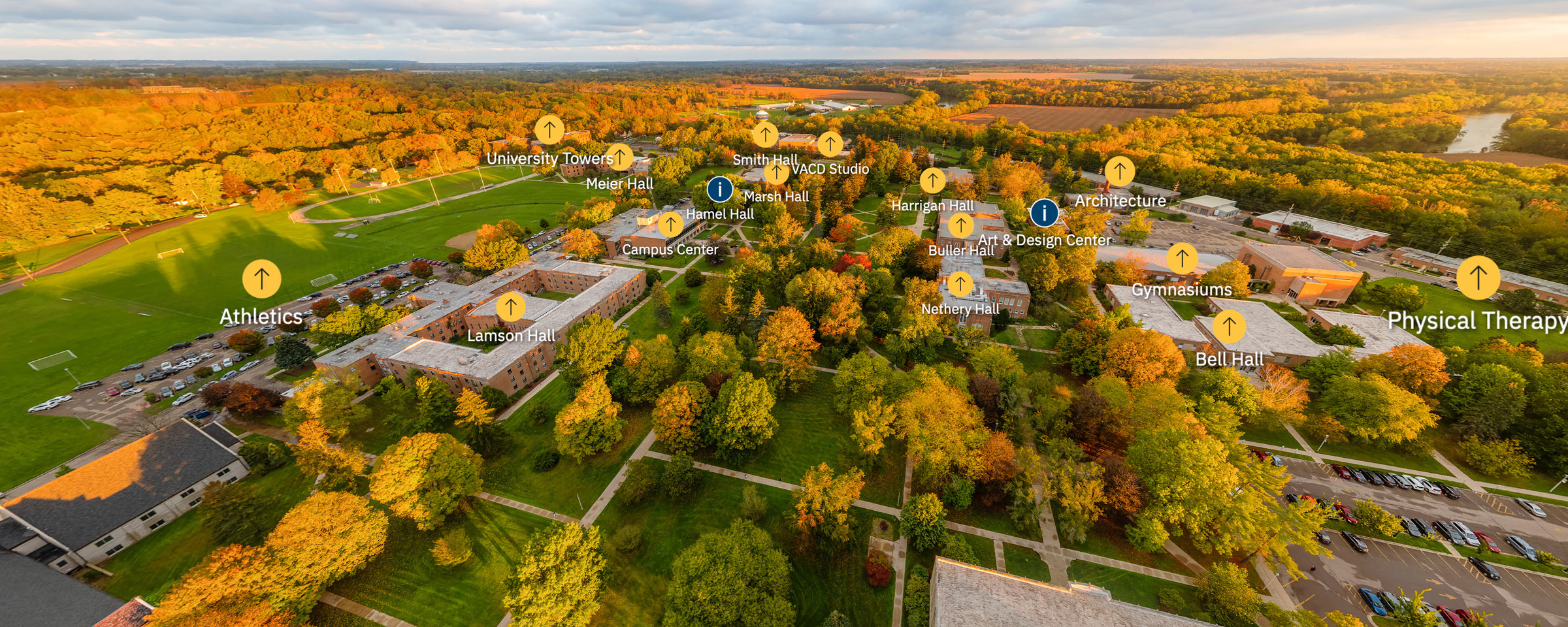
Life at Andrews is intentionally structured around four hallmarks: A Faith-Based University, A Healthy Lifestyle, A Residential Campus, and A Whole-Person Approach. This isn't just marketing; it's the operational blueprint. With a total undergraduate enrollment of 1,312 students (fall 2023), split nearly evenly between genders (48.6% male, 51.4% female), the campus is small and residential.
The culture is explicitly rooted in the character of God and the example of Christ, guided by an Office of Mission and Culture. Campus ministries and faith-based activities are central, aiming to create a community where faith, learning, and belonging come together. Social life is shaped by this ethos, featuring many cultural clubs, events like international food fairs, and activities that encourage mutual respect.
The university promotes a healthy lifestyle and provides opportunities for students to advance their knowledge in foreign languages and experience other cultures. It's a tight-knit environment where academic rigor is expected to coexist with social events and spiritual growth, all on a campus that feels more like a self-contained community than a party school.
Andrews produces solid, if not elite, outcomes for its graduates. The graduation rate is 72% (the canonical figure), though other sources report rates of 66% and 67%, placing it in the top 35% of institutions evaluated by one outlet. There's a gender gap, with men graduating at a lower rate of 57%. Specific programs can excel; the Teacher Preparation Program (TPP) reported a graduation rate of 93.3% for its 2017-18 cohort.
Financial returns are modest. The median earnings for recent graduates is reported as $47,414, with 68% earning more than a high school graduate. The canonical figure for median earnings 10 years after entry is $53,187.
A notable internal challenge is faculty compensation. A university report acknowledged Andrews ranks at the bottom of national universities for faculty pay, placing 386 of 389 (bottom 1st percentile) in 2020. This could impact resource allocation and long-term academic competitiveness, even as student outcomes remain reasonably strong.
Andrews is aggressive with financial aid, making its sticker price more accessible. Nearly 100% of Andrews students receive scholarships or financial aid, with 99% of full-time beginning undergraduates receiving grant/scholarship aid. The average aid package is around $21,780.
This support brings the cost down significantly. The average net price after aid is $12,547 (the canonical figure). Other sources cite of $24,874 and $43,226, indicating variation based on methodology and student circumstances. The university's own estimator mentions a net price of $48,806, highlighting the importance of using the official calculator for a personal estimate.
Merit scholarships for freshmen range from $8,000 to $14,000, with additional opportunities like a $750 Leadership Scholarship. The university offers federal loans as part of aid packages, which students must accept or decline. There is no indication in the provided sources that Andrews has a 'no-loan' policy that meets 100% of need without loans; such policies are described in the sources but not attributed to Andrews.
Andrews University stands out for its unwavering commitment to a specific identity. It is not a school trying to be everything to everyone. Its distinctiveness lies in:
A Deeply Integrated Faith-Based Mission: This isn't a vague historical footnote; it's the active core of campus culture, learning, and student life, guided by a dedicated Office of Mission and Culture.
A Genuinely Global and Residential Community: With a major emphasis on multiculturalism and a residential campus hallmark, it fosters a close-knit, international village atmosphere rare for a school of its size in the Midwest.
A Practical, Outcomes-Oriented Education: It couples its liberal arts foundation with nationally recognized programs in high-demand fields like health sciences (speech pathology), business, and education, leading to decent graduation rates and earning outcomes.
High Access with High Aid: Its accessible admissions rate is paired with a remarkable financial aid reach, ensuring almost every student receives support, which translates to a manageable average .
The trade-off is a very specific lifestyle and set of values. It's ideal for students seeking a supportive, faith-centered environment with a practical career path, but it may feel insular for those looking for a secular or more socially expansive college experience. Its internal challenge of low faculty compensation is a notable asterisk on its otherwise cohesive model.
Andrews University seal · sourceLife :: Andrews University · source360 Virtual Tour of Andrews - Andrews Agenda :: Andrews University · sourceAndrews University - Wikipedia · source