Admit rate has ranged 70%–90% over the last 5 years — notably volatile, though the latest figure above (50%) falls outside that window. Source: IPEDS via Urban Institute.
Acceptance & SAT from Common Data Set / IPEDS; net price, earnings & graduation from the U.S. Dept. of Education College Scorecard. Figures lag ~1–2 years — verify with the school.
Anna Maria College is a small, Catholic liberal arts school in Paxton, Massachusetts, that has carved out a distinctive niche in community-oriented professional education. Its identity is defined by a practical, hands-on focus—particularly in fields like fire science, criminal justice, and nursing—serving a student body that is predominantly local and often first-generation. While its graduation rate lags, the college reports strong post-graduate employment outcomes, positioning itself as a direct pipeline to stable, service-focused careers.
Admission requirements
Test-blind — scores not considered
Required
High school transcript
Grade point average
College-prep program
Considered (not required)
Class rank
Letters of recommendation
Demonstrated competencies
TOEFL (non-native English)
Source: IPEDS Admissions survey (2022) via Urban Institute. Covers formal factors only — it does not reflect essays, extracurriculars, or other holistic criteria.
More details
Undergrad enrollment
906
In-state tuition
$44,571
Out-of-state tuition
$44,571
Graduation Rate
46%
Most Popular Major
Fire Science/Fire-fighting
Student-Faculty Ratio
13:1
Median Earnings (10yr)
$46,651
Financial Aid Recipients
100% of first-year students
First-Year Retention Rate
66%
Class of 2025 Employment Rate
95.2%
Outcomes & value
Outcomes & value
Median earnings (10 yr)
$46,651
Value (earnings ÷ net price)
1.6×
Median debt at graduation
$25,000
Graduation rate
46%
First-year retention
60%
Reducing loan balance (3 yr)
58%
Pell (lower-income) share
34%
First-gen share (among federal-aid recipients)
40%
Financial health
2.1 / 3.0Meets the federal financial-responsibility standard
U.S. Dept. of Education Financial Responsibility Composite Score (FY2022-23). Scale −1.0 to 3.0; ≥1.5 meets the standard. Reported for private nonprofit & for-profit institutions only — public universities are state-backed and not scored, so this is a stability signal, not a ranking.
Top-earning majors
Median earnings by field of study (highest credential), ~2 years after completion.
Fire Protection$84,653
Registered Nursing, Nursing Administration, Nursing Research and Clinical Nursing$72,413
Criminal Justice and Corrections$44,971
Source: U.S. Dept. of Education College Scorecard (field-of-study earnings). Figures cover graduates who received federal aid and lag ~2 years; not all programs report data.
On-campus criminal offenses classed as violent (murder/non-negligent manslaughter, rape, robbery, aggravated assault) for the most recent reported year. Source: U.S. Dept. of Education Campus Safety and Security (Clery Act). Counts reflect what’s reported to the school, and urban campuses often report more partly due to non-student incidents nearby — read alongside campus size and setting, not as a standalone safety verdict.
Climate
Pleasant days / yr
87
Summer high
79°F
Winter low
22°F
Annual rain
51.3"
Annual snow
48.6"
Natural-hazard risk
Relatively Moderate
Pleasant days counts days per year with a mean temperature of 55–75°F, a high at or below 90°F, a low at or above 45°F, and little precipitation — a transparent comfort measure, not a weighting we invented. Computed from Open-Meteo ERA5 daily history (2019–2023). Natural-hazard risk is the county’s composite rating from the FEMA National Risk Index.
Deep dive — research, future-scholar output & economic mobility▾
Research output
Institutional h-index
18
Scholarly works
179
Institutional research volume and impact from OpenAlex. The h-index reflects large research universities and will be low for teaching-focused liberal-arts colleges — not a measure of undergraduate quality.
Economic mobility
Mobility rate
1.7%
Bottom → top quintile
34%
From bottom quintile
5%
Mobility rate = the share of students who both start in the bottom household-income quintile and reach the top quintile; bottom → top is that chance conditional on starting at the bottom. Source: Opportunity Insights Mobility Report Cards (Chetty, Friedman, Saez, Turner & Yagan). Reflects 1980–82 birth cohorts, so it’s directional, not current.
Quick answers
What is the acceptance rate at Anna Maria College?
Anna Maria College's acceptance rate is approximately 50% (Paxton, MA), based on the most recent figures we compiled from public and primary sources.
How much does Anna Maria College cost?
At Anna Maria College, the average net price (after aid) is about $28,333 per year. Actual cost varies with financial aid and residency.
How many undergraduates attend Anna Maria College?
Anna Maria College enrolls approximately 906 undergraduate students.
Where is Anna Maria College located?
Anna Maria College is located in Paxton, MA.
Admissions
Anna Maria's admissions process is moderately selective, with an that fluctuates in reported sources but is officially set at 50%. The college received 6,506 applications for a recent class, admitting 3,263, with 916 ultimately enrolling, indicating a rate of roughly 28%. The process is test-flexible; for several years, the college considered eliminating SAT/ACT submission requirements altogether, though they remain an option. Academic factors are paramount in selection. The indicates the basis for selection includes the rigor of secondary school record, class rank, GPA, and standardized test scores (where submitted). Non-academic factors like the application essay, recommendations, extracurricular activities, and character/personal qualities are also considered. Notably, only a small fraction of the admitted class ranks in the top academic tiers: 7% were in the top tenth of their high school class, 16% in the top quarter, and 46% in the top half. There is no mention of an Early Decision program or a policy regarding demonstrated interest in the provided sources, suggesting a standard rolling or regular decision process.
Earnings = median of students working ~10 years after entry; debt = median of graduates. Value divides 10-yr earnings by one year’s net price — read it as earnings per dollar of annual cost, not a full lifetime ROI; it favors lower-cost schools. Source: U.S. Dept. of Education College Scorecard. Figures lag ~2 years and reflect all students, not your intended major.
The academic mission is explicitly geared toward "exceptional professional programs at all degree levels, especially in community-oriented professions." This is not a school for abstract theory; its YouTube overview states plainly that "all of our majors are mostly community service and public oriented programs." The most popular major is Fire Science/Fire-fighting, with about 64 degrees granted annually. Other strong suits are in the constellation of public service: criminal justice, nursing, social work, and education. The college promotes 5th Year Master's Programs allowing students to earn both a bachelor's and a master's degree in five years, a practical accelerant for career entry. With a student-faculty ratio of 13:1, classes are small, though the average freshman retention rate is 66%, a indicator of student satisfaction that sits below national averages. The curriculum is built around the idea of "propelling our students to lives of civic, spiritual, and professional engagement."
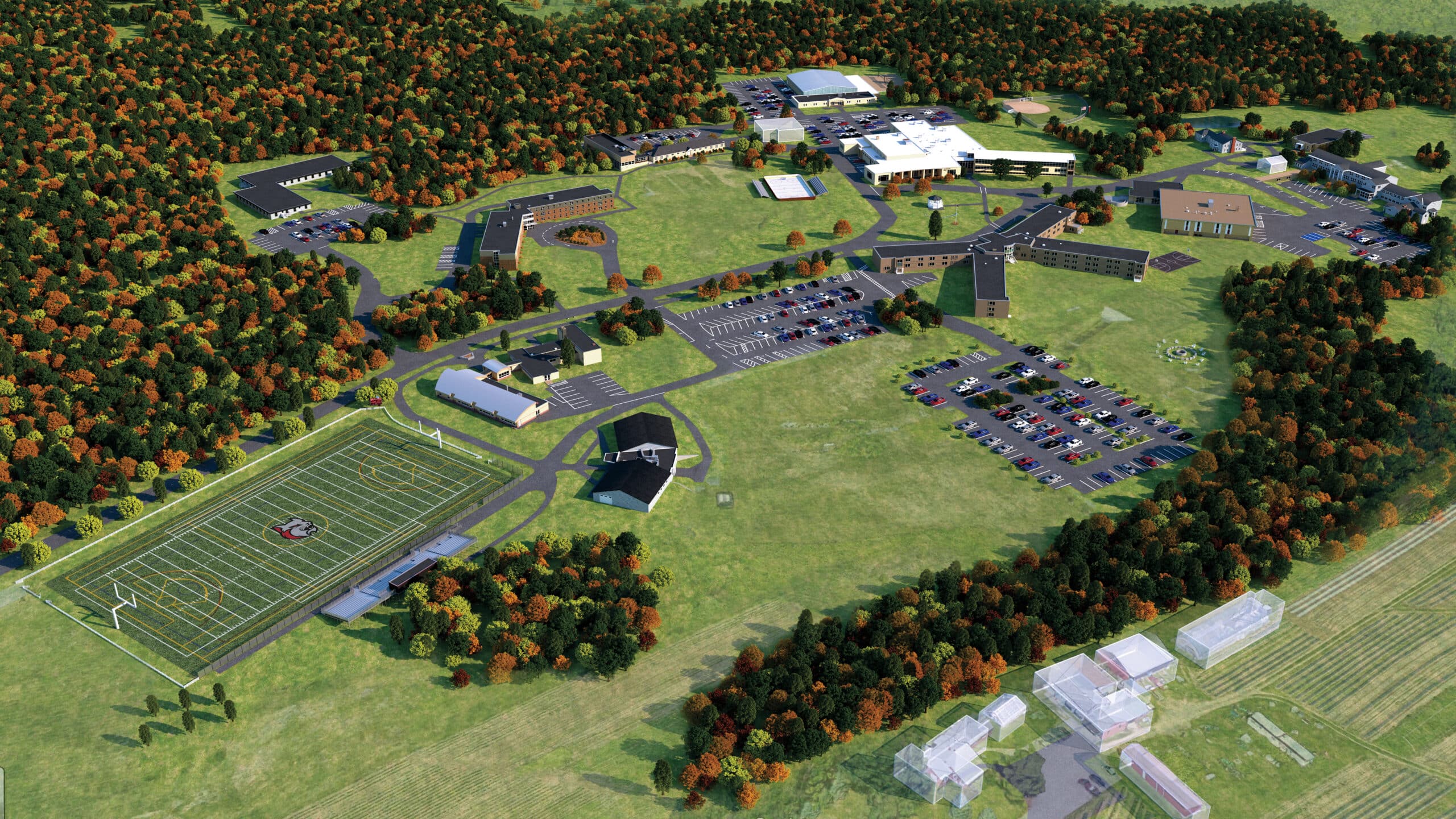
Life on the 192-acre Paxton campus is defined by its small scale and close-knit, residential feel. Total undergraduate enrollment was 995 in fall 2023, with a notable gender distribution of 61.9% male and 38.1% female students—a skew likely influenced by the dominance of fields like fire science and criminal justice. Students describe a community where "personal relationships between students" are fostered by the small size. The Office of Student Activities is committed to enhancing the experience outside the classroom, offering a range of clubs and activities. Campus Ministry is a dynamic presence, reflecting the college's Catholic heritage, and the institution aims to create a campus climate "based on respect, where our differences are acknowledged, not neglected." It's a commuter-friendly campus but with active residence life, positioning itself as a cohesive community for those who live on and off campus.
Outcomes at Anna Maria present a striking contrast: a graduation rate that struggles but employment results that shine. The six-year graduation rate is officially 46%. The college itself has published context, noting that for students entering in fall 2014, the graduation rate was 90% at the most selective institutions compared to 28% at the least selective, situating its own performance in between. However, for those who do persist, career placement is robust. The Class of 2025 achieved a 95.2% employment placement rate, a 2.3 percentage point increase from the previous year. This suggests the college's career services and professional network are effective. The median earnings 10 years after entry are $46,651, a figure that reflects solid returns for graduates entering public service and safety fields.
Affordability is a stated pillar of Anna Maria's mission, with the college asserting that 100% of its students receive financial aid, aiming to keep its private tuition "comparable to a state college." The average after aid is $28,333. The financial aid office provides a Net Price Calculator for planning and states that 100% of full-time, first-year undergraduates received grant or scholarship aid. Need-based federal loans are part of the aid package; freshmen demonstrating need may receive up to $3,500 in subsidized loans per year, with amounts increasing for upperclassmen. There is no indication in the provided sources of a "no-loan" policy or a commitment to meet 100% of demonstrated financial need solely with grants. The aid philosophy appears to be a combination of institutional scholarships and federal loans to bridge the gap, making attendance possible for many, though not debt-free.
Anna Maria College stands out for its unapologetic, practical focus on training students for specific, in-demand community professions. It doesn't try to be a miniature Ivy; it aims to be a reliable feeder into fire departments, police forces, hospitals, and schools. This mission creates a distinct campus culture—more vocational and hands-on than a traditional liberal arts college, yet grounded in a Catholic, service-oriented framework. The high employment rate for graduates, even alongside a lower graduation rate, tells a story of a college that successfully connects its persisting students to careers. Its small size and 13:1 student-faculty ratio mean students likely get direct access to instructors who are practitioners in their fields. For a student certain about a career in public service or safety and seeking a supportive, close-knit environment, Anna Maria offers a targeted and potentially effective path, albeit one that requires careful financial planning and academic persistence to navigate successfully.
Anna Maria College seal · sourceDirections - Anna Maria College · sourceAnna Maria College · sourceAnna Maria College - Profile, Rankings and Data | US News Best Colleges · source