Loading…
← All schools
Arizona College of Nursing-Aurora
Aurora, COprivate forprofitarizonacollege.edu
Acceptance
100%
Avg net price
$37,153
Earnings (10 yr)
$34,657
Acceptance & SAT from Common Data Set / IPEDS; net price, earnings & graduation from the U.S. Dept. of Education College Scorecard. Figures lag ~1–2 years — verify with the school.
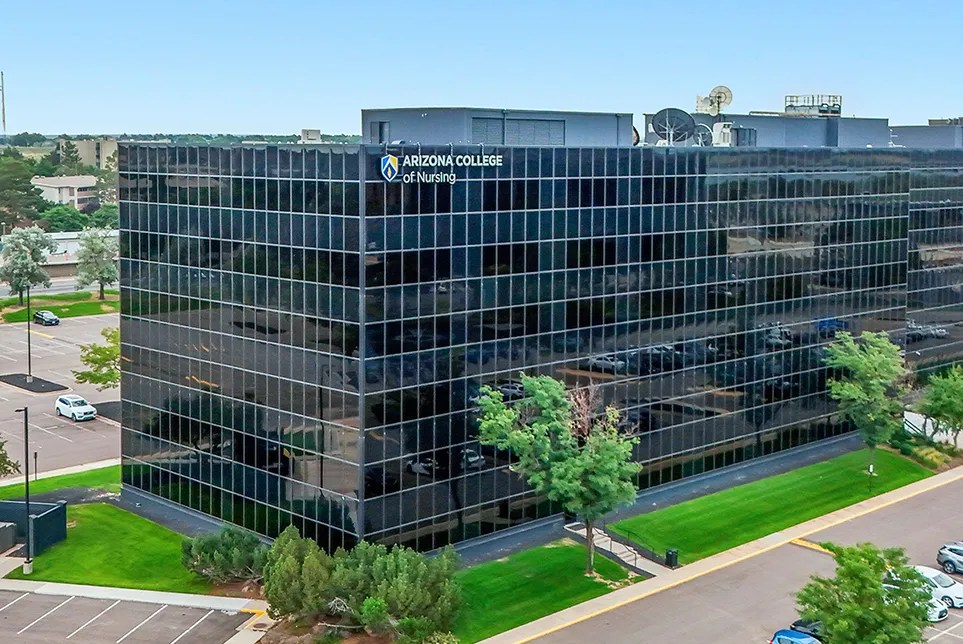
Arizona College of Nursing-Aurora is a single-purpose, career-focused institution with a straightforward proposition: if you meet the baseline academic criteria, you're in. This is not a selective liberal arts college; it's a direct pipeline into nursing, offering a three-year BSN program through a blend of classroom instruction, simulation labs, and clinical rotations. The environment is described as a 'vibrant and uplifting community,' but the experience is intensely professional, designed for students who know exactly what they want to do and want to start doing it immediately.
More details
- Undergrad enrollment
- 336
- In-state tuition
- $24,653
- Out-of-state tuition
- $24,653
- Program
- 3-Year BSN
- No-Loan Policy
- Not stated in sources
- Meets Full Need
- Not stated in sources
- First-Year Retention
- Not stated in sources
- Median Earnings (10yr)
- $34,657
Outcomes & value
Outcomes & value
- Median earnings (10 yr)
- $34,657
- Value (earnings ÷ net price)
- 0.9×
- Median debt at graduation
- $9,500
- First-year retention
- 46%
- Reducing loan balance (3 yr)
- 30%
- Pell (lower-income) share
- 63%
- First-gen share (among federal-aid recipients)
- 54%
Earnings = median of students working ~10 years after entry; debt = median of graduates. Value divides 10-yr earnings by one year’s net price — read it as earnings per dollar of annual cost, not a full lifetime ROI; it favors lower-cost schools. Source: U.S. Dept. of Education College Scorecard. Figures lag ~2 years and reflect all students, not your intended major.
Campus & location
Campus safety
- On-campus violent crimes (2024)
- 0
On-campus criminal offenses classed as violent (murder/non-negligent manslaughter, rape, robbery, aggravated assault) for the most recent reported year. Source: U.S. Dept. of Education Campus Safety and Security (Clery Act). Counts reflect what’s reported to the school, and urban campuses often report more partly due to non-student incidents nearby — read alongside campus size and setting, not as a standalone safety verdict.
Climate
- Pleasant days / yr
- 76
- Summer high
- 86°F
- Winter low
- 19°F
- Annual rain
- 19"
- Annual snow
- 45.1"
- Natural-hazard risk
- Relatively Moderate
Pleasant days counts days per year with a mean temperature of 55–75°F, a high at or below 90°F, a low at or above 45°F, and little precipitation — a transparent comfort measure, not a weighting we invented. Computed from Open-Meteo ERA5 daily history (2019–2023). Natural-hazard risk is the county’s composite rating from the FEMA National Risk Index.
Quick answers
- What is the acceptance rate at Arizona College of Nursing-Aurora?
- Arizona College of Nursing-Aurora's acceptance rate is approximately 100% (Aurora, CO), based on the most recent figures we compiled from public and primary sources.
- How much does Arizona College of Nursing-Aurora cost?
- At Arizona College of Nursing-Aurora, the average net price (after aid) is about $37,153 per year. Actual cost varies with financial aid and residency.
- How many undergraduates attend Arizona College of Nursing-Aurora?
- Arizona College of Nursing-Aurora enrolls approximately 336 undergraduate students.
- Where is Arizona College of Nursing-Aurora located?
- Arizona College of Nursing-Aurora is located in Aurora, CO.
Admissions
Admissions at Arizona College of Nursing-Aurora operates on an open-access model, with a 100% for applicants who meet the program's minimum requirements. The process is not about competitive selection but about verifying readiness. The core criteria are non-negotiable: a cumulative GPA of 2.75 from high school or prior college coursework and a weighted composite score of 60% on the HESI A2 Admissions Exam. There is no mention of SAT or ACT requirements in the provided sources for this campus, and the 100% acceptance rate indicates the primary barrier is meeting these two benchmarks, not outperforming other applicants. For those who are admitted, the rate—the percentage who enroll—is reported to be 53.68%.
Academics
The academic offering is singular and intensive: a three-year Bachelor of Science in Nursing (BSN) program. The curriculum is structured to move students from foundational concepts to advanced clinical skills, employing a three-pronged approach: classroom teaching, hands-on simulations in labs, and clinical rotations in real-world healthcare environments. The program is explicitly designed to be a 'clear path' to the degree, with an accelerated three-year timeline (or less for students with qualifying transfer credits). Discussions among prospective students on forums like Reddit highlight AZCN as an alternative for those struggling to gain entry into more competitive, traditional university nursing programs, underscoring its role as a focused, accessible route into the profession.
Compare Arizona College of Nursing-Aurora
See colleges similar to Arizona College of Nursing-Aurora →Sources
- Common Data Set - University Analytics and Institutional Research
- [PDF] 2024-2025 Common Data Set - Sarah Lawrence College
- Common Data Set: Home
- Common Data Set - GradGPT
- Arizona College of Nursing-Aurora - Ibex Insights
- Common Data Set Repository - College Transitions
- Arizona College of Nursing - Aurora Admissions & Acceptance - Niche
- Nursing School Admission Requirements | AZCN
- Arizona College of Nursing-Aurora Acceptance Rate and SAT/ACT ...
- Arizona College of Nursing--Las Vegas Admissions - USNews.com
- Arizona College of Nursing-Aurora | Stats, Admissions, Tuition & more