Loading…
← All schools
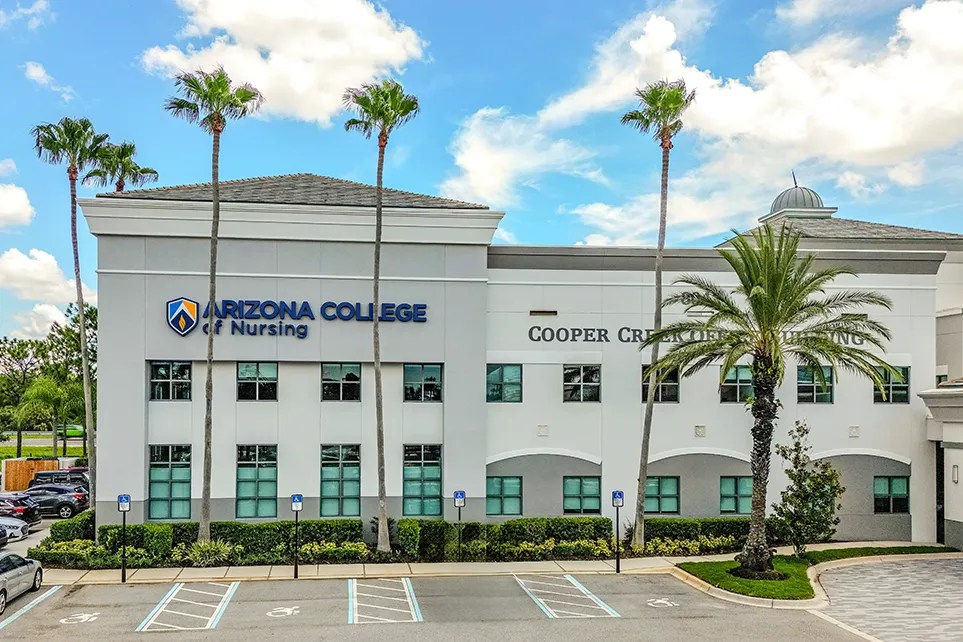
Arizona College of Nursing-Fort Lauderdale
Fort Lauderdale, FLprivate forprofitarizonacollege.edu
Arizona College of Nursing-Fort Lauderdale is a single-purpose, for-profit institution laser-focused on pumping out registered nurses via an accelerated three-year BSN program. It operates with the efficiency of a vocational pipeline, boasting a 100% acceptance rate and a streamlined admissions process with no waitlist—a stark contrast to the fiercely competitive, holistic admissions of traditional universities. The campus vibe is utilitarian and career-centric, offering a 'vibrant and uplifting community' for students whose sole aim is to secure a nursing license and enter the workforce as quickly as possible.
Admission requirements
Test-blind — scores not considered
Required
- High school transcript
- Grade point average
Source: IPEDS Admissions survey (2022) via Urban Institute. Covers formal factors only — it does not reflect essays, extracurriculars, or other holistic criteria.
More details
- Undergrad enrollment
- 428
- In-state tuition
- $25,973
- Out-of-state tuition
- $25,973
- No-Loan Policy
- No
- Application Fee
- $49
- Meets Full Need
- No
- Primary Program
- 3-Year BSN
- Demonstrated Interest
- Not considered (implied by open admission)
- Median Earnings (10yr)
- $34,657
Outcomes & value
Outcomes & value
- Median earnings (10 yr)
- $34,657
- Median debt at graduation
- $9,500
- Reducing loan balance (3 yr)
- 30%
- Pell (lower-income) share
- 67%
- First-gen share (among federal-aid recipients)
- 54%
Earnings = median of students working ~10 years after entry; debt = median of graduates. Value divides 10-yr earnings by one year’s net price — read it as earnings per dollar of annual cost, not a full lifetime ROI; it favors lower-cost schools. Source: U.S. Dept. of Education College Scorecard. Figures lag ~2 years and reflect all students, not your intended major.
Campus & location
Campus safety
- On-campus violent crimes (2024)
- 0
On-campus criminal offenses classed as violent (murder/non-negligent manslaughter, rape, robbery, aggravated assault) for the most recent reported year. Source: U.S. Dept. of Education Campus Safety and Security (Clery Act). Counts reflect what’s reported to the school, and urban campuses often report more partly due to non-student incidents nearby — read alongside campus size and setting, not as a standalone safety verdict.
Climate
- Pleasant days / yr
- 94
- Summer high
- 88°F
- Winter low
- 64°F
- Annual rain
- 55.2"
- Natural-hazard risk
- Relatively High
Pleasant days counts days per year with a mean temperature of 55–75°F, a high at or below 90°F, a low at or above 45°F, and little precipitation — a transparent comfort measure, not a weighting we invented. Computed from Open-Meteo ERA5 daily history (2019–2023). Natural-hazard risk is the county’s composite rating from the FEMA National Risk Index.
Quick answers
- How many undergraduates attend Arizona College of Nursing-Fort Lauderdale?
- Arizona College of Nursing-Fort Lauderdale enrolls approximately 428 undergraduate students.
- Where is Arizona College of Nursing-Fort Lauderdale located?
- Arizona College of Nursing-Fort Lauderdale is located in Fort Lauderdale, FL.
Admissions
This is not a selective institution in any traditional sense. Arizona College of Nursing-Fort Lauderdale maintains an open enrollment policy, with multiple sources reporting a 100% acceptance rate. The admissions process is described as 'streamlined' with no waitlist. The primary academic hurdles are clear and minimal: applicants need a high school or college cumulative GPA of 2.75 and must achieve a weighted composite score of 60% on the HESI A2 Admissions Exam. There is no mention of SAT/ACT requirements, and the school's policy aligns with an open admission model where virtually all secondary school graduates or students with GEDs are admitted. The application fee is $49. Given the open enrollment nature, concepts like 'Early Decision' or 'Demonstrated Interest'—common in competitive college admissions—are irrelevant here; the school does not engage in that level of applicant evaluation.
Compare Arizona College of Nursing-Fort Lauderdale
vs Livingstone Collegevs Dillard Universityvs University of Science and Arts of Oklahomavs Huston-Tillotson University
See colleges similar to Arizona College of Nursing-Fort Lauderdale →Sources
- Common Data Set - University Analytics and Institutional Research
- How To Use a Common Data Set - The College Solution
- Arizona College of Nursing-Fort Lauderdale - Sallie
- [PDF] Common Data Set 2022-2023
- What are the common data points for each college? - Facebook
- Common Data Set - GradGPT
- Arizona College of Nursing - Fort Lauderdale - Niche
- Nursing School Admission Requirements | AZCN
- Arizona College of Nursing-Fort Lauderdale - MeetYourClass
- Arizona College of Nursing-Fort Lauderdale - Varsity Tutors