Loading…
← All schools
Arizona School of Integrative Studies
Mesa, AZprivate forprofitasismassage.edu
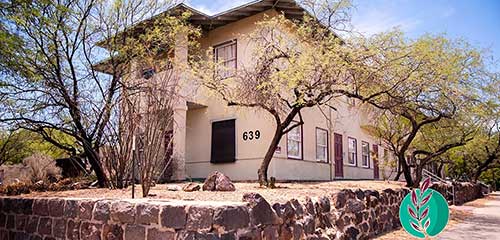
The Arizona School of Integrative Studies (ASIS Massage Education) is a singularly focused, for-profit career college that operates on a different plane than the traditional liberal arts university. With four campuses across Arizona, its entire mission is to funnel students directly into the massage therapy profession through intensive, hands-on certificate programs. The vibe is pragmatic, urban, and welcoming, stripping away the frills of campus life for a straightforward trade education where the classroom is a professional clinic and success is measured in state licensure and entry-level earnings.
More details
- Undergrad enrollment
- 155
- Loan Recipients
- 75%
- Student-Faculty Ratio
- 17:1
- Federal Grant Recipients
- 67%
- Graduation Rate (Recent)
- 82%
- Earnings 1 Year After Graduation
- $19,282
- Earnings 5 Years After Graduation
- $22,762
Outcomes & value
Outcomes & value
- Median debt at graduation
- $8,444
- Pell (lower-income) share
- 46%
- First-gen share (among federal-aid recipients)
- 42%
Earnings = median of students working ~10 years after entry; debt = median of graduates. Value divides 10-yr earnings by one year’s net price — read it as earnings per dollar of annual cost, not a full lifetime ROI; it favors lower-cost schools. Source: U.S. Dept. of Education College Scorecard. Figures lag ~2 years and reflect all students, not your intended major.
Campus & location
Campus safety
- On-campus violent crimes (2024)
- 0
On-campus criminal offenses classed as violent (murder/non-negligent manslaughter, rape, robbery, aggravated assault) for the most recent reported year. Source: U.S. Dept. of Education Campus Safety and Security (Clery Act). Counts reflect what’s reported to the school, and urban campuses often report more partly due to non-student incidents nearby — read alongside campus size and setting, not as a standalone safety verdict.
Climate
- Pleasant days / yr
- 107
- Summer high
- 105°F
- Winter low
- 44°F
- Annual rain
- 12.7"
- Natural-hazard risk
- Very High
Pleasant days counts days per year with a mean temperature of 55–75°F, a high at or below 90°F, a low at or above 45°F, and little precipitation — a transparent comfort measure, not a weighting we invented. Computed from Open-Meteo ERA5 daily history (2019–2023). Natural-hazard risk is the county’s composite rating from the FEMA National Risk Index.
Quick answers
- How much does Arizona School of Integrative Studies cost?
- At Arizona School of Integrative Studies, the average net price (after aid) is about $16,104 per year. Actual cost varies with financial aid and residency.
- How many undergraduates attend Arizona School of Integrative Studies?
- Arizona School of Integrative Studies enrolls approximately 155 undergraduate students.
- Where is Arizona School of Integrative Studies located?
- Arizona School of Integrative Studies is located in Mesa, AZ.
Admissions
Admissions at ASIS is an open-door process, defined by accessibility rather than selectivity. The school reports a 100% , reflecting its mission as a career-focused institution that aims to provide vocational training to all applicants. The process does not hinge on standardized test scores; sources indicate that for similar institutions in Arizona, a very small percentage of incoming students (as low as 15-22%) even submit SAT or ACT scores, and those scores are not a primary factor for admission. The school's admissions philosophy appears centered on a candidate's desire to enter the massage therapy field, not on a competitive academic profile. There is no indication of an Early Decision or Early Action process, which aligns with its non-selective, rolling admissions model for certificate programs.
Academics
Academics are laser-focused on a single outcome: preparing students for a career as licensed massage therapists. The school offers certificate programs, not bachelor's degrees, with a curriculum that blends hands-on technical skill development with foundational knowledge in anatomy, physiology, and kinesiology. The program is explicitly designed to teach "valuable business, life, and communication skills which set you apart from other massage therapists." This practical, integrative approach mirrors broader trends in health education that emphasize "wellbeing through evidence-based, integrative methods," but here it is applied with direct vocational intent. The student-faculty ratio is reported as 17:1, suggesting a cohort-style learning environment. The school operates four campuses across Arizona to deliver this focused training.
Compare Arizona School of Integrative Studies
vs Oregon State University-Cascades Campusvs New Mexico Institute of Mining and Technologyvs The College of Idahovs University of Alaska Southeast
See colleges similar to Arizona School of Integrative Studies →Sources
- Common Data Set 2022-2023
- Common Data Set: Home
- Common data set - Institutional Analysis
- Common Data Set Explorer 2026: Compare 100 Colleges
- Arizona School of Integrative Studies | College Scorecard
- Common Data Set Repository
- Arizona School of Integrative Studies
- Arizona School of Integrative Studies - Sallie
- New Student Admission Scores
- Arizona State University Admissions Stats
- Arizona School of Integrative Studies Rankings and Evaluation