Admit rate has ranged 27%–100% over the last 5 years — notably volatile. Source: IPEDS via Urban Institute.
Acceptance & SAT from Common Data Set / IPEDS; net price, earnings & graduation from the U.S. Dept. of Education College Scorecard. Figures lag ~1–2 years — verify with the school.
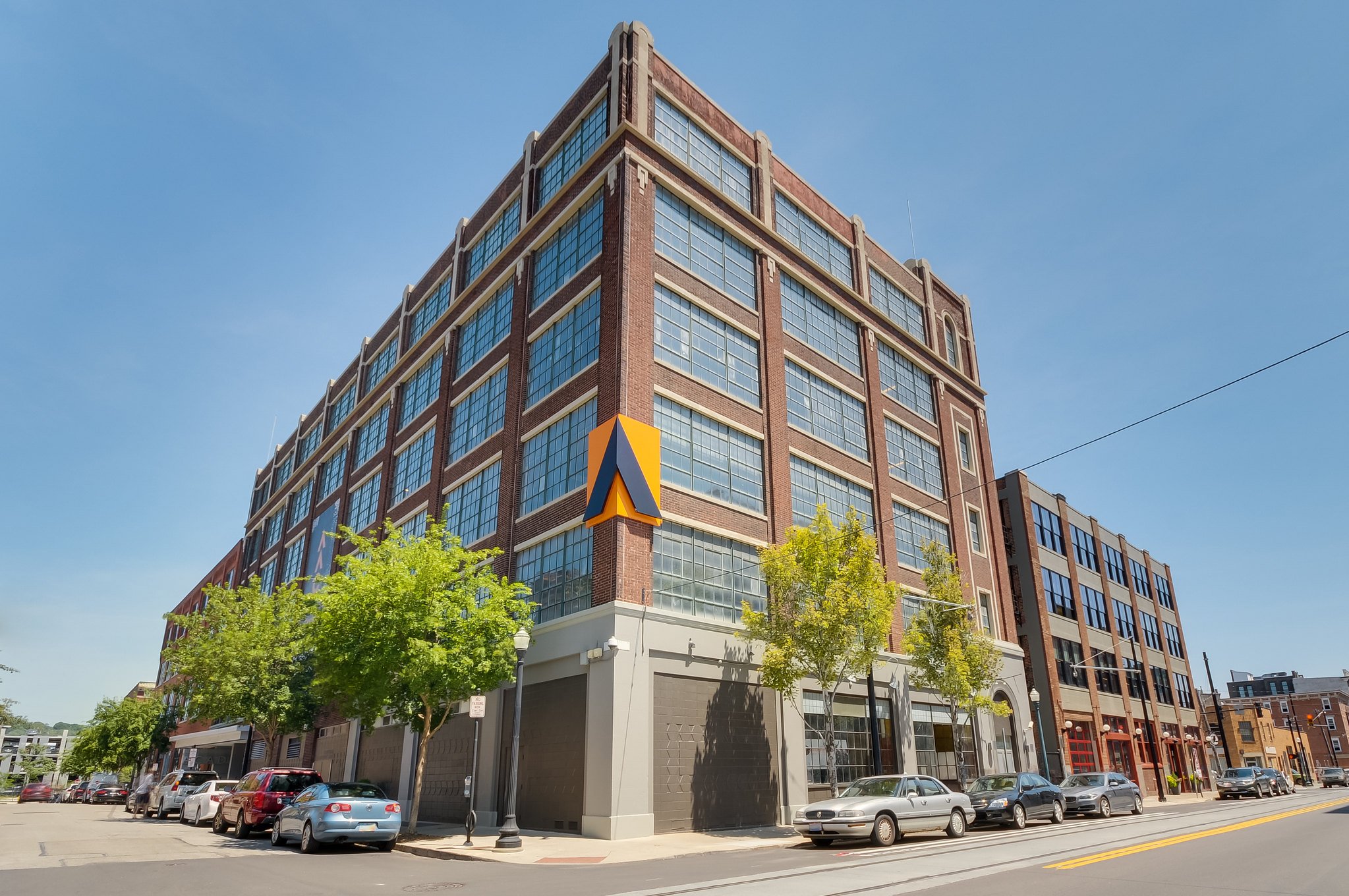
The Art Academy of Cincinnati is a fiercely independent, small-scale college of art and design that has been a fixture of the city's cultural scene since 1869. It’s a place for students who want to be artists, not just study art, offering an immersive, studio-centric education in disciplines like illustration, painting, and digital arts. The vibe is less about ivy-covered quads and more about raw, creative energy, with a focus on turning out 'radical, forward-thinking visual artists'—a mission that comes with the financial and academic realities of a highly specialized, private art school.
Admission requirements
Test-blind — scores not considered
Required
High school transcript
Grade point average
Demonstrated competencies
TOEFL (non-native English)
Source: IPEDS Admissions survey (2022) via Urban Institute. Covers formal factors only — it does not reflect essays, extracurriculars, or other holistic criteria.
More details
Undergrad enrollment
205
In-state tuition
$41,375
Out-of-state tuition
$41,375
No-Loan Policy
No
Graduation Rate
41%
Meets Full Need
No
Early Decision Plan
Not offered
Housing (On-Campus)
37%
Application Deadline
May 1
Housing (Off-Campus)
63%
Demonstrated Interest
Not considered
Percent Receiving Aid
100%
Outcomes & value
Outcomes & value
Median earnings (10 yr)
$34,368
Value (earnings ÷ net price)
1.0×
Median debt at graduation
$27,000
Graduation rate
41%
First-year retention
51%
Reducing loan balance (3 yr)
51%
Pell (lower-income) share
51%
First-gen share (among federal-aid recipients)
31%
Financial health
2.6 / 3.0Meets the federal financial-responsibility standard
U.S. Dept. of Education Financial Responsibility Composite Score (FY2022-23). Scale −1.0 to 3.0; ≥1.5 meets the standard. Reported for private nonprofit & for-profit institutions only — public universities are state-backed and not scored, so this is a stability signal, not a ranking.
Top-earning majors
Median earnings by field of study (highest credential), ~2 years after completion.
Fine and Studio Arts$24,201
Design and Applied Arts$20,140
Source: U.S. Dept. of Education College Scorecard (field-of-study earnings). Figures cover graduates who received federal aid and lag ~2 years; not all programs report data.
Campus & location
Campus safety
On-campus violent crimes (2024)
0
Per 1,000 students
0.00
On-campus criminal offenses classed as violent (murder/non-negligent manslaughter, rape, robbery, aggravated assault) for the most recent reported year. Source: U.S. Dept. of Education Campus Safety and Security (Clery Act). Counts reflect what’s reported to the school, and urban campuses often report more partly due to non-student incidents nearby — read alongside campus size and setting, not as a standalone safety verdict.
Climate
Pleasant days / yr
85
Summer high
84°F
Winter low
28°F
Annual rain
44.8"
Annual snow
14.3"
Natural-hazard risk
Relatively High
Pleasant days counts days per year with a mean temperature of 55–75°F, a high at or below 90°F, a low at or above 45°F, and little precipitation — a transparent comfort measure, not a weighting we invented. Computed from Open-Meteo ERA5 daily history (2019–2023). Natural-hazard risk is the county’s composite rating from the FEMA National Risk Index.
Deep dive — research, future-scholar output & economic mobility▾
Research output
Institutional h-index
36
Scholarly works
220
Institutional research volume and impact from OpenAlex. The h-index reflects large research universities and will be low for teaching-focused liberal-arts colleges — not a measure of undergraduate quality.
Quick answers
What is the acceptance rate at Art Academy of Cincinnati?
Art Academy of Cincinnati's acceptance rate is approximately 34% (Cincinnati, OH), based on the most recent figures we compiled from public and primary sources.
How much does Art Academy of Cincinnati cost?
At Art Academy of Cincinnati, the average net price (after aid) is about $34,253 per year. Actual cost varies with financial aid and residency.
How many undergraduates attend Art Academy of Cincinnati?
Art Academy of Cincinnati enrolls approximately 205 undergraduate students.
Where is Art Academy of Cincinnati located?
Art Academy of Cincinnati is located in Cincinnati, OH.
Admissions
Getting into the Art Academy of Cincinnati is a selective but not impossibly competitive process, with an hovering around one-third of applicants. The school is transparent that its admissions decisions are based on a , with a portfolio being the centerpiece of any application. While standardized test scores (SAT range 880–1070, ACT range 12–24) and high school GPA are considered, they are not required, placing the emphasis squarely on artistic potential and readiness. The application deadline is May 1, and the school does not offer an Early Decision plan. A critical note for applicants: the Art Academy does not consider demonstrated interest in its admissions process, meaning campus visits, emails, and interviews won't give you a leg up—your work must speak for itself.
Earnings = median of students working ~10 years after entry; debt = median of graduates. Value divides 10-yr earnings by one year’s net price — read it as earnings per dollar of annual cost, not a full lifetime ROI; it favors lower-cost schools. Source: U.S. Dept. of Education College Scorecard. Figures lag ~2 years and reflect all students, not your intended major.
The academic experience at AAC is an all-in, studio-based immersion. The school offers accredited Bachelor of Fine Arts degrees across a tight cluster of traditional and contemporary disciplines. The most popular majors are Illustration, Design and Visual Communications, Painting, and Sculpture, but the curriculum also includes Creative Writing, Digital Arts Animation, Photography, and Print Media. The intimate scale is a defining feature, with an 11:1 student-faculty ratio ensuring close mentorship. The official learning outcomes emphasize solving visual problems and defining formal and conceptual elements of art, a practical focus that prepares students for a professional practice. This is not a liberal arts college with an art department; it's a conservatory-style environment where the studio is the primary classroom.
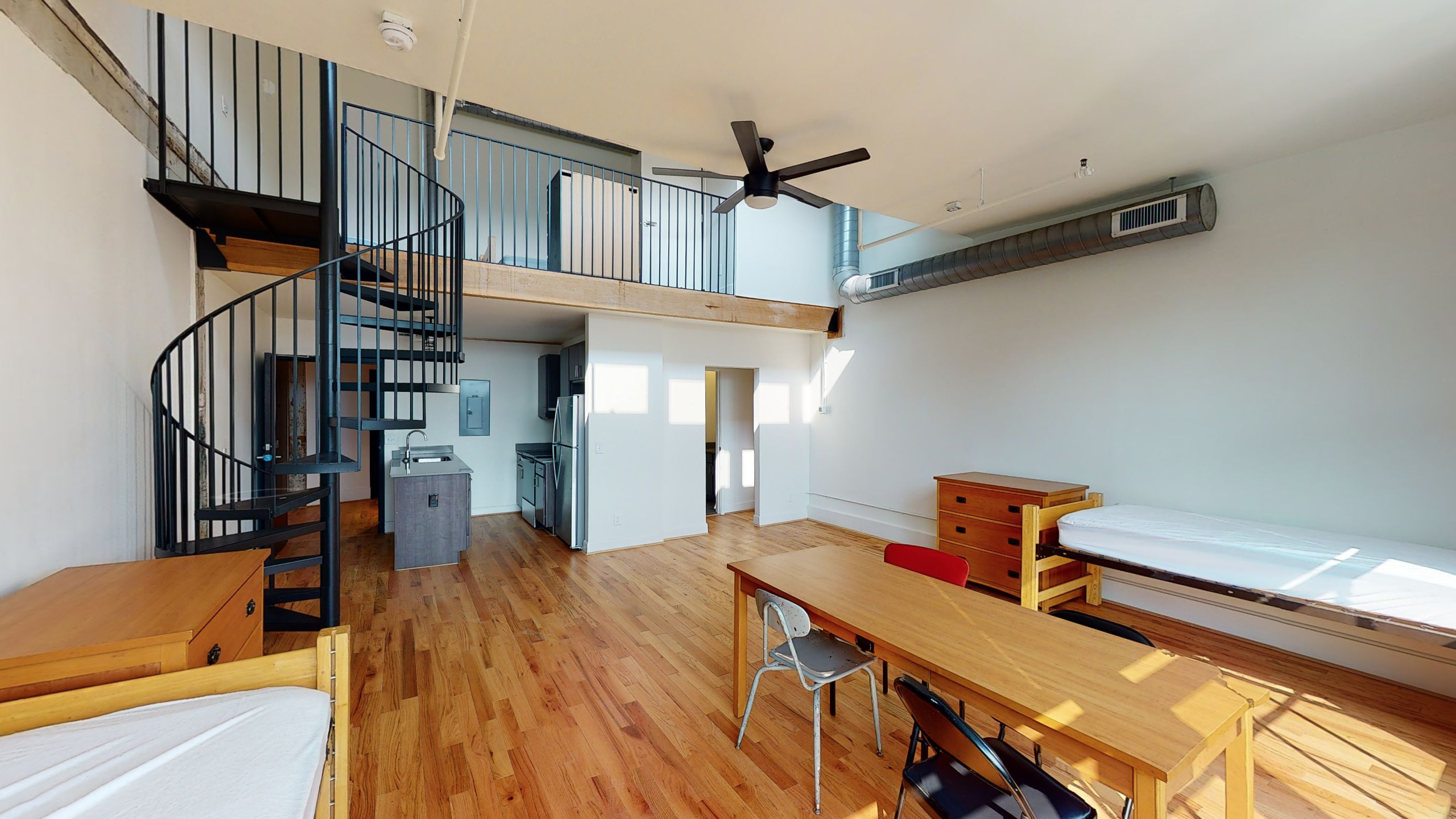
Life at the Art Academy is deeply intertwined with its urban Cincinnati setting and its identity as a creative hub. The campus itself is described as a 'cultural cornerstone' in the city. Only about 37% of students live in college-affiliated housing, with the majority (63%) living off-campus, contributing to a more independent, city-dwelling student culture. The Student Affairs team is explicitly dedicated to supporting students as 'radical, forward-thinking visual artists.' Campus activities lean heavily into the arts and creative community: public talks by writers, designers, and artists; poetry readings and open mic nights; a Halloween party; and an annual Student Art Sale. It's a close-knit community where social life often revolves around making, discussing, and exhibiting art.
Graduation and earnings data for AAC graduates reflect the challenging but passionate path of a professional artist. The six-year graduation rate is 41%, with a four-year rate of 33%. Post-graduation earnings for art school alumni are typically modest in the early years, and AAC is no exception. Reported median earnings six years after entry are $27,483, though other sources note earnings of $35,735 or $36,427 one year after graduation, with variability by specific major. For example, graduates with degrees in Fine and Studio Arts report median earnings around $21,425, while those in Design and Applied Arts fare somewhat better. These figures underscore a reality: students choose AAC for the transformative artistic training, not a guaranteed high-income trajectory, and success is often measured in exhibitions, commissions, and creative fulfillment rather than a starting salary.
Attending this private art academy carries a significant price tag, but the institution works to offset costs with financial aid. The average after aid is $34,253. Virtually every beginning undergraduate (100%) receives some form of grant or scholarship aid, with the average total aid package reported at $19,460. This aid is a mix of federal grants, state grants, and institutional scholarships. The school emphasizes that 'most of our students receive some form of financial aid,' and its financial aid team is 'dedicated to finding creative, outside-the-box ways to help you keep your costs low.' However, it is important to note that the Art Academy does not have a 'no-loan' policy or a commitment to meet 100% of demonstrated financial need without loans. The process starts with the FAFSA, which determines eligibility for all federal and state aid, and the financial aid application deadline is April 1.
The Art Academy of Cincinnati stands out for its unapologetic, single-minded focus on cultivating professional artists. Founded in 1869, it possesses a deep historical within Cincinnati's cultural ecosystem, yet its mission is relentlessly contemporary: to produce 'radical, forward-thinking visual artists.' Unlike art programs housed within larger universities, AAC offers a pure, immersive studio environment with the intensity of a conservatory. Its small size (evident in the 11:1 student-faculty ratio) and urban campus create a crucible for creativity, where students are embedded in a city's arts scene from day one. It’s a school for those who know they want to be illustrators, painters, or sculptors, and are willing to embrace the demanding, hands-on, and financially uncertain path of an artist's life, supported by a community that speaks their language.
Art Academy of Cincinnati seal · sourceCollege of Art and Design Since 1869 - Art Academy of Cincinnati · sourceArt Academy of Cincinnati - Wikipedia · sourceArt Academy of Cincinnati - AICAD · source