Admit rate has ranged 64%–79% over the last 5 years — notably volatile, though the latest figure above (63%) falls outside that window. Source: IPEDS via Urban Institute.
Acceptance & SAT from Common Data Set / IPEDS; net price, earnings & graduation from the U.S. Dept. of Education College Scorecard. Figures lag ~1–2 years — verify with the school.
Asbury University is a small, fiercely Christian liberal arts college in Wilmore, Kentucky, where faith isn't just a footnote—it's the foundation of a tight-knit, residential community. With a pragmatic academic bent focused on 'job-ready skills' and a remarkable 99% career outcomes rate, it offers a distinctive blend of spiritual formation and professional preparation. This is a place where nearly every student lives on campus, the average age skews older at nearly 24, and the goal is to graduate not just educated, but equipped and often debt-free.
Admission requirements
Test-blind — scores not considered
Required
High school transcript
Grade point average
Considered (not required)
Class rank
Letters of recommendation
College-prep program
Demonstrated competencies
TOEFL (non-native English)
Source: IPEDS Admissions survey (2022) via Urban Institute. Covers formal factors only — it does not reflect essays, extracurriculars, or other holistic criteria.
More details
Undergrad enrollment
1,420
In-state tuition
$33,640
Out-of-state tuition
$33,640
On-Campus Housing
98% of students
Average Student Age
23.75 years
Career Outcomes Rate
99%
Student No-Debt Fund
Pilot program for selected students
Median Earnings (10yr)
$42,368
Students Receiving Aid
100%
Six-Year Graduation Rate
65%
Outcomes & value
Outcomes & value
Median earnings (10 yr)
$42,368
Value (earnings ÷ net price)
2.0×
Median debt at graduation
$24,028
Graduation rate
65%
First-year retention
83%
Reducing loan balance (3 yr)
66%
Pell (lower-income) share
28%
First-gen share (among federal-aid recipients)
24%
Financial health
3.0 / 3.0Meets the federal financial-responsibility standard
U.S. Dept. of Education Financial Responsibility Composite Score (FY2022-23). Scale −1.0 to 3.0; ≥1.5 meets the standard. Reported for private nonprofit & for-profit institutions only — public universities are state-backed and not scored, so this is a stability signal, not a ranking.
Top-earning majors
Median earnings by field of study (highest credential), ~2 years after completion.
Teacher Education and Professional Development, Specific Levels and Methods$33,382
Accounting and Related Services$29,685
Communication and Media Studies$29,141
Radio, Television, and Digital Communication$26,739
Religious Music and Worship$25,774
Agricultural and Domestic Animal Services
Campus & location
Campus safety
On-campus violent crimes (2024)
0
Per 1,000 students
0.00
On-campus criminal offenses classed as violent (murder/non-negligent manslaughter, rape, robbery, aggravated assault) for the most recent reported year. Source: U.S. Dept. of Education Campus Safety and Security (Clery Act). Counts reflect what’s reported to the school, and urban campuses often report more partly due to non-student incidents nearby — read alongside campus size and setting, not as a standalone safety verdict.
Climate
Pleasant days / yr
87
Summer high
85°F
Winter low
32°F
Annual rain
51.2"
Annual snow
8.7"
Natural-hazard risk
Very Low
Pleasant days counts days per year with a mean temperature of 55–75°F, a high at or below 90°F, a low at or above 45°F, and little precipitation — a transparent comfort measure, not a weighting we invented. Computed from Open-Meteo ERA5 daily history (2019–2023). Natural-hazard risk is the county’s composite rating from the FEMA National Risk Index.
Deep dive — research, future-scholar output & economic mobility▾
Research output
Institutional h-index
32
Scholarly works
523
Institutional research volume and impact from OpenAlex. The h-index reflects large research universities and will be low for teaching-focused liberal-arts colleges — not a measure of undergraduate quality.
Share of this school’s graduates who go on to earn research doctorates (2010–20), by national rank and per-capita yield (NSF institutional-yield ratio). A signal of a research-oriented student culture — not a causal promise, since it partly reflects who enrolls. Only top producers appear. Source: NSF NCSES, Baccalaureate Origins of U.S. Research Doctorate Recipients.
Quick answers
What is the acceptance rate at Asbury University?
Asbury University's acceptance rate is approximately 63% (Wilmore, KY), based on the most recent figures we compiled from public and primary sources.
How much does Asbury University cost?
At Asbury University, the average net price (after aid) is about $21,401 per year. Actual cost varies with financial aid and residency.
How many undergraduates attend Asbury University?
Asbury University enrolls approximately 1,420 undergraduate students.
Where is Asbury University located?
Asbury University is located in Wilmore, KY.
Admissions
Asbury's admissions process is accessible, with a focus on building a community of committed students rather than on hyper-selectivity. While some sources cite an as high as 95.4%, the university's published canonical figure is 63%. The middle 50% of admitted students who submit test scores have an SAT range between 990 and 1290, or an ACT composite between 20 and 27. The average high school GPA of incoming students is a strong 3.85. In a recent cycle, 1,371 applicants resulted in 1,308 acceptances. The process does not appear to leverage binding Early Decision as a major strategic tool; sources discussing Early Decision acceptance rates reference practices at highly selective institutions, not Asbury specifically. Similarly, while the is the definitive source for understanding how a college weighs factors like demonstrated interest, the provided sources about the CDS are generic guides and do not contain Asbury's specific data.
Earnings = median of students working ~10 years after entry; debt = median of graduates. Value divides 10-yr earnings by one year’s net price — read it as earnings per dollar of annual cost, not a full lifetime ROI; it favors lower-cost schools. Source: U.S. Dept. of Education College Scorecard. Figures lag ~2 years and reflect all students, not your intended major.
$20,140
Sports, Kinesiology, and Physical Education/Fitness$20,140
Source: U.S. Dept. of Education College Scorecard (field-of-study earnings). Figures cover graduates who received federal aid and lag ~2 years; not all programs report data.
Academics at Asbury are framed through the dual lenses of intellectual development and practical skill-building, aimed at unlocking student strengths and building character. The university offers a traditional liberal arts core through 14 academic departments and more than 40 majors. Popular fields of study include English Language and Literature (6% of graduates), Psychology (5%), Visual and Performing Arts (5%), and Biological and Biomedical Sciences (5%). The business program emphasizes accounting, management, analytics, and economics. The curriculum is described as rigorous and is designed to provide ample leadership opportunities. In addition to its undergraduate offerings, Asbury provides several master's degrees, primarily in education, including alternative certification pathways.
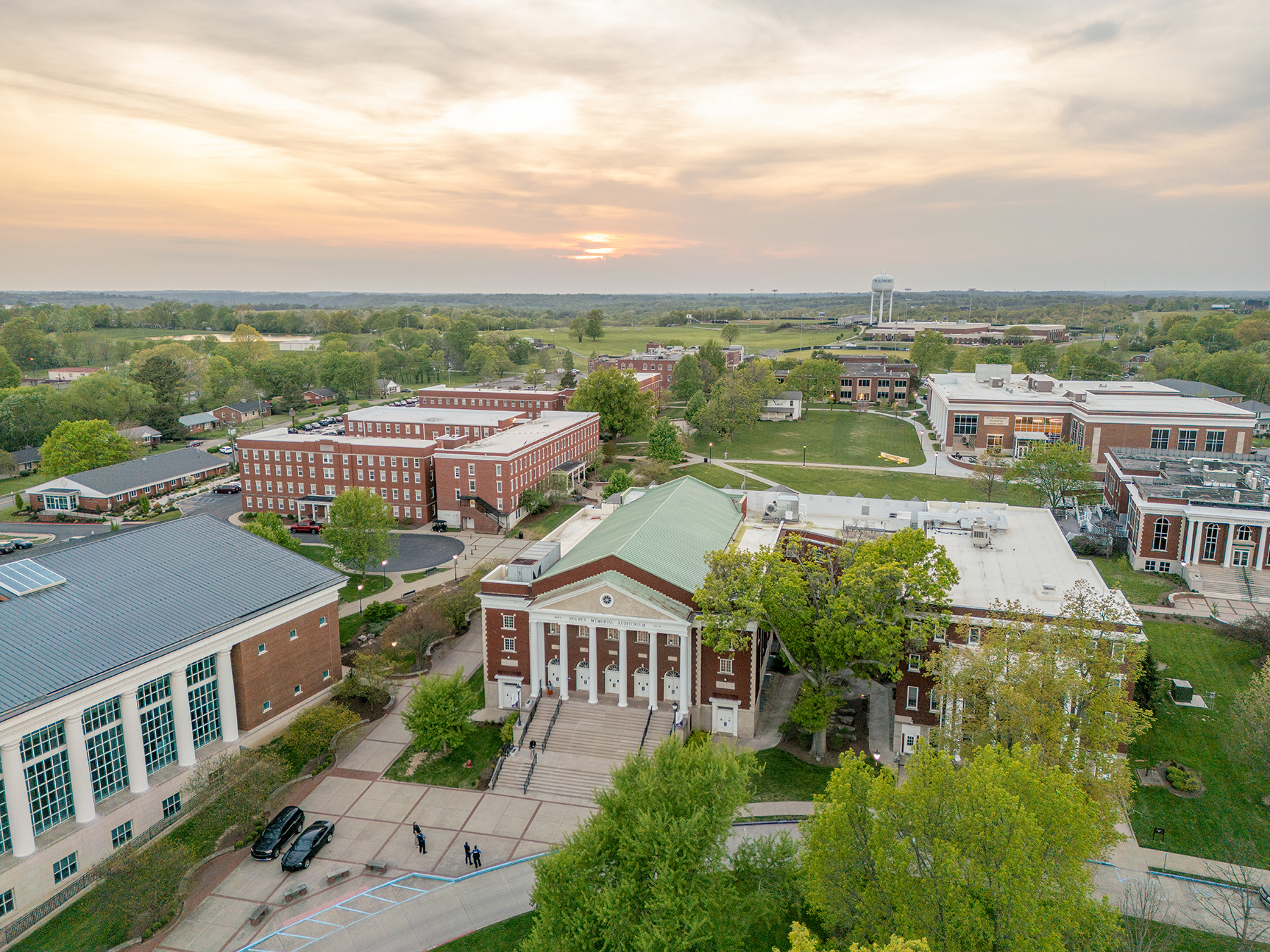
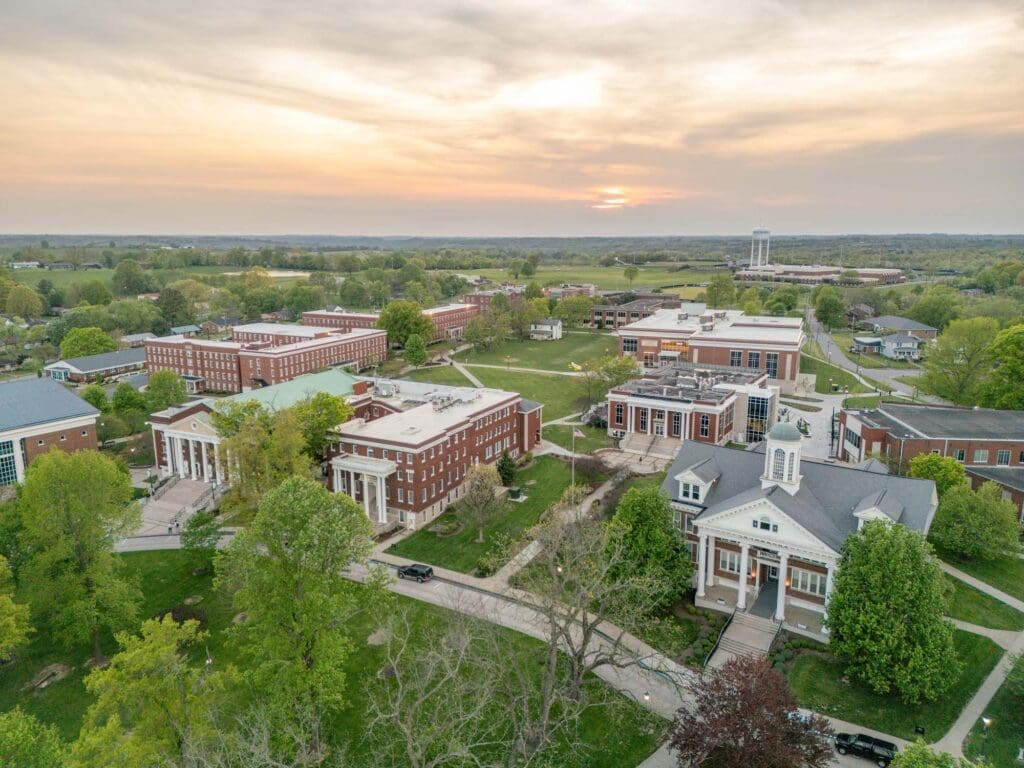
Life at Asbury is intensely communal and explicitly Christ-centered. The campus is overwhelmingly residential, with 98% of students living in college-owned, -operated, or -affiliated housing. The community is consistently described by students as close-knit, welcoming, and supportive, where forming meaningful, lifelong friendships is the norm. Campus life is built around worship, small groups, music, NCAA Division III sports, and volunteer service. The Office of Intercultural Life serves to equip students to engage with their own culture and others. The student body is not exclusively traditional-aged; the average student age is 23.75 years, suggesting a significant population of non-traditional students. The vibe is captured by the university's own description: 'Meaningful mentorship, Christ-centered community, unique programs, unforgettable campus traditions.'
Asbury's outcomes data tells a story of effective preparation and strong follow-through. The university celebrates a record four-year graduation rate that surpasses the national average by 17 percentage points. Its six-year graduation rate stands at 65.6% (closely aligning with the canonical 65% figure), which is nearly 10 points higher than the latest national average. Most impressively, Asbury reports a 99% career outcomes rate for its 2025 graduates—meaning 99% are employed, in graduate school, or in fellowships/internships within six months of graduation. This figure is based on a 92.5% knowledge rate and exceeds the national bachelor's-degree career outcomes rate of 85.7%. The median earnings for alumni ten years after entry are $42,368.
Asbury is proactive in making its education affordable through widespread aid. The university states that 100% of its undergraduate students receive financial aid or scholarships. The average first-year student pays about $21,000 after aid, which aligns with the canonical average of $21,401. Other sources estimate the net price at $17,799 or $21,375 after scholarships and grants, with an average aid package of $45,457 for those who receive aid. A distinctive and evolving initiative is the Student No Debt Fund, a pilot program fueled by donors that aims to help selected students graduate debt-free through a combination of faith, stewardship, and support. While not a blanket 'no-loan' policy that meets full need for all qualifying incomes like some elite institutions, it represents a targeted commitment to reducing student debt.
Asbury University carves out a unique niche by refusing to treat spiritual life and professional readiness as separate pursuits. It's not a Bible college, but a Christian liberal arts university where faith permeates a robust residential community—98% of students live on campus—and informs a practical curriculum built for 'job-ready skills.' This synthesis produces remarkable results: a 99% career outcomes rate that defies the modest selectivity of its admissions. The community is famously close-knit and supportive, yet it includes a meaningful cohort of non-traditional students, with an average age pushing 24. Furthermore, Asbury backs its mission with tangible support, ensuring every student receives financial aid and pioneering a Student No Debt Fund to help selected undergraduates graduate without loans. It's a place designed for students who want their college experience to be a holistic integration of belief, learning, living, and launching.
Asbury University seal · sourceThe College Tour: All Episodes | Asbury University · sourceAsbury equips students to belong, become and be set apart · sourceAsbury University Tour | The College Tour · source