Loading…
← All schools
Atlantic University
Guaynabo, PRprivate nonprofitwww.atlanticu.edu/
Avg net price
$6,425
Earnings (10 yr)
$25,272
Graduation rate
39%
Acceptance & SAT from Common Data Set / IPEDS; net price, earnings & graduation from the U.S. Dept. of Education College Scorecard. Figures lag ~1–2 years — verify with the school.
Atlantic University is a large, public institution where the beach is practically a campus quad and the academic experience is defined by its scale and accessibility. With an acceptance rate hovering around two-thirds, it serves as a primary engine of upward mobility for the region, though its graduation rate and post-graduate earnings reflect the challenges of its mission. The vibe is distinctly Floridian—sun-drenched, sprawling, and heavily commuter-influenced, where student life is largely what you make of it amidst thousands of annual events.
More details
- Undergrad enrollment
- 1,451
- In-state tuition
- $8,280
- Out-of-state tuition
- $8,280
- No-Loan Policy
- No policy indicated
- Graduation Rate
- 39%
- Meets Full Need
- No policy indicated
- ED Share of Class
- Not stated in sources
- First-Year Retention
- Not stated in sources
- Demonstrated Interest
- Not stated in sources
- Student-Faculty Ratio
- 28:1
- Median Earnings (10yr)
- $25,272
Outcomes & value
Outcomes & value
- Median earnings (10 yr)
- $25,272
- Value (earnings ÷ net price)
- 3.9×
- Median debt at graduation
- $5,457
- Graduation rate
- 39%
- First-year retention
- 82%
- Reducing loan balance (3 yr)
- 53%
- Pell (lower-income) share
- 85%
- First-gen share (among federal-aid recipients)
- 15%
Financial health
2.7 / 3.0Meets the federal financial-responsibility standard
U.S. Dept. of Education Financial Responsibility Composite Score (FY2022-23). Scale −1.0 to 3.0; ≥1.5 meets the standard. Reported for private nonprofit & for-profit institutions only — public universities are state-backed and not scored, so this is a stability signal, not a ranking.
Top-earning majors
Median earnings by field of study (highest credential), ~2 years after completion.
- Film/Video and Photographic Arts$19,227
- Computer Software and Media Applications$15,552
- Design and Applied Arts$13,496
- Graphic Communications$12,961
Source: U.S. Dept. of Education College Scorecard (field-of-study earnings). Figures cover graduates who received federal aid and lag ~2 years; not all programs report data.
Compare on earnings: best colleges for Communications
Campus & location
Campus safety
- On-campus violent crimes (2024)
- 0
- Per 1,000 students
- 0.00
On-campus criminal offenses classed as violent (murder/non-negligent manslaughter, rape, robbery, aggravated assault) for the most recent reported year. Source: U.S. Dept. of Education Campus Safety and Security (Clery Act). Counts reflect what’s reported to the school, and urban campuses often report more partly due to non-student incidents nearby — read alongside campus size and setting, not as a standalone safety verdict.
Climate
- Pleasant days / yr
- 66
- Summer high
- 88°F
- Winter low
- 68°F
- Annual rain
- 44.1"
Pleasant days counts days per year with a mean temperature of 55–75°F, a high at or below 90°F, a low at or above 45°F, and little precipitation — a transparent comfort measure, not a weighting we invented. Computed from Open-Meteo ERA5 daily history (2019–2023).
Deep dive — research, future-scholar output & economic mobility
Research output
- Institutional h-index
- 95
- Scholarly works
- 2,043
Institutional research volume and impact from OpenAlex. The h-index reflects large research universities and will be low for teaching-focused liberal-arts colleges — not a measure of undergraduate quality.
Quick answers
- How much does Atlantic University cost?
- At Atlantic University, the average net price (after aid) is about $6,425 per year. Actual cost varies with financial aid and residency.
- How many undergraduates attend Atlantic University?
- Atlantic University enrolls approximately 1,451 undergraduate students.
- Where is Atlantic University located?
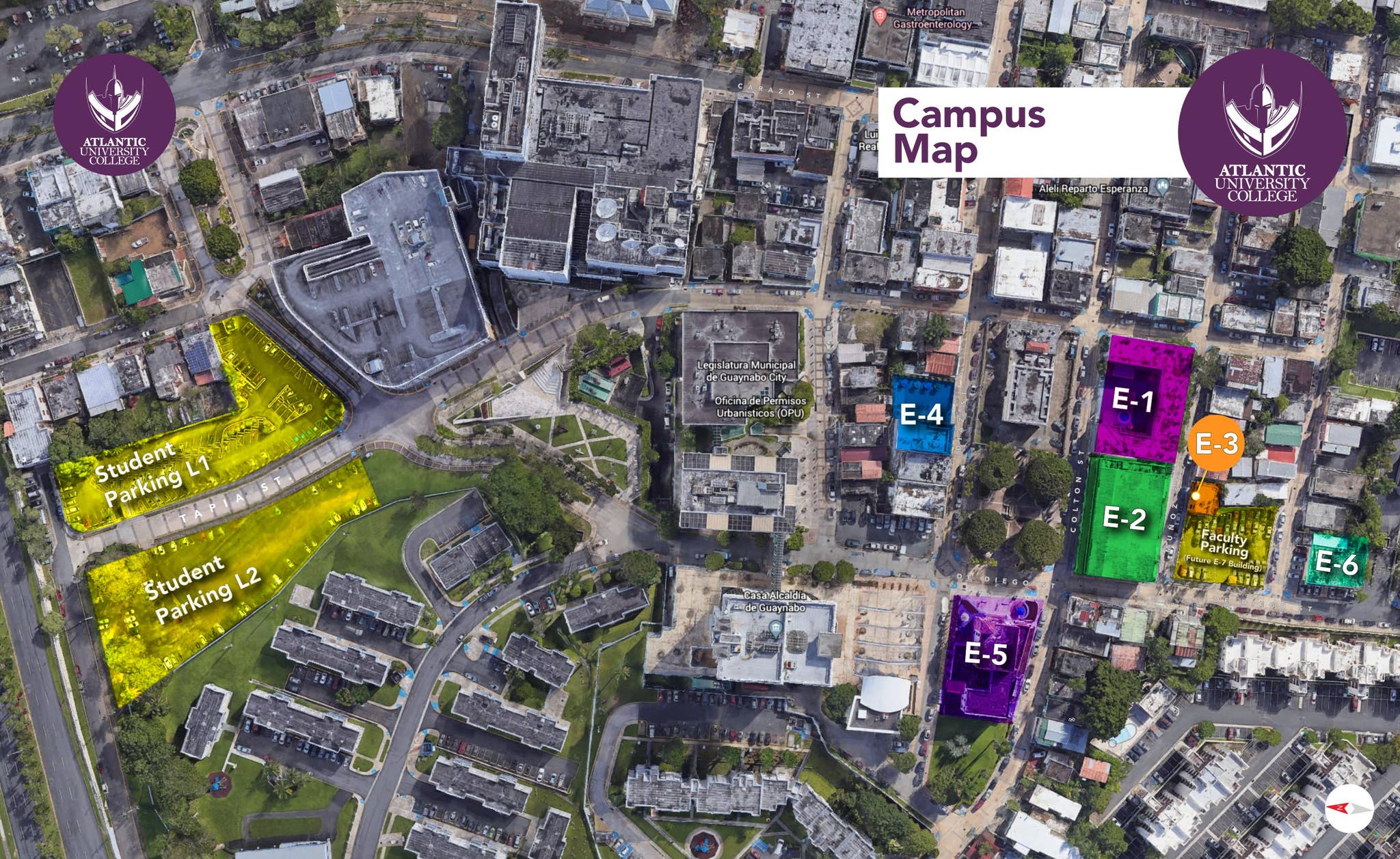
- Atlantic University is located in Guaynabo, PR.
Admissions
Atlantic University operates with a moderately selective admissions process, accepting roughly two-thirds of its applicants. For the most recent admitted class, the middle 50% SAT range was 1090-1270, the ACT range was 22-28, and the GPA range was 3.66-4.29. The admit rate is reported variably between sources as 59%, 66%, and 75%, indicating a generally accessible threshold. The rate—the percentage of admitted students who enroll—is described as 'Medium,' with one source specifying it at 16%. There is no available data on an Early Decision or the share of the class filled via Early Decision, suggesting the university may not heavily utilize binding early plans. The is the definitive source for detailed application statistics and factors, though the specific consideration of 'demonstrated interest' in Atlantic University's process is not detailed in the provided sources.
- Middle 50% Test Scores: SAT 1090-1270; ACT 22-28.
- Admitted Student GPA: Middle 50% range of 3.66-4.29.
- Yield Rate: Described as 'Medium'; one source cites 16%.
Compare Atlantic University
vs Inter American University of Puerto Rico-Arecibovs Inter American University of Puerto Rico-San Germanvs Inter American University of Puerto Rico-Fajardovs EDP University of Puerto Rico Inc-San Juan
See colleges similar to Atlantic University →Sources
- Common Data Set
- Common Data Set 2024-2025
- Common Data Set
- Common Data Set Explorer 2026: Compare 100 Colleges
- 2023-2024 Common Data Set Template
- Common Data Set - Office of Institutional Research & Analytics
- FAU Freshman Admission
- Florida Atlantic University Admissions - BigFuture
- FAU SAT Scores and GPA
- Florida Atlantic University Admissions
- Florida Atlantic University, located in Boca Raton, just ...