Admit rate has ranged 59%–72% over the last 5 years — notably volatile. Source: IPEDS via Urban Institute.
Acceptance & SAT from Common Data Set / IPEDS; net price, earnings & graduation from the U.S. Dept. of Education College Scorecard. Figures lag ~1–2 years — verify with the school.
Augustana University in Sioux Falls, South Dakota, is a private Lutheran-affiliated institution that operates less as a cloistered liberal arts college and more as a practical, outcomes-focused hub for the region. Its character is defined by a strikingly high rate of double majors, a deep integration with the growing city of Sioux Falls, and a financial aid program—Augustana Possible—that aggressively meets full need for qualifying students. This is a campus where the liberal arts foundation is visibly and intentionally channeled into career readiness, producing graduates who land jobs at a near-universal rate.
Admission requirements
Test-optional — scores considered if submitted
Required
High school transcript
Grade point average
TOEFL (non-native English)
Considered (not required)
Class rank
Letters of recommendation
Test scores (SAT/ACT)
College-prep program
Source: IPEDS Admissions survey (2022) via Urban Institute. Covers formal factors only — it does not reflect essays, extracurriculars, or other holistic criteria.
More details
Undergrad enrollment
1,965
In-state tuition
$40,160
Out-of-state tuition
$40,160
Graduation Rate
73%
Meets Full Need
Yes, for qualifying students (Augustana Possible)
Double Major Rate
~50% of students
Median Earnings (10yr)
$59,217
Students Receiving Aid
100%
Early Decision Deadline
November 1
ED Scholarship Guarantee
$25,000/year minimum
Median Starting Salary (2025)
$55,000
Positive Career Outcome Rate (2025)
Outcomes & value
Outcomes & value
Median earnings (10 yr)
$59,217
Value (earnings ÷ net price)
2.5×
Median debt at graduation
$25,000
Graduation rate
73%
First-year retention
86%
Reducing loan balance (3 yr)
83%
Pell (lower-income) share
18%
First-gen share (among federal-aid recipients)
14%
Financial health
3.0 / 3.0Meets the federal financial-responsibility standard
U.S. Dept. of Education Financial Responsibility Composite Score (FY2022-23). Scale −1.0 to 3.0; ≥1.5 meets the standard. Reported for private nonprofit & for-profit institutions only — public universities are state-backed and not scored, so this is a stability signal, not a ranking.
Top-earning majors
Median earnings by field of study (highest credential), ~2 years after completion.
Registered Nursing, Nursing Administration, Nursing Research and Clinical Nursing$57,724
Business Administration, Management and Operations$44,666
Teacher Education and Professional Development, Specific Subject Areas$43,426
Special Education and Teaching$39,009
Sports, Kinesiology, and Physical Education/Fitness$39,009
Campus & location
Campus safety
On-campus violent crimes (2024)
4
Per 1,000 students
1.70
On-campus criminal offenses classed as violent (murder/non-negligent manslaughter, rape, robbery, aggravated assault) for the most recent reported year. Source: U.S. Dept. of Education Campus Safety and Security (Clery Act). Counts reflect what’s reported to the school, and urban campuses often report more partly due to non-student incidents nearby — read alongside campus size and setting, not as a standalone safety verdict.
Climate
Pleasant days / yr
88
Summer high
83°F
Winter low
13°F
Annual rain
26.6"
Annual snow
32.9"
Natural-hazard risk
Relatively Moderate
Pleasant days counts days per year with a mean temperature of 55–75°F, a high at or below 90°F, a low at or above 45°F, and little precipitation — a transparent comfort measure, not a weighting we invented. Computed from Open-Meteo ERA5 daily history (2019–2023). Natural-hazard risk is the county’s composite rating from the FEMA National Risk Index.
Deep dive — research, future-scholar output & economic mobility▾
Research output
Institutional h-index
268
Scholarly works
1,514
Institutional research volume and impact from OpenAlex. The h-index reflects large research universities and will be low for teaching-focused liberal-arts colleges — not a measure of undergraduate quality.
Quick answers
What is the acceptance rate at Augustana University?
Augustana University's acceptance rate is approximately 68% (Sioux Falls, SD), based on the most recent figures we compiled from public and primary sources.
What SAT score do you need for Augustana University?
Admitted students at Augustana University typically score 1150–1370 on the SAT (the middle-50% range). Scores outside this band are still admitted, especially with strong applications.
How much does Augustana University cost?
At Augustana University, the average net price (after aid) is about $23,894 per year. Actual cost varies with financial aid and residency.
How many undergraduates attend Augustana University?
Augustana University enrolls approximately 1,965 undergraduate students.
Where is Augustana University located?
Augustana University is located in Sioux Falls, SD.
Admissions
Augustana's admissions process is characterized as "less selective," with a clear pathway for students who meet its academic profile. The university reports an of 68%, placing it in the accessible range for many applicants. The middle 50% SAT range for admitted students is 1150–1370. The university considers a student's secondary school record, specifically their GPA and the rigor of their coursework, as a very important factor in admissions decisions. Other factors like class rank, recommendations, and the application essay are also considered. Notably, Augustana offers an Early Decision option with a November 1 deadline, which comes with a guaranteed minimum scholarship of $25,000 per year for admitted ED students. While the exact ED acceptance rate isn't provided in the sources, the practice indicates a strategic advantage for committed applicants. The admissions office can be reached at (605) 274-5516 or via a toll-free number, (800) 727-2844.
Earnings = median of students working ~10 years after entry; debt = median of graduates. Value divides 10-yr earnings by one year’s net price — read it as earnings per dollar of annual cost, not a full lifetime ROI; it favors lower-cost schools. Source: U.S. Dept. of Education College Scorecard. Figures lag ~2 years and reflect all students, not your intended major.
Teacher Education and Professional Development, Specific Levels and Methods
$37,928
History$36,848
Business/Corporate Communications$35,060
Source: U.S. Dept. of Education College Scorecard (field-of-study earnings). Figures cover graduates who received federal aid and lag ~2 years; not all programs report data.
The academic culture at Augustana is built on a liberal arts and sciences foundation but is distinguished by an extraordinary emphasis on combination and practical application. A defining statistic is that half of all Augustana students pursue more than one major, weaving together disciplines to build versatile skill sets. The university offers more than 100 majors, minors, and pre-professional programs through its College of Arts & Sciences, which organizes degrees into five broad areas: Life Sciences, Pure & Applied Sciences, Humanities, Social Sciences, and Interdisciplinary Studies. Popular majors cluster in Business, Management, Marketing, and Related Support Services, as well as Biological and Biomedical Sciences. The curriculum is designed to be hands-on, with students encouraged to "perform, research, intern and lead" as part of their education. This is not a place for solitary study; the academic model actively pushes students to build experience and multiple competencies alongside their core studies.
Life at Augustana is intensely communal, with the university framing itself as "more than a university, it's a community." The Division of Student Affairs and the Office of Student Life and Leadership facilitate a vibrant campus culture where students create lasting relationships through clubs, engaging events, and shared residence hall living. The campus culture actively encourages involvement in clubs and intramurals, making it easy for students to connect. This community extends beyond campus borders into Sioux Falls, with the university fostering strong university-community partnerships. Students and Sioux Falls residents alike find opportunities for research, athletic competition, and seasonal events together. The ethos is one of stretching "creativity, curiosity, endurance, intellect, empathy, spirituality, [and] sense of adventure" both on campus and in the wider Quad Cities region.
Augustana's raison d'être is crystal-clear: delivering positive career outcomes for its graduates. The data is compelling. For the Class of 2025, 98% of graduates achieved a positive career outcome (employed, in graduate school, or continuing experiential learning). The figure was 99% for the Class of 2024. For those employed full-time, the median starting salary is robust: $55,000 for the Class of 2025 and $54,770 for the Class of 2024. The university also demonstrates a notable commitment to socioeconomic mobility. A study highlighted Augustana among top schools helping low-income students get ahead, noting that 24% of its students are Pell Grant recipients and achieve a graduation rate of 71%—significantly higher than the 54.6% comparison baseline. This strong graduation rate for all students is a point of institutional pride.
Augustana tackles affordability with a multi-pronged and notably aggressive approach. A foundational statistic is that 100% of full-time undergraduate students receive scholarships and/or grants. The average after aid is $23,534. The cornerstone of its aid strategy is the Augustana Possible program, a bold financial aid initiative that meets 100% of demonstrated financial need, up to direct costs (tuition, fees, room, and board), for qualifying newly enrolled students. This effectively functions as a no-loan policy for those who qualify, meaning their full need is met with grant aid, not loans. Students must be enrolled full-time (12+ credits) to be eligible for all institutional aid. The university strongly encourages families to file the FAFSA to determine eligibility for both federal and Augustana-specific , and provides a Net Price Calculator tool for initial cost estimates.
Augustana University carves out a distinctive niche by fusing three powerful elements into a coherent identity. First, its academic model of combination, where half of all students double-major, moves beyond the standard liberal arts pitch to promise a deliberately engineered, versatile education tailored for the modern job market. Second, its Augustana Possible financial aid program is a serious, upfront commitment to affordability that meets 100% of need for qualifying students, removing a primary barrier for low- and middle-income families and aligning its mission with socioeconomic mobility. Third, its deep symbiosis with Sioux Falls means students aren't at a remote college town; they are in a growing regional economic hub, with partnerships and opportunities woven directly into the student experience. The result is a university that feels pragmatic, supportive, and connected—a place where the liberal arts are explicitly leveraged for career launch, backed by a financial promise that makes it accessible.
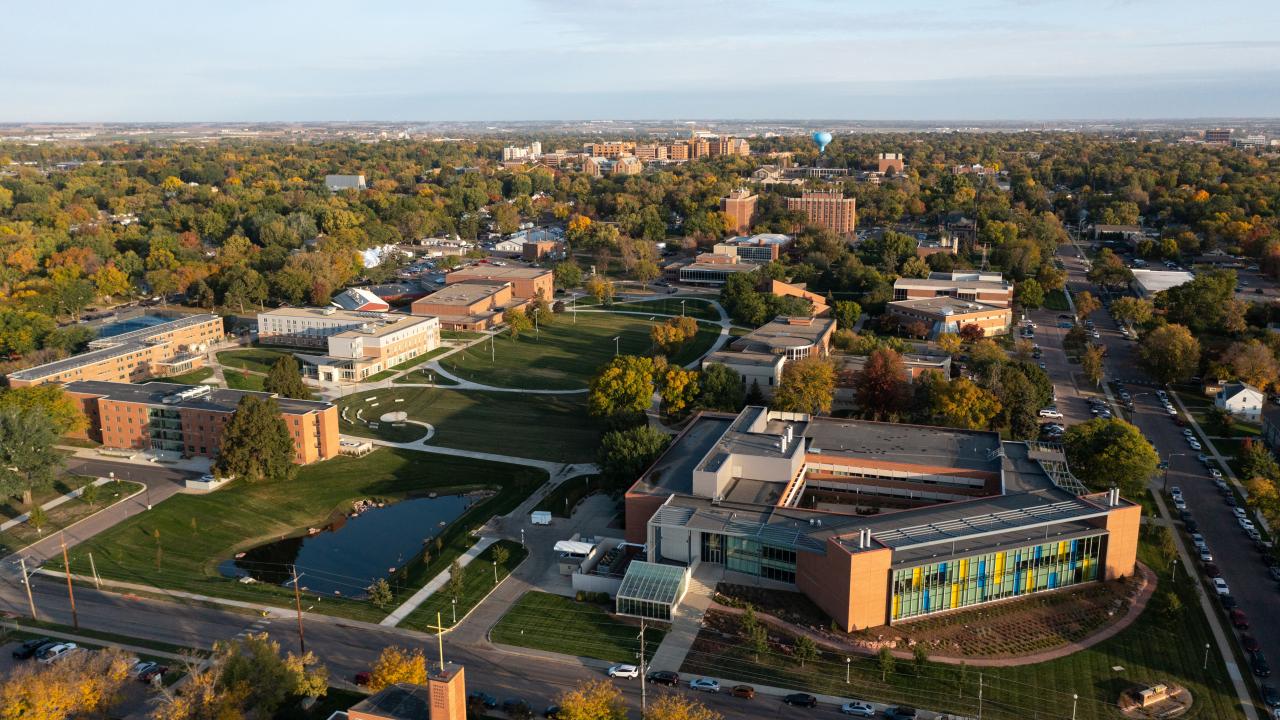
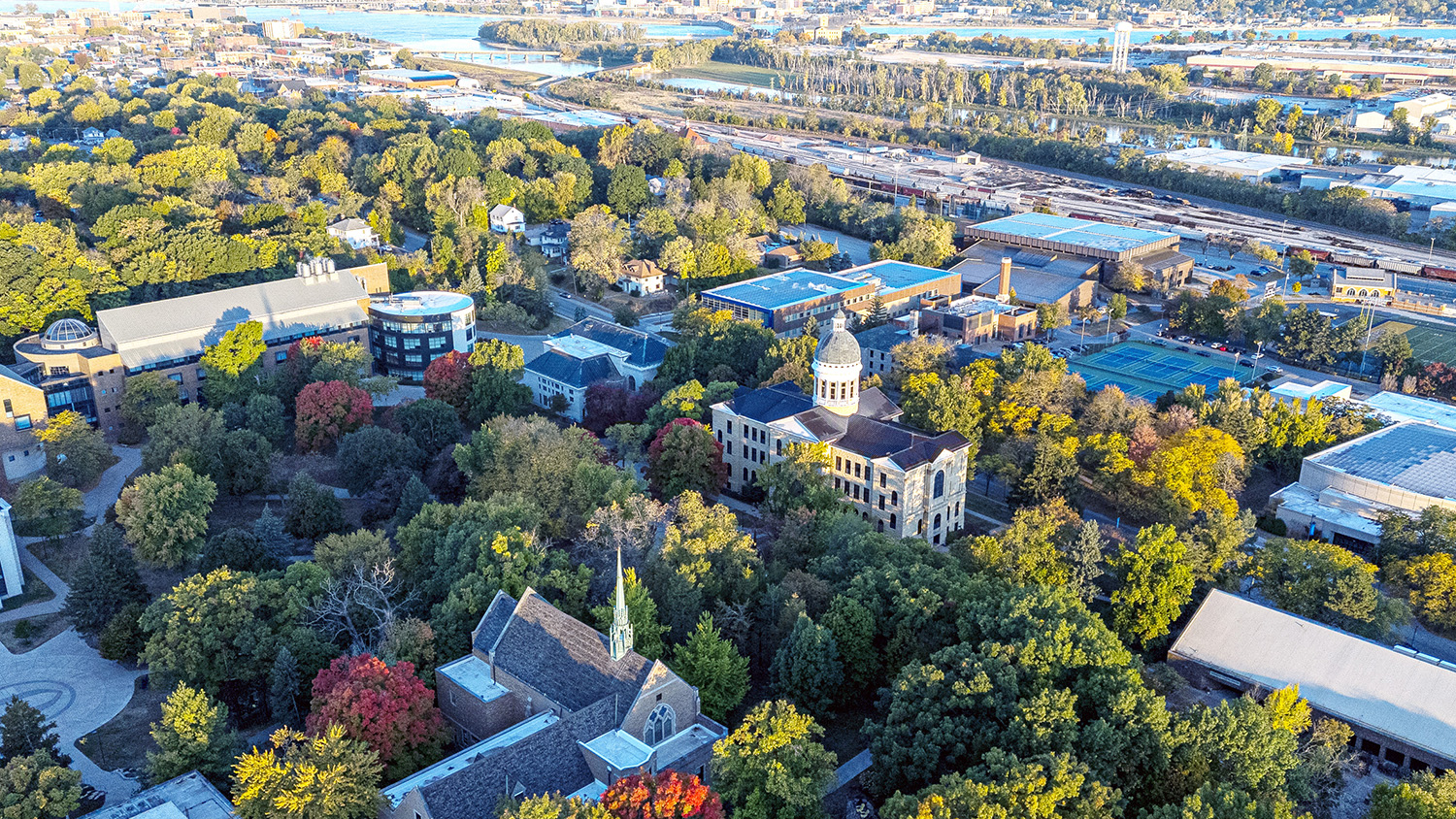
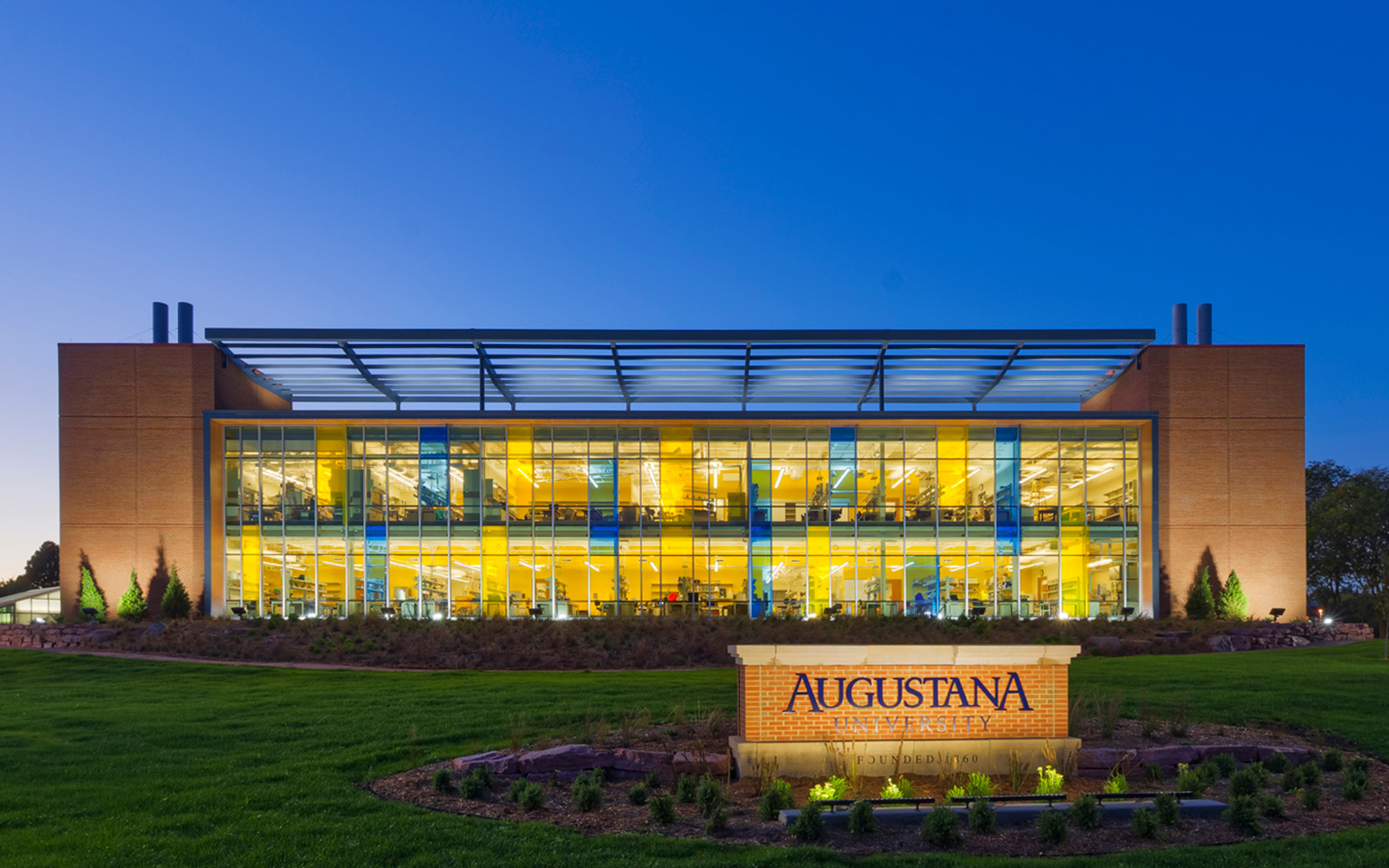
Augustana University seal · sourceVisit Campus | Augustana University · sourceOur campus in photos | Augustana College · sourceFroiland Science Complex - Augustana University | SmithGroup · source