Loading…
← All schools
Auguste Escoffier School of Culinary Arts-Boulder
Boulder, COprivate forprofitwww.escoffier.edu/
Avg net price
$13,367
Earnings (10 yr)
$32,001
Acceptance & SAT from Common Data Set / IPEDS; net price, earnings & graduation from the U.S. Dept. of Education College Scorecard. Figures lag ~1–2 years — verify with the school.
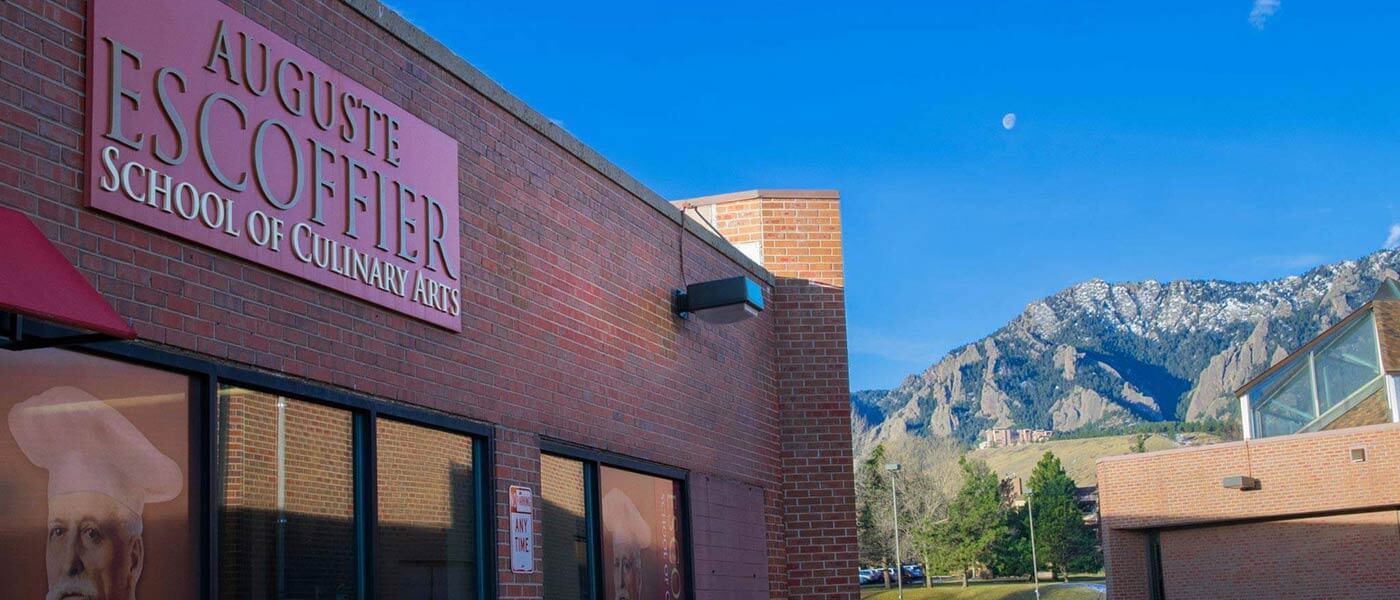
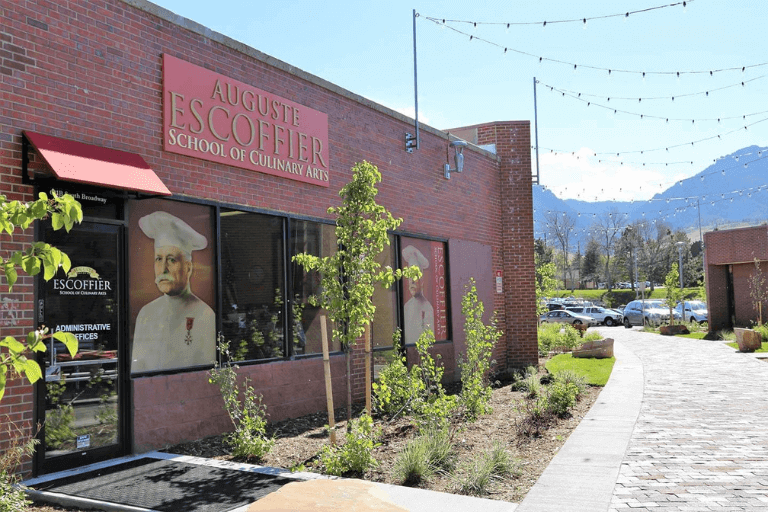
Auguste Escoffier School of Culinary Arts-Boulder is not a traditional liberal arts college but a focused trade school that immerses students in the craft of cooking with a distinct emphasis on sustainability and farm-to-table principles. It operates on an open-admissions model, welcoming anyone who meets the basic requirements, and its identity is built around intense, hands-on training, a mandatory industry externship, and a campus life deeply integrated into Boulder's vibrant food scene. The school's value proposition is direct: a relatively short, practical education designed to launch careers in the culinary world, though its outcomes, like retention and graduation rates, reflect the challenges inherent in such intensive vocational programs.
More details
- Undergrad enrollment
- 8,504
- Program Focus
- Culinary Arts & Sustainability
- Application Fee
- $25
- Key Program Feature
- 6-week farm-to-table experience + 12-week externship
- Median Earnings (10yr)
- $32,001
- First-Year Retention Rate
- 49.2%
- Students Receiving Grant Aid
- 75%
Outcomes & value
Outcomes & value
- Median earnings (10 yr)
- $32,001
- Value (earnings ÷ net price)
- 2.4×
- Median debt at graduation
- $9,653
- Reducing loan balance (3 yr)
- 62%
- Pell (lower-income) share
- 59%
- First-gen share (among federal-aid recipients)
- 38%
Earnings = median of students working ~10 years after entry; debt = median of graduates. Value divides 10-yr earnings by one year’s net price — read it as earnings per dollar of annual cost, not a full lifetime ROI; it favors lower-cost schools. Source: U.S. Dept. of Education College Scorecard. Figures lag ~2 years and reflect all students, not your intended major.
Campus & location
Campus safety
- On-campus violent crimes (2024)
- 0
On-campus criminal offenses classed as violent (murder/non-negligent manslaughter, rape, robbery, aggravated assault) for the most recent reported year. Source: U.S. Dept. of Education Campus Safety and Security (Clery Act). Counts reflect what’s reported to the school, and urban campuses often report more partly due to non-student incidents nearby — read alongside campus size and setting, not as a standalone safety verdict.
Climate
- Pleasant days / yr
- 92
- Summer high
- 83°F
- Winter low
- 18°F
- Annual rain
- 18.4"
- Annual snow
- 58"
- Natural-hazard risk
- Relatively Moderate
Pleasant days counts days per year with a mean temperature of 55–75°F, a high at or below 90°F, a low at or above 45°F, and little precipitation — a transparent comfort measure, not a weighting we invented. Computed from Open-Meteo ERA5 daily history (2019–2023). Natural-hazard risk is the county’s composite rating from the FEMA National Risk Index.
Quick answers
- How much does Auguste Escoffier School of Culinary Arts-Boulder cost?
- At Auguste Escoffier School of Culinary Arts-Boulder, the average net price (after aid) is about $13,367 per year. Actual cost varies with financial aid and residency.
- How many undergraduates attend Auguste Escoffier School of Culinary Arts-Boulder?
- Auguste Escoffier School of Culinary Arts-Boulder enrolls approximately 8,504 undergraduate students.
- Where is Auguste Escoffier School of Culinary Arts-Boulder located?
- Auguste Escoffier School of Culinary Arts-Boulder is located in Boulder, CO.
Admissions
The admissions process at Escoffier-Boulder is defined by its open admissions policy. This means the is effectively 100% for applicants who meet the basic requirements, which are a high school diploma or GED and the potential to succeed in the foodservice industry. There is no competitive selection based on grades or test scores; SAT and ACT scores are not required or considered. The school charges a $25 application fee. The primary gatekeeper is not selectivity but an applicant's own assessment of whether the program's schedule, costs, and intensity are a good fit. There is no indication of an Early Decision plan or that demonstrated interest is a considered factor in admissions decisions.
- Open Admission Policy: The school explicitly states it has an open admissions policy.
- Admissions Requirements: Admission is based "solely on meeting Admissions Requirements and the potential of the applicant to succeed in the foodservice industry."
- No Standardized Testing: SAT and ACT data is listed as "Not Available" or "N/A."
- Application Fee: $25.
Compare Auguste Escoffier School of Culinary Arts-Boulder
vs United States Air Force Academyvs United States Naval Academyvs United States Military Academyvs University of Idaho
See colleges similar to Auguste Escoffier School of Culinary Arts-Boulder →Sources
- Auguste Escoffier School of Culinary Arts-Boulder - IPEDS
- Common Data Set - Data & Analytics - University of Colorado Boulder
- Completion and Placement Statistics (Document 28.1)
- Auguste Escoffier School of Culinary Arts-Boulder - DFR Report HTML
- boulder student programs catalog 2025-2026
- Common Data Set Explorer 2026: Compare 100 Colleges
- Auguste Escoffier School of Culinary Arts-Boulder
- Escoffier School of Culinary Arts - Boulder
- Auguste Escoffier School of Culinary Arts-Boulder Statistics
- Auguste Escoffier School of Culinary Arts - Boulder SAT ...