Loading…
← All schools
Austin Career Institute LLC
Austin, TXprivate forprofitaustincareerinstitute.edu
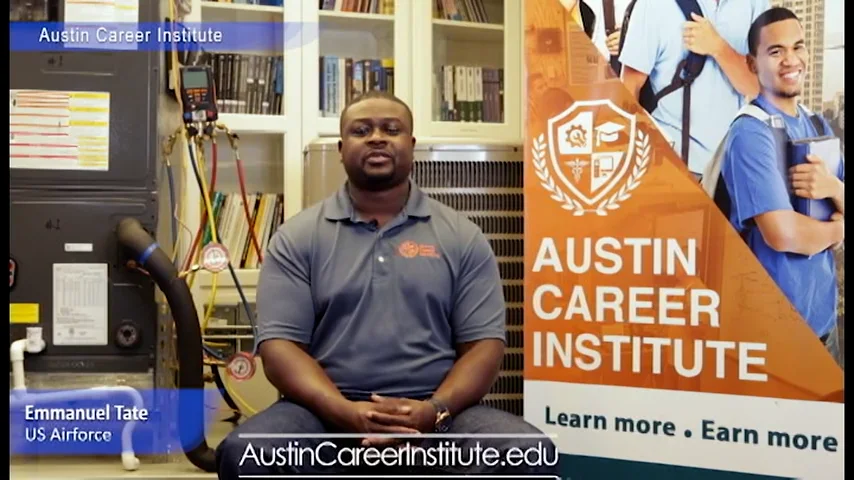
Austin Career Institute is a no-frills, high-touch trade school in the heart of Texas, built for speed and practicality. It operates on a simple, open-access model where the only real barrier to entry is a high school diploma or GED, and the entire curriculum is laser-focused on getting students into skilled, hands-on trades—like HVAC, welding, electrical work, and medical assisting—in under a year. This is not a place for a traditional liberal arts experience; it's a direct pipeline to the workforce, emphasizing an 80% hands-on, 20% theory teaching philosophy and boasting small classes for personalized attention.
More details
- Undergrad enrollment
- 102
- Key Requirement
- High School Diploma or GED
- Instruction Model
- 80% Hands-on, 20% Theory
- Typical Program Length
- 8 months (~30 weeks)
- Languages of Instruction
- English & Spanish
- Earnings 1 Year After Graduation
- $36,427
- Earnings 5 Years After Graduation
- $45,519
Outcomes & value
Outcomes & value
- Pell (lower-income) share
- 47%
Earnings = median of students working ~10 years after entry; debt = median of graduates. Value divides 10-yr earnings by one year’s net price — read it as earnings per dollar of annual cost, not a full lifetime ROI; it favors lower-cost schools. Source: U.S. Dept. of Education College Scorecard. Figures lag ~2 years and reflect all students, not your intended major.
Campus & location
Campus safety
- On-campus violent crimes (2024)
- 0
On-campus criminal offenses classed as violent (murder/non-negligent manslaughter, rape, robbery, aggravated assault) for the most recent reported year. Source: U.S. Dept. of Education Campus Safety and Security (Clery Act). Counts reflect what’s reported to the school, and urban campuses often report more partly due to non-student incidents nearby — read alongside campus size and setting, not as a standalone safety verdict.
Climate
- Pleasant days / yr
- 102
- Summer high
- 95°F
- Winter low
- 44°F
- Annual rain
- 36.1"
- Annual snow
- 1.5"
- Natural-hazard risk
- Relatively High
Pleasant days counts days per year with a mean temperature of 55–75°F, a high at or below 90°F, a low at or above 45°F, and little precipitation — a transparent comfort measure, not a weighting we invented. Computed from Open-Meteo ERA5 daily history (2019–2023). Natural-hazard risk is the county’s composite rating from the FEMA National Risk Index.
Quick answers
- How much does Austin Career Institute LLC cost?
- At Austin Career Institute LLC, the average net price (after aid) is about $17,145 per year. Actual cost varies with financial aid and residency.
- How many undergraduates attend Austin Career Institute LLC?
- Austin Career Institute LLC enrolls approximately 102 undergraduate students.
- Where is Austin Career Institute LLC located?
- Austin Career Institute LLC is located in Austin, TX.
Admissions
The admissions process at Austin Career Institute is straightforward and accessible, reflecting its mission as a career-focused trade school. The institute has an open admission policy, meaning all applicants who meet the basic criteria are accepted. The primary requirement is that applicants must have a high school diploma or GED; students who apply without this documentation are not admitted. There is no mention of SAT or ACT requirements, and the is reported as 100%. The process begins when an interested applicant calls or visits the institute to set up an appointment with an Admissions Representative. This personalized, one-on-one meeting is the core of the admissions pathway, where the representative helps determine the appropriate class schedule for the prospective student.
Academics
ACI's academic model is the antithesis of a traditional college lecture hall. It's built on a teaching philosophy, where students learn from industry professionals using up-to-date equipment in labs designed to simulate real-world work environments. The institute is a nationally accredited trade school offering short-term, high-demand certification programs. Students can graduate in as little as , with programs running approximately . Key program areas include HVAC, Welding, Electrical, and Medical Assistant training. Instruction is offered in both English and Spanish, broadening access. The curriculum is explicitly designed to build the specific skills employers need, with a constant focus on career paths and salary potential for graduates.
Compare Austin Career Institute LLC
See colleges similar to Austin Career Institute LLC →Sources
- [PDF] school catalog - austin career institute
- Common Data Set: Home
- [PDF] Common Data Set 2018-2019 - AWS
- Common Data Set - GradGPT
- Demystifying the Common Data Set - Top Tier Admissions
- Common Data Set - Institutional Reporting
- Austin Career Institute LLC | College Scorecard
- ASI Career Institute - Niche
- [PDF] ADMISSIONS Policy - austin career institute
- Austin Career Institute Tuition, Acceptance Rate, & Academics - Sallie
- Austin Career Institute - School Profile - College &… - EDsmart Data