Admit rate has ranged 43%–54% over the last 5 years — notably volatile. Source: IPEDS via Urban Institute.
Acceptance & SAT from Common Data Set / IPEDS; net price, earnings & graduation from the U.S. Dept. of Education College Scorecard. Figures lag ~1–2 years — verify with the school.
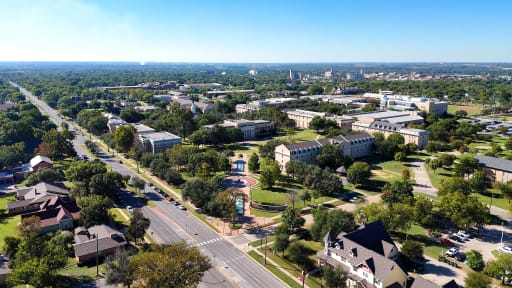
Austin College is a private liberal arts college in Sherman, Texas, that operates with the scrappy confidence of a school that knows its niche. It offers a classic, high-touch liberal arts curriculum—over 55 majors and minors, with popular tracks in psychology, biology, and business—within a highly residential, socially active campus where 85% of students live on-site. The college positions itself as a value-conscious gateway to a robust career, boasting strong graduation outcomes and a financial aid approach that makes its education accessible to a broad middle class.
Admission requirements
Test-optional — scores considered if submitted
Required
High school transcript
Grade point average
Letters of recommendation
Considered (not required)
Class rank
Test scores (SAT/ACT)
College-prep program
Demonstrated competencies
TOEFL (non-native English)
Source: IPEDS Admissions survey (2022) via Urban Institute. Covers formal factors only — it does not reflect essays, extracurriculars, or other holistic criteria.
More details
Undergrad enrollment
1,165
In-state tuition
$48,680
Out-of-state tuition
$48,680
Graduation Rate
67%
On-Campus Housing
85% of students
Early Notification
Offered (Decisions by Mar 1)
Merit Scholarships
Up to $33,000 (auto-considered)
Demonstrated Interest
Considered
Student Organizations
Over 75
Median Earnings (10yr)
$61,296
Students Receiving Aid
100% of first-years
Outcomes & value
Outcomes & value
Median earnings (10 yr)
$61,296
Value (earnings ÷ net price)
2.9×
Median debt at graduation
$24,500
Graduation rate
67%
First-year retention
79%
Reducing loan balance (3 yr)
73%
Pell (lower-income) share
31%
First-gen share (among federal-aid recipients)
23%
Financial health
2.6 / 3.0Meets the federal financial-responsibility standard
U.S. Dept. of Education Financial Responsibility Composite Score (FY2022-23). Scale −1.0 to 3.0; ≥1.5 meets the standard. Reported for private nonprofit & for-profit institutions only — public universities are state-backed and not scored, so this is a stability signal, not a ranking.
Top-earning majors
Median earnings by field of study (highest credential), ~2 years after completion.
Economics$44,384
Business/Commerce, General$38,289
Biology, General$32,925
International Relations and National Security Studies$29,685
History$25,967
Romance Languages, Literatures, and Linguistics$25,194
Campus & location
Campus safety
On-campus violent crimes (2024)
0
Per 1,000 students
0.00
On-campus criminal offenses classed as violent (murder/non-negligent manslaughter, rape, robbery, aggravated assault) for the most recent reported year. Source: U.S. Dept. of Education Campus Safety and Security (Clery Act). Counts reflect what’s reported to the school, and urban campuses often report more partly due to non-student incidents nearby — read alongside campus size and setting, not as a standalone safety verdict.
Climate
Pleasant days / yr
90
Summer high
92°F
Winter low
38°F
Annual rain
49.2"
Annual snow
2.6"
Natural-hazard risk
Relatively Low
Pleasant days counts days per year with a mean temperature of 55–75°F, a high at or below 90°F, a low at or above 45°F, and little precipitation — a transparent comfort measure, not a weighting we invented. Computed from Open-Meteo ERA5 daily history (2019–2023). Natural-hazard risk is the county’s composite rating from the FEMA National Risk Index.
Deep dive — research, future-scholar output & economic mobility▾
Research output
Institutional h-index
161
Scholarly works
4,463
Institutional research volume and impact from OpenAlex. The h-index reflects large research universities and will be low for teaching-focused liberal-arts colleges — not a measure of undergraduate quality.
Economic mobility
Mobility rate
2.3%
Bottom → top quintile
40%
From bottom quintile
6%
Mobility rate = the share of students who both start in the bottom household-income quintile and reach the top quintile; bottom → top is that chance conditional on starting at the bottom. Source: Opportunity Insights Mobility Report Cards (Chetty, Friedman, Saez, Turner & Yagan). Reflects 1980–82 birth cohorts, so it’s directional, not current.
Quick answers
What is the acceptance rate at Austin College?
Austin College's acceptance rate is approximately 48% (Sherman, TX), based on the most recent figures we compiled from public and primary sources.
What SAT score do you need for Austin College?
Admitted students at Austin College typically score 1100–1310 on the SAT (the middle-50% range). Scores outside this band are still admitted, especially with strong applications.
How much does Austin College cost?
At Austin College, the average net price (after aid) is about $21,107 per year. Actual cost varies with financial aid and residency.
How many undergraduates attend Austin College?
Austin College enrolls approximately 1,165 undergraduate students.
Where is Austin College located?
Austin College is located in Sherman, TX.
Admissions
Austin College's admissions process is moderately selective, offering a tangible pathway to a private liberal arts education for a wide academic range. The college admits about half of its applicants, with the middle 50% of admitted students scoring between 1100 and 1310 on the SAT or between 23 and 29 on the ACT. The average GPA of incoming students is around 3.59. The college offers an Early Notification option, promising decisions to applicants as early as November 15 and no later than March 1. While the overall rate—the percentage of admitted students who enroll—has been reported as low (around 14-17%), this is not uncommon for liberal arts colleges and suggests admitted students are often weighing multiple options. The , a standard resource for admissions factors, indicates that Austin College likely considers a student's demonstrated interest in the institution as part of its evaluation, though the specific weight is not detailed in the provided sources.
Earnings = median of students working ~10 years after entry; debt = median of graduates. Value divides 10-yr earnings by one year’s net price — read it as earnings per dollar of annual cost, not a full lifetime ROI; it favors lower-cost schools. Source: U.S. Dept. of Education College Scorecard. Figures lag ~2 years and reflect all students, not your intended major.
Multi/Interdisciplinary Studies, Other
$24,035
Political Science and Government$24,035
Source: U.S. Dept. of Education College Scorecard (field-of-study earnings). Figures cover graduates who received federal aid and lag ~2 years; not all programs report data.
The academic experience at Austin College is defined by a comprehensive liberal arts and sciences foundation. Students can choose from over 55 majors, minors, and unique programs, spanning the humanities, social sciences, and STEM fields. The curriculum encourages exploration, with the option for students to design their own major. The most popular majors reflect a blend of pre-professional and traditional liberal arts interests: Psychology, Biology/Biological Sciences, Business/Commerce, and History. This balance has earned the college recognition from The Princeton Review as a "Best Value College," highlighting its combination of academic quality, career preparation, and affordability. The college's identity is firmly rooted in the liberal arts model, aiming to provide, as its website states, "excellent career preparation" within a broader framework of intellectual development.
Life at Austin College is intensely campus-centric and communal. A full 85% of students live in college-owned, -operated, or -affiliated housing, creating a highly residential environment where the line between academic and social life blurs. The campus supports this community with over 75 student organizations, ensuring that virtually every interest has a niche. Descriptions of campus culture point to a lively social scene; Niche.com notes "a lively party culture, with frequent social gatherings involving alcohol," which is enjoyed by many but can be overwhelming for some. The college itself promotes campus life as being "about friendships, fun, and finding your purpose," facilitated by fully trained residential life staff. This combination of abundant on-campus housing, a dense network of clubs, and an active social calendar fosters a tight-knit, all-in experience where students are deeply embedded in the college ecosystem from move-in to graduation.
Austin College delivers solid post-graduation results that underscore the value of its liberal arts degree. The college's graduation rate is a key strength, with reported figures ranging from 65% to 69%, placing it among the top 30% of colleges nationally for this metric. This consistent graduation success is a cornerstone of its value proposition. In terms of early career earnings, data shows Austin College graduates earning a median income of about $28,501 one year after graduation, which grows significantly to approximately $56,983 five years out. These outcomes have been recognized by external rankings; for example, Money Magazine has included Austin College on its "Best Colleges" list, which evaluates graduation rates, cost, financial aid, and alumni salaries. The college also tracks graduate unemployment, reporting a rate of less than 15% from its graduate surveys, indicating successful transitions into the workforce or further education.
Austin College employs an aggressive financial aid strategy to bridge the gap between its sticker price and what middle-class families can afford. A remarkable 100% of full-time beginning undergraduates receive grant or scholarship aid. The average financial aid package is substantial, reported to be as high as $48,681, which significantly reduces the . The college offers automatic consideration for general merit scholarships up to $33,000, using a recalculated, weighted GPA for evaluation—no separate application is required. While the sources do not indicate that Austin College has a formal "no-loan" policy for all students (where 100% of need is met with grants), its high aid participation rate and sizable merit awards demonstrate a committed effort to make attendance feasible. The net price—the average cost after aid—varies slightly in reports but centers around the mid-$20,000s, reflecting the college's focus on being a financially accessible private option.
Austin College stands out as a deliberate and successful model of the accessible private liberal arts college. It doesn't chase the ultra-selectivity of its Northeastern peers; instead, it focuses on delivering the core benefits of a liberal arts education—small classes, faculty attention, a residential community, and broad intellectual training—to a wider segment of students. Its distinction lies in the effective pairing of this model with strong outcomes: a graduation rate that outpaces many public universities and earning potential that grows robustly in the years after graduation. The campus culture is all-in, with the vast majority of students living on campus and participating in a dense web of organizations and social events. Furthermore, it backs its mission with tangible financial support, guaranteeing merit scholarship consideration for all applicants and providing aid to every incoming student. In essence, Austin College offers a classic, full-immersion liberal arts experience with a practical Texan focus on value, community, and return on investment.