Loading…
← All schools
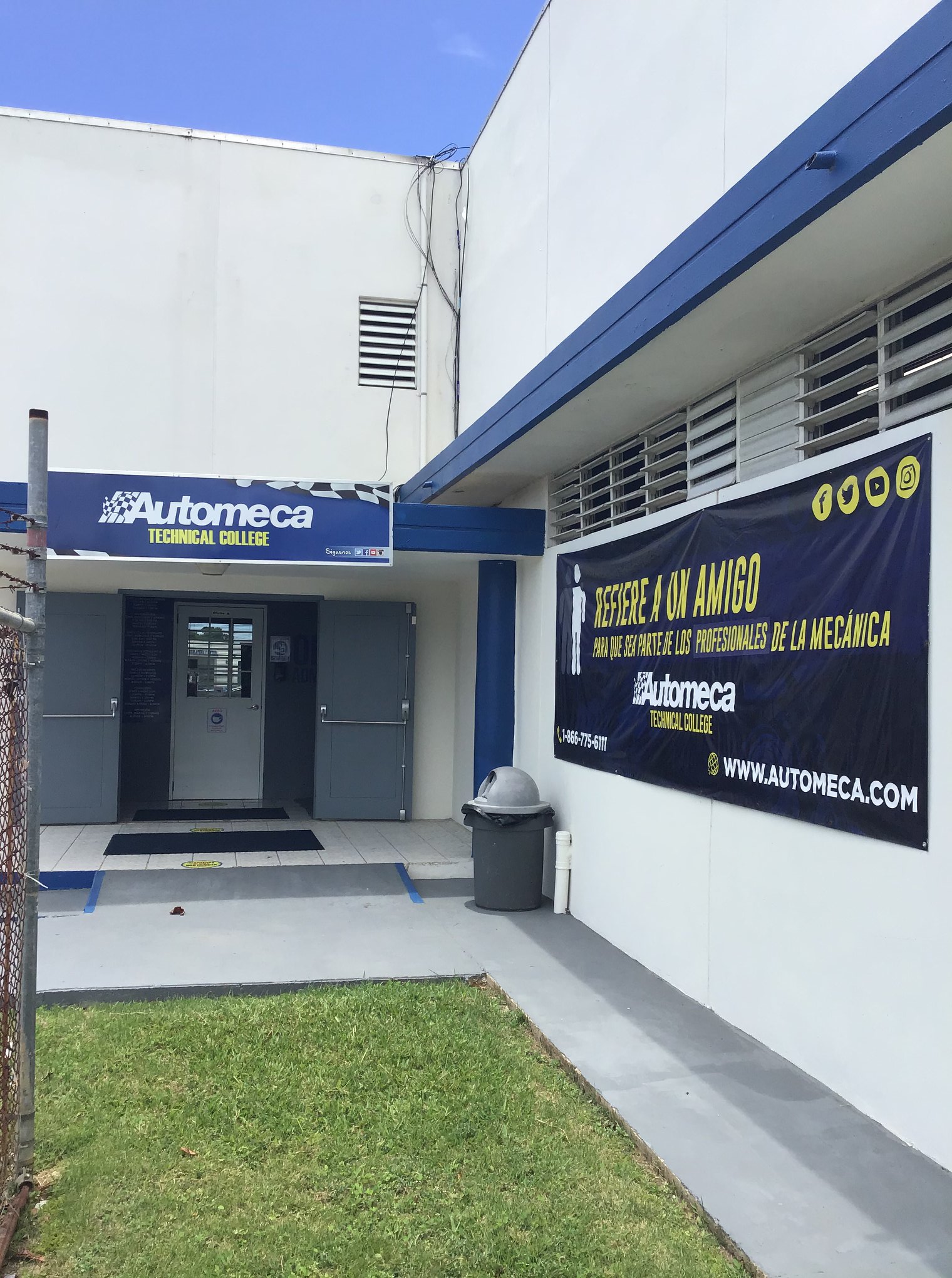
Automeca Technical College-Aguadilla
Aguadilla, PRprivate forprofitwww.automeca.com/
Avg net price
$5,268
Earnings (10 yr)
$24,632
Acceptance & SAT from Common Data Set / IPEDS; net price, earnings & graduation from the U.S. Dept. of Education College Scorecard. Figures lag ~1–2 years — verify with the school.
Automeca Technical College-Aguadilla is a small, for-profit trade school in Cabán, Puerto Rico, that operates with the single-minded focus of a precision garage. With a student body that is overwhelmingly male and an institutional mission laser-focused on automotive mechanics, it offers a no-frills, vocational path into the skilled trades. Its defining characteristic is a pragmatic, hands-on education where students pay a relatively low net price for training that leads directly to a specific, if modestly compensated, career.
More details
- Undergrad enrollment
- 246
- In-state tuition
- $9,095
- Out-of-state tuition
- $9,095
- Location
- Cabán, Aguadilla, Puerto Rico
- Graduation Rate
- 77.9%
- Institution Type
- For-profit college
- Gender Distribution
- 94% male, 6% female
- Full-Time Retention Rate
- 76%
- Students Receiving Grant Aid
- 96%
- Average Grant/Scholarship Aid
- $9,284
Outcomes & value
Outcomes & value
- Median earnings (10 yr)
- $24,632
- Value (earnings ÷ net price)
- 4.7×
- Median debt at graduation
- $3,030
- Reducing loan balance (3 yr)
- 36%
- Pell (lower-income) share
- 94%
- First-gen share (among federal-aid recipients)
- 47%
Earnings = median of students working ~10 years after entry; debt = median of graduates. Value divides 10-yr earnings by one year’s net price — read it as earnings per dollar of annual cost, not a full lifetime ROI; it favors lower-cost schools. Source: U.S. Dept. of Education College Scorecard. Figures lag ~2 years and reflect all students, not your intended major.
Campus & location
Campus safety
- On-campus violent crimes (2024)
- 0
On-campus criminal offenses classed as violent (murder/non-negligent manslaughter, rape, robbery, aggravated assault) for the most recent reported year. Source: U.S. Dept. of Education Campus Safety and Security (Clery Act). Counts reflect what’s reported to the school, and urban campuses often report more partly due to non-student incidents nearby — read alongside campus size and setting, not as a standalone safety verdict.
Climate
- Pleasant days / yr
- 35
- Summer high
- 86°F
- Winter low
- 71°F
- Annual rain
- 48.9"
Pleasant days counts days per year with a mean temperature of 55–75°F, a high at or below 90°F, a low at or above 45°F, and little precipitation — a transparent comfort measure, not a weighting we invented. Computed from Open-Meteo ERA5 daily history (2019–2023).
Quick answers
- How much does Automeca Technical College-Aguadilla cost?
- At Automeca Technical College-Aguadilla, the average net price (after aid) is about $5,268 per year. Actual cost varies with financial aid and residency.
- How many undergraduates attend Automeca Technical College-Aguadilla?
- Automeca Technical College-Aguadilla enrolls approximately 246 undergraduate students.
- Where is Automeca Technical College-Aguadilla located?
- Automeca Technical College-Aguadilla is located in Aguadilla, PR.
Admissions
Admissions at Automeca Technical College-Aguadilla are characterized by open access, a hallmark of many career-focused technical institutions. While no explicit for the Aguadilla campus is provided in the sources, its sister campus in Caguas is noted as having a 100% acceptance rate, and its Bayamon campus is similarly described with a 100% acceptance rate for Fall 2020. This strongly suggests an open-admissions or minimally selective policy at Aguadilla as well. The school does not appear to prioritize standardized test scores like the SAT or ACT in its admissions process, as sources listing admissions data for non-open-admissions schools explicitly note that such data is not presented for this institution. The total enrollment is small, with 231 students, and the gender distribution is starkly skewed: 94% male and 6% female.
Academics
The academic experience is singular and vocational, revolving almost entirely around automotive technology. The most popular major—and likely the core of the curriculum—is Automobile/Automotive Mechanics Technology/Technician. The institution's vision, as stated in its student catalog, is to be a leading institution recognized for its innovative character in bringing together students, teachers, and industry. With over 40 years of experience, it aims to form professionals in automotive mechanics and emerging technologies in Puerto Rico. The student-faculty ratio at a sister campus is 21:1, which may be indicative of the instructional model. The full-time retention rate is reported as 76%, suggesting that a significant majority of students who start their programs continue into a second year.
Compare Automeca Technical College-Aguadilla
vs Inter American University of Puerto Rico-Fajardovs EDP University of Puerto Rico Inc-San Juanvs Inter American University of Puerto Rico-Arecibovs Inter American University of Puerto Rico-Aguadilla
See colleges similar to Automeca Technical College-Aguadilla →Sources
- Automeca Technical College-Aguadilla
- Automeca Technical College-Aguadilla - Sallie
- Automeca Technical College-Aguadilla Stats
- Automeca Technical College-Aguadilla - DFR Report HTML
- Common Data Set: Home
- Common Data Set 2023 – 2024
- Automeca Technical College - Caguas
- Automeca Technical College-Bayamon - Sallie
- Automeca Technical College-Aguadilla Information
- Automeca Technical College-Aguadilla Admissions
- Automeca Technical College