Loading…
← All schools
Aviation Institute of Maintenance-Atlanta
Duluth, GAprivate forprofitaviationmaintenance.edu
Avg net price
$27,365
Earnings (10 yr)
$48,191
Acceptance & SAT from Common Data Set / IPEDS; net price, earnings & graduation from the U.S. Dept. of Education College Scorecard. Figures lag ~1–2 years — verify with the school.
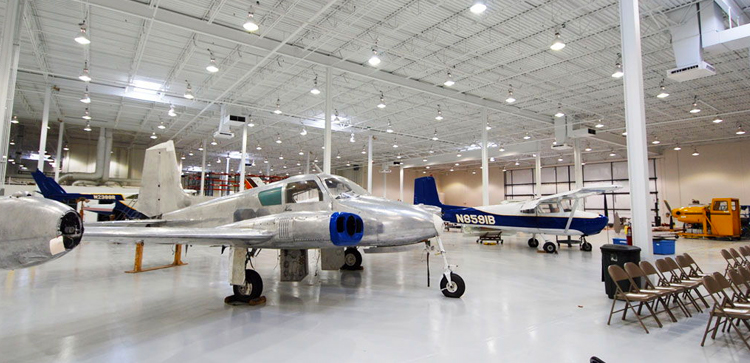
The Aviation Institute of Maintenance-Atlanta is a singularly focused trade school in Duluth, Georgia, where the admissions gate is wide open but the curriculum is intensely specific. This is not a place for a liberal arts exploration; it's a direct pipeline into the hands-on, grease-under-the-fingernails world of aviation maintenance and welding, where success is measured by certification and immediate job placement rather than selectivity. The environment is pragmatic and career-driven, built for students who want to bypass traditional college and get straight to work on the tarmac.
More details
- Undergrad enrollment
- 824
- In-state tuition
- $16,657
- Out-of-state tuition
- $16,657
- Top Majors
- Aircraft Maintenance, Welding, Heavy Equipment Maintenance
- Student-Faculty Ratio
- 17:1
- Median Earnings (10yr)
- $48,191
- Average Grant/Scholarship Aid
- $6,191
- First-Time Students Receiving Aid
- 75%
Outcomes & value
Outcomes & value
- Median earnings (10 yr)
- $48,191
- Value (earnings ÷ net price)
- 1.8×
- Median debt at graduation
- $31,500
- Reducing loan balance (3 yr)
- 19%
- Pell (lower-income) share
- 56%
- First-gen share (among federal-aid recipients)
- 44%
Earnings = median of students working ~10 years after entry; debt = median of graduates. Value divides 10-yr earnings by one year’s net price — read it as earnings per dollar of annual cost, not a full lifetime ROI; it favors lower-cost schools. Source: U.S. Dept. of Education College Scorecard. Figures lag ~2 years and reflect all students, not your intended major.
Campus & location
Campus safety
- On-campus violent crimes (2024)
- 0
On-campus criminal offenses classed as violent (murder/non-negligent manslaughter, rape, robbery, aggravated assault) for the most recent reported year. Source: U.S. Dept. of Education Campus Safety and Security (Clery Act). Counts reflect what’s reported to the school, and urban campuses often report more partly due to non-student incidents nearby — read alongside campus size and setting, not as a standalone safety verdict.
Climate
- Pleasant days / yr
- 101
- Summer high
- 86°F
- Winter low
- 39°F
- Annual rain
- 65.1"
- Annual snow
- 1"
- Natural-hazard risk
- Relatively High
Pleasant days counts days per year with a mean temperature of 55–75°F, a high at or below 90°F, a low at or above 45°F, and little precipitation — a transparent comfort measure, not a weighting we invented. Computed from Open-Meteo ERA5 daily history (2019–2023). Natural-hazard risk is the county’s composite rating from the FEMA National Risk Index.
Quick answers
- How much does Aviation Institute of Maintenance-Atlanta cost?
- At Aviation Institute of Maintenance-Atlanta, the average net price (after aid) is about $27,365 per year. Actual cost varies with financial aid and residency.
- How many undergraduates attend Aviation Institute of Maintenance-Atlanta?
- Aviation Institute of Maintenance-Atlanta enrolls approximately 824 undergraduate students.
- Where is Aviation Institute of Maintenance-Atlanta located?
- Aviation Institute of Maintenance-Atlanta is located in Duluth, GA.
Admissions
AIM-Atlanta operates on an open admission policy, meaning it accepts all applicants who meet the basic requirements. There is no competitive to navigate; the barrier to entry is functional, not selective. The process is straightforward: applicants must provide proof of education (a high school diploma or GED), complete an application form, and submit any required identification documents. Standardized test scores like the SAT or ACT are not a factor in admissions decisions, aligning with the school's mission of accessible career training. With a total enrollment of 824 students as of 2024, the institute's model is built on intake, not exclusion.
Academics
The academic experience is a laser-focused, fast-paced dive into technical trades. The institute is a nationally accredited school and a leading provider of aviation maintenance and welding training. Its top major is Vehicle Maintenance and Repair Technologies, with popular programs specifically in Aircraft Maintenance, Welding, and Heavy Equipment Maintenance Technician. The curriculum is designed to thoroughly prepare students for industry certification exams, emphasizing the practical, hands-on skills demanded by employers. The student-faculty ratio is 17:1, which, in theory, allows for more direct instruction in shop and classroom settings. However, the quality of instruction has been a point of discussion, with some anecdotal reports citing lower graduation rates and concerns about instructors hired directly from graduation without extensive real-world experience.
Compare Aviation Institute of Maintenance-Atlanta
See colleges similar to Aviation Institute of Maintenance-Atlanta →Sources
- Aviation Institute of Maintenance-Atlanta - College Scorecard
- Aviation Institute of Maintenance-Atlanta - Data USA
- Common Data Set: Home
- Admissions - Aviation Institute of Maintenance
- 2025–2026 Common Data Set Now Available
- Where to find Common Data Set (CDS) for college admission statistics
- Aviation Institute of Maintenance - Atlanta - Niche
- Aviation Institute Of Maintenance Atlanta Admissions - BigFuture
- Aviation Institute of Maintenance-Las Vegas Statistics - Overgrad
- Aviation Institute of Maintenance-Atlanta - School Profile…