Loading…
← All schools
Aviation Institute of Maintenance-Dallas
Irving, TXprivate forprofitaviationmaintenance.edu
Avg net price
$27,139
Earnings (10 yr)
$42,375
Acceptance & SAT from Common Data Set / IPEDS; net price, earnings & graduation from the U.S. Dept. of Education College Scorecard. Figures lag ~1–2 years — verify with the school.
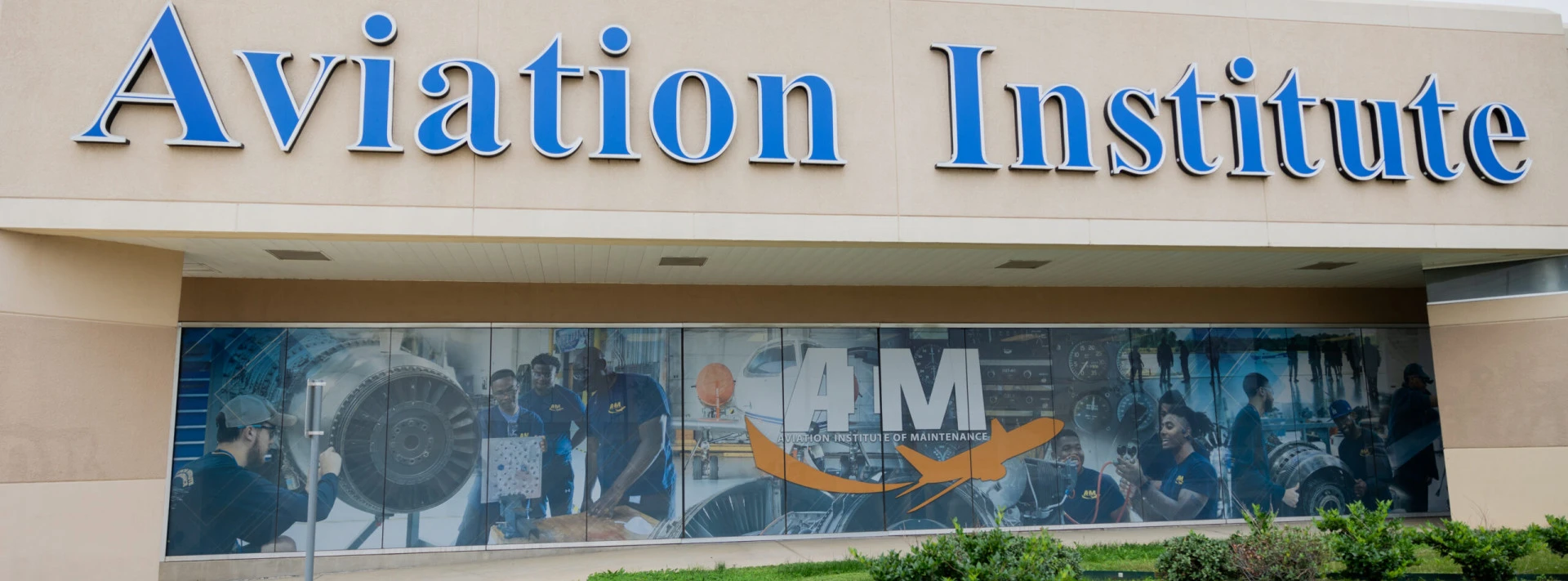
The Aviation Institute of Maintenance-Dallas is not a traditional university but a focused, hands-on trade school in Irving, Texas, built for a single, high-stakes purpose: turning students into certified aviation maintenance technicians. With an open admissions policy, its 18-to-1 student-faculty ratio, and a curriculum centered entirely on the FAA Airframe and Powerplant (A&P) license, AIM-Dallas operates like a career accelerator, trading campus lawns for hangar bays. Its identity is defined by practical outcomes—getting graduates into hangars—with a reported 55.7% graduation rate and a median earnings profile that reflects the skilled-trade pathway.
More details
- Undergrad enrollment
- 495
- In-state tuition
- $16,757
- Out-of-state tuition
- $16,757
- Graduation Rate
- 55.7%
- Most Popular Major
- Aircraft Maintenance
- Student-Faculty Ratio
- 18 to 1
- Median Earnings (10yr)
- $42,375
- First-Year Retention Rate
- 66%
Outcomes & value
Outcomes & value
- Median earnings (10 yr)
- $42,375
- Value (earnings ÷ net price)
- 1.6×
- Median debt at graduation
- $32,229
- Reducing loan balance (3 yr)
- 27%
- Pell (lower-income) share
- 32%
- First-gen share (among federal-aid recipients)
- 48%
Earnings = median of students working ~10 years after entry; debt = median of graduates. Value divides 10-yr earnings by one year’s net price — read it as earnings per dollar of annual cost, not a full lifetime ROI; it favors lower-cost schools. Source: U.S. Dept. of Education College Scorecard. Figures lag ~2 years and reflect all students, not your intended major.
Campus & location
Campus safety
- On-campus violent crimes (2024)
- 0
On-campus criminal offenses classed as violent (murder/non-negligent manslaughter, rape, robbery, aggravated assault) for the most recent reported year. Source: U.S. Dept. of Education Campus Safety and Security (Clery Act). Counts reflect what’s reported to the school, and urban campuses often report more partly due to non-student incidents nearby — read alongside campus size and setting, not as a standalone safety verdict.
Climate
- Pleasant days / yr
- 88
- Summer high
- 94°F
- Winter low
- 40°F
- Annual rain
- 53.8"
- Annual snow
- 1.6"
- Natural-hazard risk
- Very High
Pleasant days counts days per year with a mean temperature of 55–75°F, a high at or below 90°F, a low at or above 45°F, and little precipitation — a transparent comfort measure, not a weighting we invented. Computed from Open-Meteo ERA5 daily history (2019–2023). Natural-hazard risk is the county’s composite rating from the FEMA National Risk Index.
Quick answers
- How much does Aviation Institute of Maintenance-Dallas cost?
- At Aviation Institute of Maintenance-Dallas, the average net price (after aid) is about $27,139 per year. Actual cost varies with financial aid and residency.
- How many undergraduates attend Aviation Institute of Maintenance-Dallas?
- Aviation Institute of Maintenance-Dallas enrolls approximately 495 undergraduate students.
- Where is Aviation Institute of Maintenance-Dallas located?
- Aviation Institute of Maintenance-Dallas is located in Irving, TX.
Admissions
AIM-Dallas employs an open admission policy, meaning all applicants who meet the basic requirements are accepted; there is no competitive selection process based on grades or test scores. The barrier to entry is functional, not academic: applicants must provide proof of education (a high school diploma or GED), complete an application form, and submit any required identification documents. This model is designed for accessibility, targeting career-changers, veterans, and those seeking a direct path to a technical trade without the traditional college admissions gauntlet. The school's first-year retention rate is reported at 66%, and its total enrollment sits at 429 students. Notably, sources discussing selectivity or for other AIM campuses reference a national average around 68%, but these do not apply to the Dallas campus due to its open policy.
Compare Aviation Institute of Maintenance-Dallas
See colleges similar to Aviation Institute of Maintenance-Dallas →Sources
- Common Data Set | Institutional Success and Decision Support
- Aviation Institute of Maintenance-Dallas - Sallie
- Common Data Set | University of North Texas
- Common Data Set 2024-2025
- A. General Information
- Common Data Set 2023 – 2024
- Aviation Institute of Maintenance - Indianapolis
- Aviation Institute Of Maintenance Dallas Admissions - BigFuture
- Admissions
- Aviation Institute of Maintenance-Dallas Statistics