Admit rate has ranged 36%–100% over the last 5 years — notably volatile. Source: IPEDS via Urban Institute.
Acceptance & SAT from Common Data Set / IPEDS; net price, earnings & graduation from the U.S. Dept. of Education College Scorecard. Figures lag ~1–2 years — verify with the school.
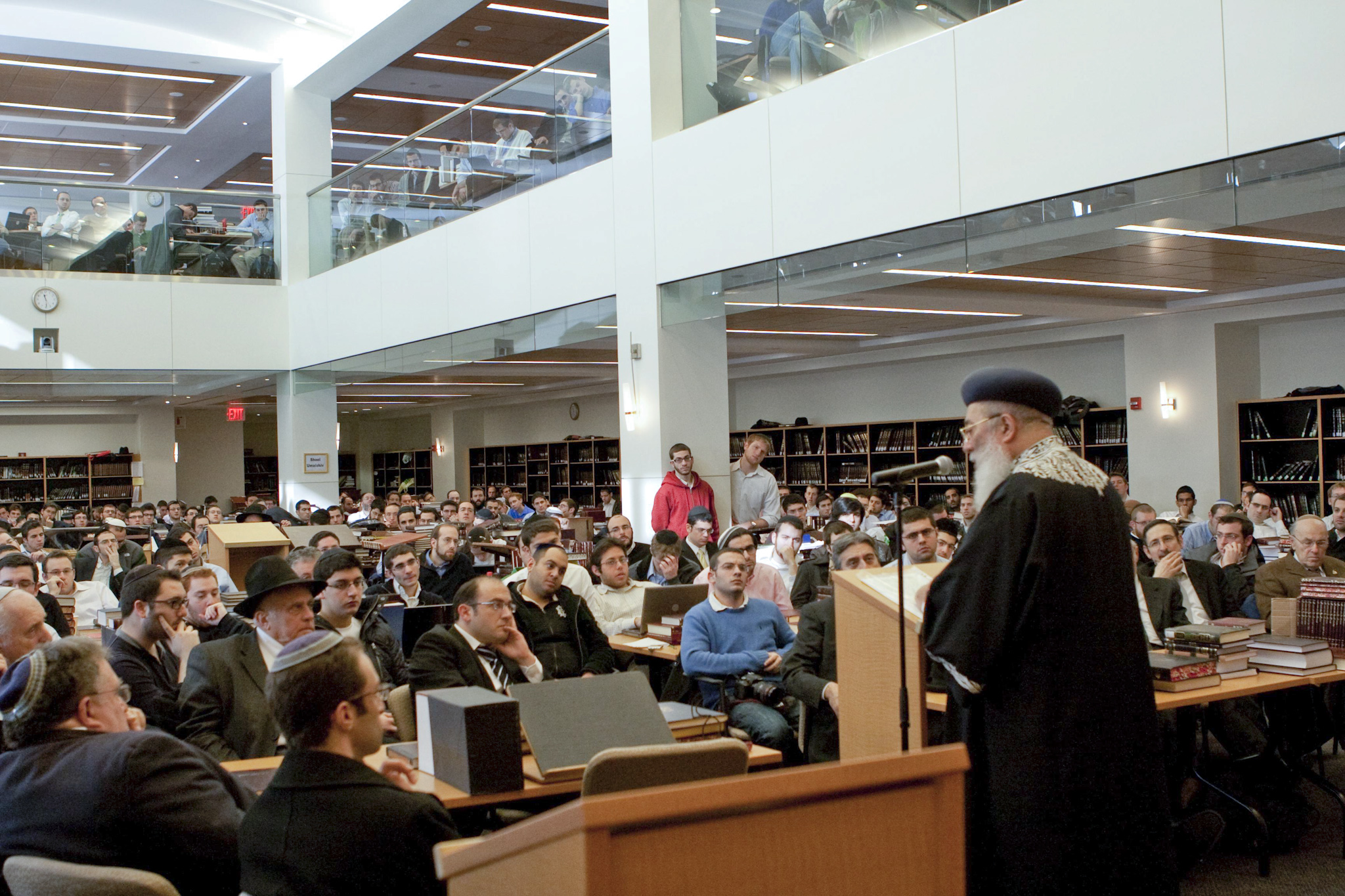
Bais Medrash Elyon is not a typical American college. It is a very small, highly residential yeshiva in Monsey, New York, offering a singular, immersive focus on Talmudic and Rabbinical Studies. The institution operates with a unique admissions profile and a deeply specialized academic mission, serving a specific community of Orthodox Jewish men dedicated to intensive textual analysis and religious scholarship.
Admission requirements
Test-blind — scores not considered
Required
Letters of recommendation
College-prep program
Considered (not required)
High school transcript
Grade point average
Demonstrated competencies
Source: IPEDS Admissions survey (2022) via Urban Institute. Covers formal factors only — it does not reflect essays, extracurriculars, or other holistic criteria.
More details
Undergrad enrollment
61
In-state tuition
$8,600
Out-of-state tuition
$8,600
Campus Setting
Highly Residential
Graduation Rate
0%
Sole Major Offered
Talmudic and Rabbinical Studies
Student-Faculty Ratio
19:1
Outcomes & value
Outcomes & value
Graduation rate
—
First-year retention
75%
Pell (lower-income) share
11%
Earnings = median of students working ~10 years after entry; debt = median of graduates. Value divides 10-yr earnings by one year’s net price — read it as earnings per dollar of annual cost, not a full lifetime ROI; it favors lower-cost schools. Source: U.S. Dept. of Education College Scorecard. Figures lag ~2 years and reflect all students, not your intended major.
Campus & location
Campus safety
On-campus violent crimes (2024)
0
On-campus criminal offenses classed as violent (murder/non-negligent manslaughter, rape, robbery, aggravated assault) for the most recent reported year. Source: U.S. Dept. of Education Campus Safety and Security (Clery Act). Counts reflect what’s reported to the school, and urban campuses often report more partly due to non-student incidents nearby — read alongside campus size and setting, not as a standalone safety verdict.
Climate
Pleasant days / yr
93
Summer high
82°F
Winter low
27°F
Annual rain
53.7"
Annual snow
24.2"
Natural-hazard risk
Relatively Moderate
Pleasant days counts days per year with a mean temperature of 55–75°F, a high at or below 90°F, a low at or above 45°F, and little precipitation — a transparent comfort measure, not a weighting we invented. Computed from Open-Meteo ERA5 daily history (2019–2023). Natural-hazard risk is the county’s composite rating from the FEMA National Risk Index.
Quick answers
What is the acceptance rate at Bais Medrash Elyon?
Bais Medrash Elyon's acceptance rate is approximately 38% (Monsey, NY), based on the most recent figures we compiled from public and primary sources.
How much does Bais Medrash Elyon cost?
At Bais Medrash Elyon, the average net price (after aid) is about $8,447 per year. Actual cost varies with financial aid and residency.
How many undergraduates attend Bais Medrash Elyon?
Bais Medrash Elyon enrolls approximately 61 undergraduate students.
Where is Bais Medrash Elyon located?
Bais Medrash Elyon is located in Monsey, NY.
Admissions
Admissions at Bais Medrash Elyon present a unique and somewhat opaque picture, with reported varying widely across sources from 38% to 100%. The institution's published , a standard document for admissions transparency, is not readily available for this school, making definitive analysis difficult. Available data suggests a small applicant pool; one source notes 32 total applicants for a recent cycle, with 12 admitted, yielding an acceptance rate of 37.5% and a high (enrollment rate) of 66.67%. The school does not require or consider SAT or ACT scores for admission. Without access to its specific Common Data Set Section C7, the relative importance of factors like academic rigor, recommendations, or demonstrated interest cannot be authoritatively determined for Bais Medrash Elyon, though these factors are standard components of the CDS framework used by other institutions.
Academic life at Bais Medrash Elyon is defined by an exclusive, all-consuming focus. The institution offers only one major: Talmudic and Rabbinical Studies. The curriculum is centered on intensive Torah study, emphasizing analytical skills, deep textual comprehension, and rigorous debate within the Talmudic tradition. This creates a focused academic environment unlike the broad liberal arts model of a typical university. The student-to-faculty ratio is reported at 19 to 1, which is above the national average, suggesting a potentially personalized, if not always small-class, learning environment within the yeshiva structure. The school awards bachelor's degrees, and the educational approach is described as supportive, with students engaging in stimulating classes and participatory textual analysis.
Bais Medrash Elyon is a "highly residential" institution with a "very small" total enrollment of approximately 138 students, all of whom are presumably male. Campus life is intrinsically linked to its academic and religious mission. The environment is built around a schedule of intensive study, prayer, and communal living within the Orthodox Jewish community of Monsey, New York. There is no indication of a conventional collegiate social scene with clubs, athletics, or Greek life. Instead, student life revolves around the yeshiva, fostering a close-knit, immersive experience where daily routines are shaped by religious observance and scholarly pursuit. The Carnegie Classification confirms its small size and highly residential character.
Outcome data for Bais Medrash Elyon graduates is largely undisclosed in the provided sources. Specific figures for graduation rates, post-graduate employment, and typical alumni earnings are not publicly available. One source states that graduation rate data "remains largely undisclosed, with specific figures not publicly available," while another notes that the school's effectiveness at graduating students is less than the national average. The federal College Scorecard and IPEDS data sources, which typically house this information, are referenced but do not provide explicit rates in the snippets. This lack of transparent outcome metrics is a significant distinction from most Title IV eligible institutions.
The published (tuition and fees) at Bais Medrash Elyon is relatively low compared to private four-year colleges, reported at $15,044. However, the —what students actually pay after grants and scholarships—is significantly lower. Sources report varying average net prices, including $8,019, $11,704, and $14,121. The canonical figure to use is $8,447. Financial aid is prevalent, with one source indicating 100% of undergraduate students receive some form of financial aid. The average total aid awarded is reported as $5,379 per year, with federal and state grants being common components. There is no information in the provided sources suggesting the school has a "no-loan" financial aid policy or a commitment to meet 100% of demonstrated financial need for all admitted students.
Bais Medrash Elyon stands out as a pure embodiment of a specialized religious education, completely divorced from the model of a comprehensive American university. Its singularity is its defining feature:
Absolute Academic Focus: It offers exactly one degree program—Talmudic and Rabbinical Studies—making it one of the most specialized post-secondary institutions in the country. Every resource and aspect of campus life is directed toward this single intellectual and spiritual pursuit.
Demographic and Cultural Specificity: It serves a very specific population: Orthodox Jewish men seeking an immersive yeshiva experience. The "highly residential" designation underscores that education here is a total life commitment, not just a classroom activity.
Operational Transparency (or Lack Thereof): It operates with a level of public data opacity unusual in higher education. The absence of a readily available and clear graduation outcomes marks it as an institution oriented inward toward its community, rather than outward toward the broader landscape of national college rankings and comparisons.
It is not a school for academic exploration or vocational training in secular fields. It is a dedicated house of advanced Jewish learning for those already committed to its path.