Admit rate has ranged 70%–79% over the last 5 years — notably volatile. Source: IPEDS via Urban Institute.
Acceptance & SAT from Common Data Set / IPEDS; net price, earnings & graduation from the U.S. Dept. of Education College Scorecard. Figures lag ~1–2 years — verify with the school.
Baldwin Wallace University, a liberal arts institution in the Cleveland suburb of Berea, Ohio, operates with a refreshingly pragmatic and accessible ethos. It combines a traditional liberal arts core with a sharp focus on career-ready skills, most notably in business, the performing arts, and health professions, backed by a striking 97% career outcomes rate. The campus culture is defined by its manageable scale, a robust slate of student organizations, and a straightforward admissions process that prizes academic preparation over cutthroat competition.
Admission requirements
Test-optional — scores considered if submitted
Required
High school transcript
Grade point average
College-prep program
TOEFL (non-native English)
Considered (not required)
Class rank
Letters of recommendation
Test scores (SAT/ACT)
Source: IPEDS Admissions survey (2022) via Urban Institute. Covers formal factors only — it does not reflect essays, extracurriculars, or other holistic criteria.
More details
Undergrad enrollment
2,842
In-state tuition
$39,832
Out-of-state tuition
$39,832
Top Majors
Business (21%), Visual & Performing Arts (18%), Health Professions
6-Year Graduation Rate
67%
Median Earnings (10yr)
$54,122
First-Year Retention Rate
84%
Career Outcome Rate (within 6 months)
97%
Outcomes & value
Outcomes & value
Median earnings (10 yr)
$54,122
Value (earnings ÷ net price)
2.0×
Median debt at graduation
$27,000
Graduation rate
67%
First-year retention
84%
Reducing loan balance (3 yr)
67%
Pell (lower-income) share
29%
First-gen share (among federal-aid recipients)
32%
Financial health
0.6 / 3.0Below the federal standard — financial stress
U.S. Dept. of Education Financial Responsibility Composite Score (FY2022-23). Scale −1.0 to 3.0; ≥1.5 meets the standard. Reported for private nonprofit & for-profit institutions only — public universities are state-backed and not scored, so this is a stability signal, not a ranking.
Top-earning majors
Median earnings by field of study (highest credential), ~2 years after completion.
Registered Nursing, Nursing Administration, Nursing Research and Clinical Nursing$61,516
Accounting and Related Services$53,984
Finance and Financial Management Services$50,677
Human Resources Management and Services$47,846
Environmental/Natural Resources Management and Policy$44,384
Multi/Interdisciplinary Studies, Other
Campus & location
Campus safety
On-campus violent crimes (2024)
0
Per 1,000 students
0.00
On-campus criminal offenses classed as violent (murder/non-negligent manslaughter, rape, robbery, aggravated assault) for the most recent reported year. Source: U.S. Dept. of Education Campus Safety and Security (Clery Act). Counts reflect what’s reported to the school, and urban campuses often report more partly due to non-student incidents nearby — read alongside campus size and setting, not as a standalone safety verdict.
Climate
Pleasant days / yr
94
Summer high
80°F
Winter low
26°F
Annual rain
46.3"
Annual snow
37.1"
Natural-hazard risk
Relatively High
Pleasant days counts days per year with a mean temperature of 55–75°F, a high at or below 90°F, a low at or above 45°F, and little precipitation — a transparent comfort measure, not a weighting we invented. Computed from Open-Meteo ERA5 daily history (2019–2023). Natural-hazard risk is the county’s composite rating from the FEMA National Risk Index.
Deep dive — research, future-scholar output & economic mobility▾
Research output
Institutional h-index
70
Scholarly works
1,093
Institutional research volume and impact from OpenAlex. The h-index reflects large research universities and will be low for teaching-focused liberal-arts colleges — not a measure of undergraduate quality.
Economic mobility
Mobility rate
1.1%
Bottom → top quintile
31%
From bottom quintile
4%
Mobility rate = the share of students who both start in the bottom household-income quintile and reach the top quintile; bottom → top is that chance conditional on starting at the bottom. Source: Opportunity Insights Mobility Report Cards (Chetty, Friedman, Saez, Turner & Yagan). Reflects 1980–82 birth cohorts, so it’s directional, not current.
Quick answers
What is the acceptance rate at Baldwin Wallace University?
Baldwin Wallace University's acceptance rate is approximately 76% (Berea, OH), based on the most recent figures we compiled from public and primary sources.
What SAT score do you need for Baldwin Wallace University?
Admitted students at Baldwin Wallace University typically score 1060–1290 on the SAT (the middle-50% range). Scores outside this band are still admitted, especially with strong applications.
How much does Baldwin Wallace University cost?
At Baldwin Wallace University, the average net price (after aid) is about $27,603 per year. Actual cost varies with financial aid and residency.
How many undergraduates attend Baldwin Wallace University?
Baldwin Wallace University enrolls approximately 2,842 undergraduate students.
Where is Baldwin Wallace University located?
Baldwin Wallace University is located in Berea, OH.
Admissions
Baldwin Wallace's admissions process is characterized by its accessibility and transparency. The university is less selective, with a high . Applicants can begin applying for the fall term as of August 1, and admission decisions are released after the application review process begins. The university considers admission test scores (SAT/ACT) during the application process. While the outlines that factors like demonstrated interest are considered by many institutions, the specific priority Baldwin Wallace places on it is not detailed in the provided sources. The admissions office emphasizes a rolling review process, allowing for decisions well in advance of regular notification dates for some plans.
The academic experience at BW is built on a fusion of liberal arts foundation and professional preparation. The education melds a competency curriculum with the rigor of more than 50 undergraduate programs, though other sources cite more than 65 academic programs spanning sciences, health, performing arts, and business. This blend is designed to foster career agility. The most popular majors for recent graduates cluster in three key areas: Business, Management, Marketing, and Related Support Services (21%); Visual and Performing Arts (18%); and Health Professions. The curriculum is supported by exceptional internships and extensive hands-on learning opportunities designed to build portfolios and prepare students for dynamic careers.
Earnings = median of students working ~10 years after entry; debt = median of graduates. Value divides 10-yr earnings by one year’s net price — read it as earnings per dollar of annual cost, not a full lifetime ROI; it favors lower-cost schools. Source: U.S. Dept. of Education College Scorecard. Figures lag ~2 years and reflect all students, not your intended major.
$44,384
Criminal Justice and Corrections$41,937
Marketing$41,007
Source: U.S. Dept. of Education College Scorecard (field-of-study earnings). Figures cover graduates who received federal aid and lag ~2 years; not all programs report data.
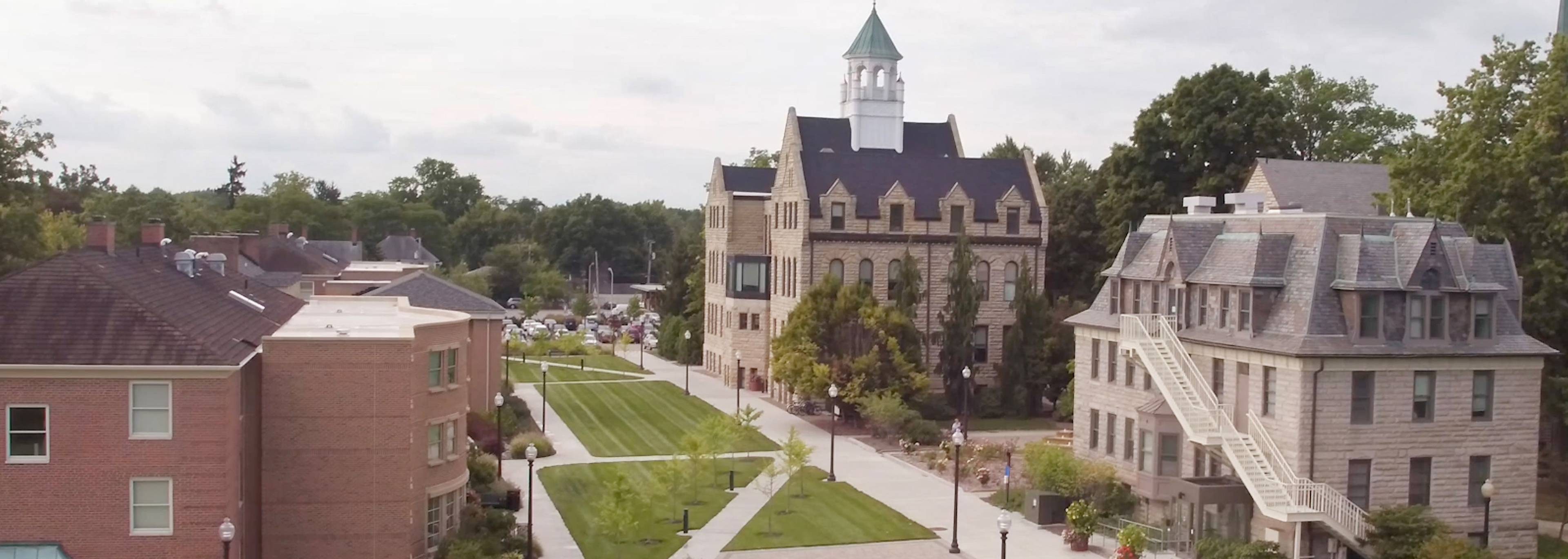
Life outside the classroom at BW is active and organization-driven, anchored by the College Union. Students can choose from a wide array of academic, faith-based, diversity-focused, cultural, fine arts, and recreational clubs. The range is illustrated by examples like the French Club, which provides a forum for social, cultural, and language activities including cinema, cuisine, and discussions. Recreational sports are available at both club and intramural levels. The Office of Student Life, located on the second floor of the Union, serves as a hub for getting involved or simply as a fun place to hang out. Campus traditions and New Student Orientation help build community, and the university's proximity to Cleveland offers additional cultural and professional opportunities.
BW's most compelling selling point is its powerful track record of launching graduates into careers and advanced study. A striking 97% of BW graduates are employed or in graduate school within six months of graduation. Furthermore, nearly half of BW graduates go on to earn an advanced degree. This outcome rate notably outperforms the reported national average of 86%. The university reports a strong first-year retention rate of 84%. However, a significant gap exists in six-year graduation rates between Pell Grant recipients and non-Pell recipients, with the latter graduating at a rate 14.2 percentage points higher.
BW actively promotes affordability through a guaranteed minimum of . All admitted first-year students qualify for at least $14,000 in renewable merit scholarships. To understand the full picture, the university encourages families to use the BW Calculator, which provides an estimate of financial support. Filing the FAFSA (using BW's school code 003014) is mandatory to receive a financial aid offer. Aid packages consist of scholarships, which do not require repayment, and federally backed low-interest loans that can be subsidized or unsubsidized. The average net price after aid—the cost after scholarships and grants are applied—is a key figure for families. The sources do not specify a "no-loan" policy or a commitment to meet 100% of demonstrated need without loans.
Baldwin Wallace carves out a distinctive niche by successfully marrying two often-separated educational ideals: the breadth and critical thinking of a liberal arts education and the concrete, portfolio-building preparation for a professional career. This is not a theoretical exercise; it's validated by outcomes, with 97% of graduates swiftly employed or in grad school. Its strength is not in cutthroat selectivity, but in accessible admission followed by high-impact support. The campus vibe is collaborative and involved, powered by a dense network of student organizations. For a student seeking a supportive, mid-sized community where the question "What can I do with this major?" is answered with internships, skills, and a near-guarantee of post-graduate traction, BW presents a compelling and unusually pragmatic choice in the Ohio liberal arts landscape.
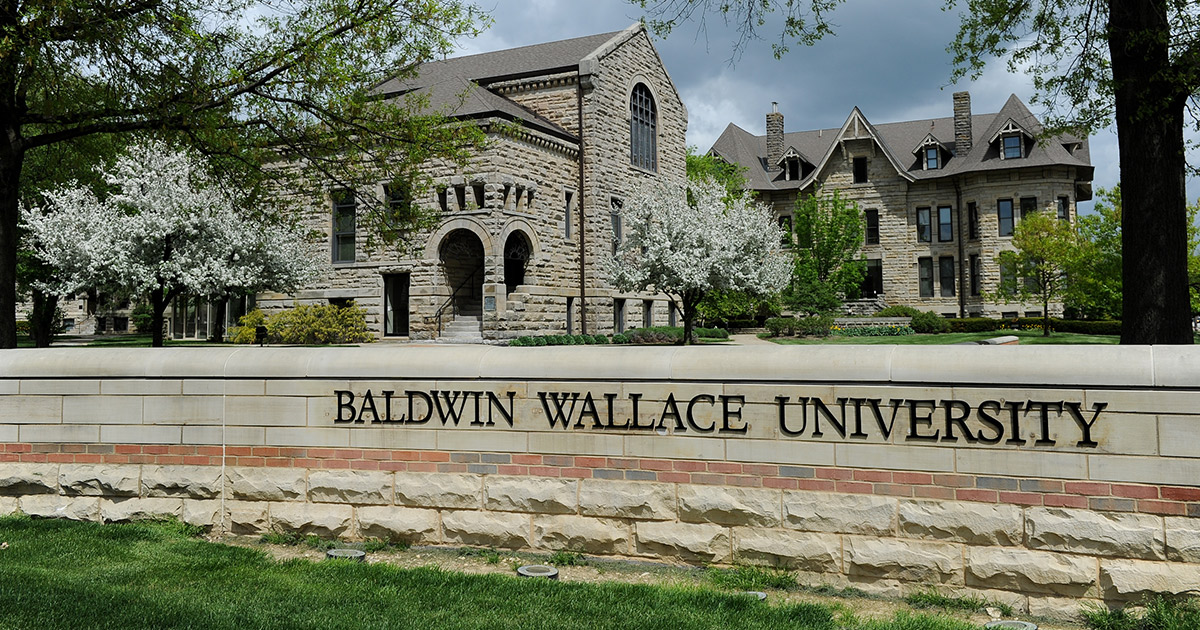
Baldwin Wallace University seal · sourceBaldwin Wallace University · sourceBaldwin Wallace University · sourceBaldwin Wallace University - Profile, Rankings and Data | US News Best Colleges · source