Loading…
← All schools
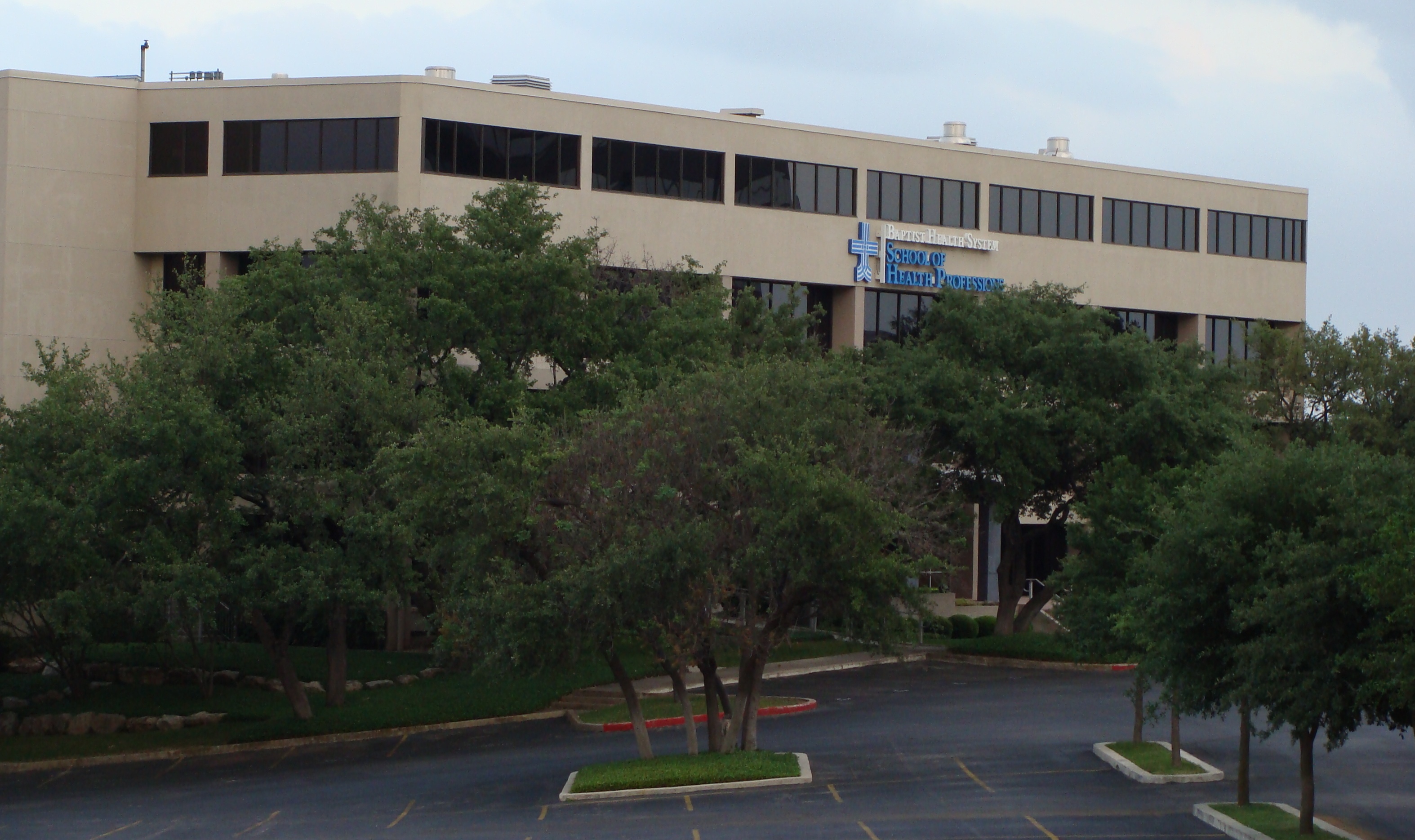
Baptist Health System School of Health Professions
San Antonio, TXprivate forprofitwww.bshp.edu/
Acceptance
100%
Earnings (10 yr)
$74,220
Acceptance & SAT from Common Data Set / IPEDS; net price, earnings & graduation from the U.S. Dept. of Education College Scorecard. Figures lag ~1–2 years — verify with the school.
Baptist Health System School of Health Professions is not a traditional liberal arts college; it's a focused, mission-driven pipeline for San Antonio's healthcare workforce. As the 'premier education component' of the Baptist Health System, this small school operates with the singular purpose of turning out highly skilled, practice-ready nurses and health professionals, boasting a near-perfect NCLEX pass rate and strong graduate earnings. The culture is one of direct, clinical immersion, where education is tightly coupled to real-world impact within the region's medical ecosystem.
More details
- Undergrad enrollment
- 575
- In-state tuition
- $13,760
- Out-of-state tuition
- $13,760
- 2024 NCLEX Pass Rate
- 98%
- Median Earnings (10yr)
- $74,220
- Graduation Rate (4 & 6 yr)
- 89%
- Student Population (Hispanic/Latino)
- 55.48%
- Students Receiving Grants/Scholarships
- 65%
Outcomes & value
Outcomes & value
- Median earnings (10 yr)
- $74,220
- Median debt at graduation
- $18,592
- Reducing loan balance (3 yr)
- 63%
- Pell (lower-income) share
- 53%
- First-gen share (among federal-aid recipients)
- 44%
Earnings = median of students working ~10 years after entry; debt = median of graduates. Value divides 10-yr earnings by one year’s net price — read it as earnings per dollar of annual cost, not a full lifetime ROI; it favors lower-cost schools. Source: U.S. Dept. of Education College Scorecard. Figures lag ~2 years and reflect all students, not your intended major.
Financial health
0.1 / 3.0Below the federal standard — financial stress
U.S. Dept. of Education Financial Responsibility Composite Score (FY2022-23). Scale −1.0 to 3.0; ≥1.5 meets the standard. Reported for private nonprofit & for-profit institutions only — public universities are state-backed and not scored, so this is a stability signal, not a ranking.
Top-earning majors
Median earnings by field of study (highest credential), ~2 years after completion.
- Health and Medical Administrative Services$76,460
- Registered Nursing, Nursing Administration, Nursing Research and Clinical Nursing$72,587
Source: U.S. Dept. of Education College Scorecard (field-of-study earnings). Figures cover graduates who received federal aid and lag ~2 years; not all programs report data.
Compare on earnings: best colleges for Nursing
Campus & location
Campus safety
- On-campus violent crimes (2024)
- 0
On-campus criminal offenses classed as violent (murder/non-negligent manslaughter, rape, robbery, aggravated assault) for the most recent reported year. Source: U.S. Dept. of Education Campus Safety and Security (Clery Act). Counts reflect what’s reported to the school, and urban campuses often report more partly due to non-student incidents nearby — read alongside campus size and setting, not as a standalone safety verdict.
Climate
- Pleasant days / yr
- 108
- Summer high
- 95°F
- Winter low
- 46°F
- Annual rain
- 37.8"
- Annual snow
- 1"
- Natural-hazard risk
- Relatively High
Pleasant days counts days per year with a mean temperature of 55–75°F, a high at or below 90°F, a low at or above 45°F, and little precipitation — a transparent comfort measure, not a weighting we invented. Computed from Open-Meteo ERA5 daily history (2019–2023). Natural-hazard risk is the county’s composite rating from the FEMA National Risk Index.
Quick answers
- What is the acceptance rate at Baptist Health System School of Health Professions?
- Baptist Health System School of Health Professions's acceptance rate is approximately 100% (San Antonio, TX), based on the most recent figures we compiled from public and primary sources.
- How many undergraduates attend Baptist Health System School of Health Professions?
- Baptist Health System School of Health Professions enrolls approximately 575 undergraduate students.
- Where is Baptist Health System School of Health Professions located?
- Baptist Health System School of Health Professions is located in San Antonio, TX.
Admissions
Admissions at the Baptist School of Health Professions is a pragmatic, criteria-focused process designed to identify candidates ready for its rigorous healthcare programs. The school reports a 100% , reflecting its open-access mission within its specific applicant pool. Admission decisions are based on entrance test scores and GPA, with published minimum criteria for its traditional RN program including an ACT score of 22, an SAT score of 1100, a Classical Learning Test (CLT) score of 72, a GPA of 2.5, and placement in the top 50% of one's high school graduating class. The process is streamlined, with prospective students encouraged to contact an Admissions Advisor directly to explore programs. There is no mention of Early Decision programs or that demonstrated interest is a considered factor in admissions decisions.
Compare Baptist Health System School of Health Professions
vs Virginia Military Institutevs Florida Polytechnic Universityvs Kalamazoo Collegevs Meredith College
See colleges similar to Baptist Health System School of Health Professions →Sources
- Baptist Health System School of Health Professions | Data USA
- Baptist Health System School of Health Professions - Sallie
- Baptist Health System School of Health Professions Graduation ...
- Baptist Health System School of Health Professions - ZoomInfo
- Baptist Health System School of Health Professions (off-campus)
- Admissions | Baptist Health System School of Health Professions
- Baptist Health System School of Health Professions - Niche
- Admissions FAQ - Baptist Health System School of Health Professions
- How competitive is the Baptist School of Health Professions ...
-min.jpg?sfvrsn=8bc11d38_1)