Admit rate has ranged 80%–99% over the last 5 years — notably volatile, though the latest figure above (75%) falls outside that window. Source: IPEDS via Urban Institute.
Acceptance & SAT from Common Data Set / IPEDS; net price, earnings & graduation from the U.S. Dept. of Education College Scorecard. Figures lag ~1–2 years — verify with the school.
Belmont Abbey College is a small, private Catholic liberal arts college in Belmont, North Carolina, that operates with a distinctly monastic rhythm and a focus on character formation alongside career preparation. Its identity is split between a rigorous core curriculum rooted in the Benedictine tradition and a surprisingly robust slate of pre-professional programs, most notably in business and sport management, all set on a historic campus less than an hour from Charlotte. The school is accessible, with a high acceptance rate, but its graduation rate and post-graduate earnings reflect the challenges many regional colleges face, making it a choice for students seeking a close-knit, values-driven community over prestige-driven outcomes.
Admission requirements
Test-optional — scores considered if submitted
Required
High school transcript
Grade point average
Considered (not required)
Class rank
Letters of recommendation
Test scores (SAT/ACT)
College-prep program
TOEFL (non-native English)
Source: IPEDS Admissions survey (2022) via Urban Institute. Covers formal factors only — it does not reflect essays, extracurriculars, or other holistic criteria.
More details
Undergrad enrollment
1,276
In-state tuition
$19,500
Out-of-state tuition
$19,500
Top Majors
Business Management, Sport Management, Psychology, Biology
Graduation Rate
47%
Early Action Offered
Yes
Student-Faculty Ratio
12:1
Early Decision Offered
No
Median Earnings (10yr)
$47,937
First-Year Retention Rate
68%
Outcomes & value
Outcomes & value
Median earnings (10 yr)
$47,937
Value (earnings ÷ net price)
1.9×
Median debt at graduation
$26,000
Graduation rate
47%
First-year retention
70%
Reducing loan balance (3 yr)
42%
Pell (lower-income) share
24%
First-gen share (among federal-aid recipients)
27%
Financial health
1.7 / 3.0Meets the federal financial-responsibility standard
U.S. Dept. of Education Financial Responsibility Composite Score (FY2022-23). Scale −1.0 to 3.0; ≥1.5 meets the standard. Reported for private nonprofit & for-profit institutions only — public universities are state-backed and not scored, so this is a stability signal, not a ranking.
Top-earning majors
Median earnings by field of study (highest credential), ~2 years after completion.
Business Administration, Management and Operations$46,790
Accounting and Related Services$43,519
Teacher Education and Professional Development, Specific Levels and Methods$35,416
Liberal Arts and Sciences, General Studies and Humanities$31,670
Sports, Kinesiology, and Physical Education/Fitness$29,685
Education, General
Campus & location
Campus safety
On-campus violent crimes (2024)
3
Per 1,000 students
2.20
On-campus criminal offenses classed as violent (murder/non-negligent manslaughter, rape, robbery, aggravated assault) for the most recent reported year. Source: U.S. Dept. of Education Campus Safety and Security (Clery Act). Counts reflect what’s reported to the school, and urban campuses often report more partly due to non-student incidents nearby — read alongside campus size and setting, not as a standalone safety verdict.
Climate
Pleasant days / yr
106
Summer high
88°F
Winter low
37°F
Annual rain
44"
Annual snow
1.5"
Natural-hazard risk
Relatively Moderate
Pleasant days counts days per year with a mean temperature of 55–75°F, a high at or below 90°F, a low at or above 45°F, and little precipitation — a transparent comfort measure, not a weighting we invented. Computed from Open-Meteo ERA5 daily history (2019–2023). Natural-hazard risk is the county’s composite rating from the FEMA National Risk Index.
Deep dive — research, future-scholar output & economic mobility▾
Research output
Institutional h-index
22
Scholarly works
274
Institutional research volume and impact from OpenAlex. The h-index reflects large research universities and will be low for teaching-focused liberal-arts colleges — not a measure of undergraduate quality.
Economic mobility
Mobility rate
1.5%
Bottom → top quintile
30%
From bottom quintile
5%
Mobility rate = the share of students who both start in the bottom household-income quintile and reach the top quintile; bottom → top is that chance conditional on starting at the bottom. Source: Opportunity Insights Mobility Report Cards (Chetty, Friedman, Saez, Turner & Yagan). Reflects 1980–82 birth cohorts, so it’s directional, not current.
Quick answers
What is the acceptance rate at Belmont Abbey College?
Belmont Abbey College's acceptance rate is approximately 75% (Belmont, NC), based on the most recent figures we compiled from public and primary sources.
What SAT score do you need for Belmont Abbey College?
Admitted students at Belmont Abbey College typically score 960–1200 on the SAT (the middle-50% range). Scores outside this band are still admitted, especially with strong applications.
How much does Belmont Abbey College cost?
At Belmont Abbey College, the average net price (after aid) is about $24,639 per year. Actual cost varies with financial aid and residency.
How many undergraduates attend Belmont Abbey College?
Belmont Abbey College enrolls approximately 1,276 undergraduate students.
Where is Belmont Abbey College located?
Belmont Abbey College is located in Belmont, NC.
Admissions
Belmont Abbey's admissions process is notably accessible, characterized by a high and a non-binding Early Action option. The college does not offer Early Decision. While the process is rolling, students who haven't taken standardized tests are still eligible to apply for Early Action, indicating a flexible approach to application components. The rate—the percentage of admitted students who enroll—is significantly below the average for schools with similar acceptance rates, suggesting admitted students often have other options. The admissions factors are not detailed in the provided sources, and there is no explicit information on whether the college considers demonstrated interest in its evaluation.
Academics at Belmont Abbey are delivered through a 12:1 student-faculty ratio, promising small class sizes and direct access to professors. The curriculum is bifurcated: a solid liberal arts core, including unique programs like Christianity and Culture, coexists with a strong suite of pre-professional majors. Business Management, Sport Management, Psychology, and Biology are among the most popular undergraduate programs. The Business Management major explicitly aims to develop skills in creative and critical thinking, decision-making, and writing. However, the average freshman retention rate of 68% suggests a notable portion of students do not return for a second year, which can be an indicator of academic or social fit challenges.
Earnings = median of students working ~10 years after entry; debt = median of graduates. Value divides 10-yr earnings by one year’s net price — read it as earnings per dollar of annual cost, not a full lifetime ROI; it favors lower-cost schools. Source: U.S. Dept. of Education College Scorecard. Figures lag ~2 years and reflect all students, not your intended major.
$26,739
Criminal Justice and Corrections$26,585
English Language and Literature, General$25,194
Source: U.S. Dept. of Education College Scorecard (field-of-study earnings). Figures cover graduates who received federal aid and lag ~2 years; not all programs report data.
With a total undergraduate enrollment of about 1,580, Belmont Abbey fosters a tight-knit, family-like atmosphere on its campus located less than an hour from downtown Charlotte. The college describes its environment as "vibrant," offering a range of social, cultural, and recreational activities. A signature event is Welcome Week, a packed schedule of activities for new and returning students organized by residence life, campus ministry, and student activities. While student life offers a balance of academics and community events, some external assessments suggest there is room for expanded club offerings and weekend programming to improve engagement. The proximity to Charlotte provides off-campus diversion, but the on-campus culture is central to the experience.
Graduation and post-graduate earnings are areas where Belmont Abbey faces significant challenges. The four-year graduation rate is notably low, and even the six-year rate falls below the national average for private colleges. The college itself has articulated a mission goal to raise its six-year graduation rate above 50%. A decade after entry, median earnings for graduates are modest. There is a gender disparity in outcomes, with female graduates reportedly having a higher graduation rate and average annual income than their male counterparts. These figures paint a picture of a college where persistence to degree and immediate post-graduate financial returns are hurdles, which prospective students must weigh against the institution's community and value-focused education.
Full-time tuition at Belmont Abbey is set at $22,500 annually for students taking 12 to 18 credit hours per semester. The college is aggressive with financial aid, with 99% of full-time beginning undergraduates receiving grant or scholarship aid. Merit awards, based on official GPA, range from $2,500 to $9,000 annually. The —the average cost after aid—brings the annual expense down significantly. Students must be accepted for admission before being considered for financial aid, and the FAFSA is a key component. The college offers federal subsidized and unsubsidized loans, but the provided sources do not indicate the existence of a "no-loan" policy or a commitment to meet 100% of demonstrated financial need for any income bracket.
Belmont Abbey College stands out precisely because it doesn't try to be everything to everyone. It is an unapologetically Catholic, Benedictine institution where the monastic rhythm of prayer and community is woven into campus life, offering a stark contrast to the secular, large-university experience. Its academic identity is a compelling hybrid: a required liberal arts core grounded in the Western and Catholic intellectual tradition ensures every graduate, whether a business major or a biologist, engages with philosophy, theology, and great books. Simultaneously, it has carved a practical niche with strong, popular programs in Business Management and Sport Management that connect directly to the professional sports economy of nearby Charlotte. This creates a unique value proposition: a small, character-forming community where you can study sport management within a framework of ethical philosophy, all while living 15 minutes from a minor league baseball stadium and under an hour from a major NFL city. It's for the student who wants the intimate support and moral focus of a religious college but also has a clear-eyed, career-oriented path in mind.
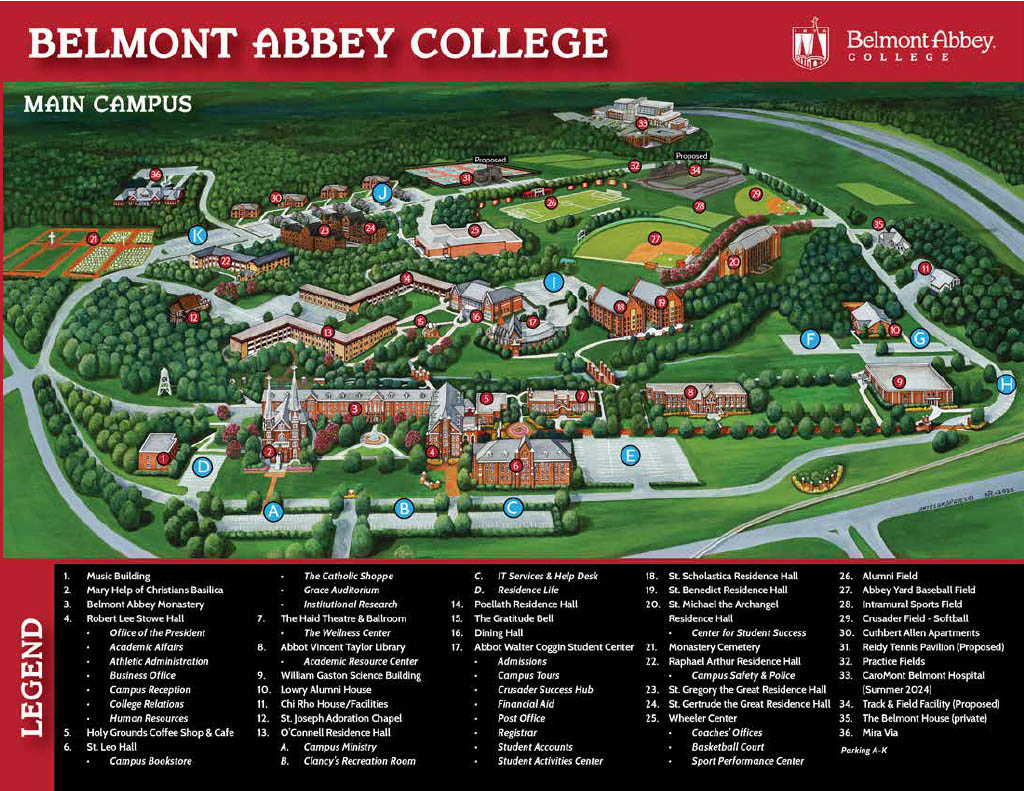
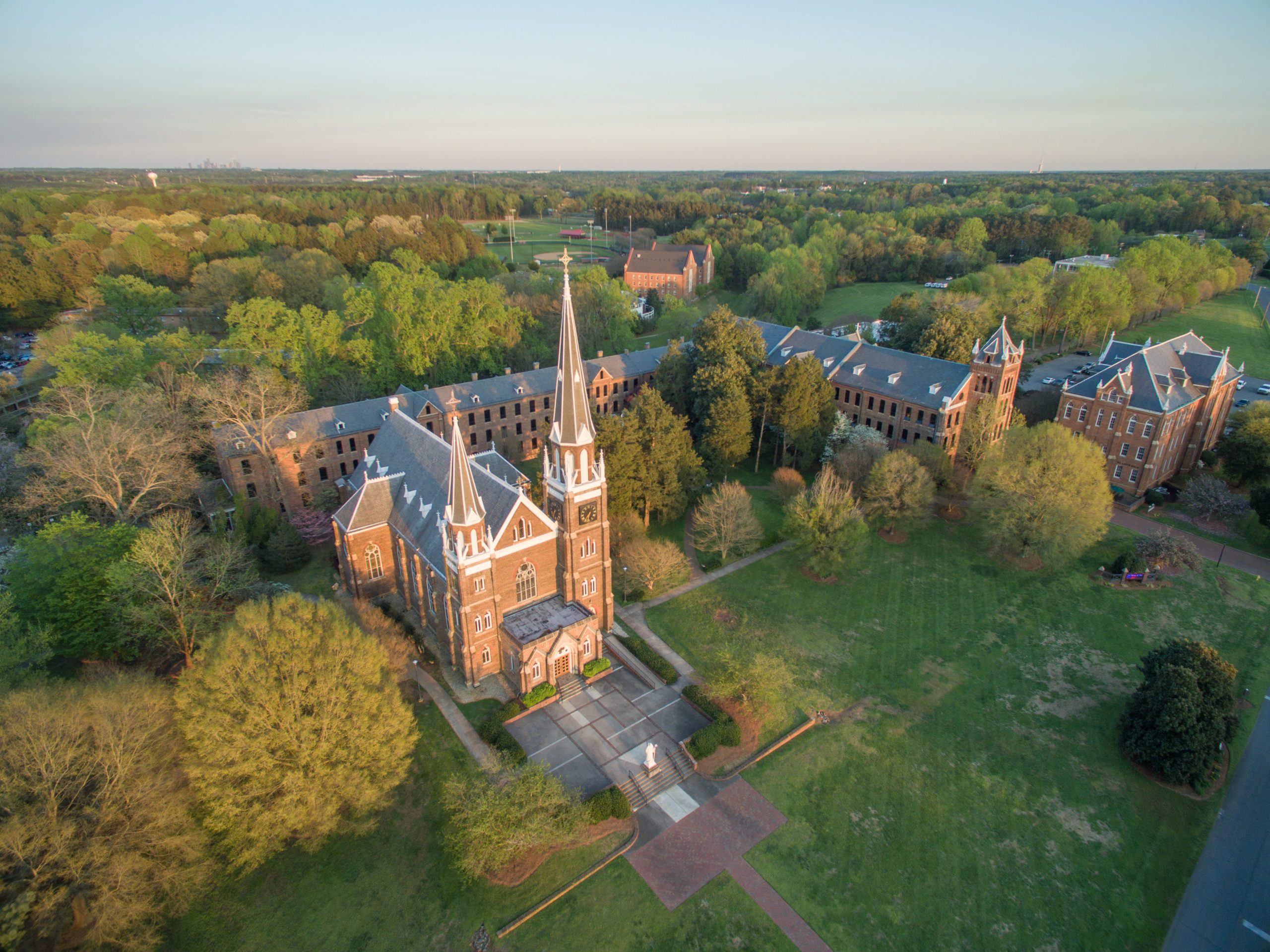
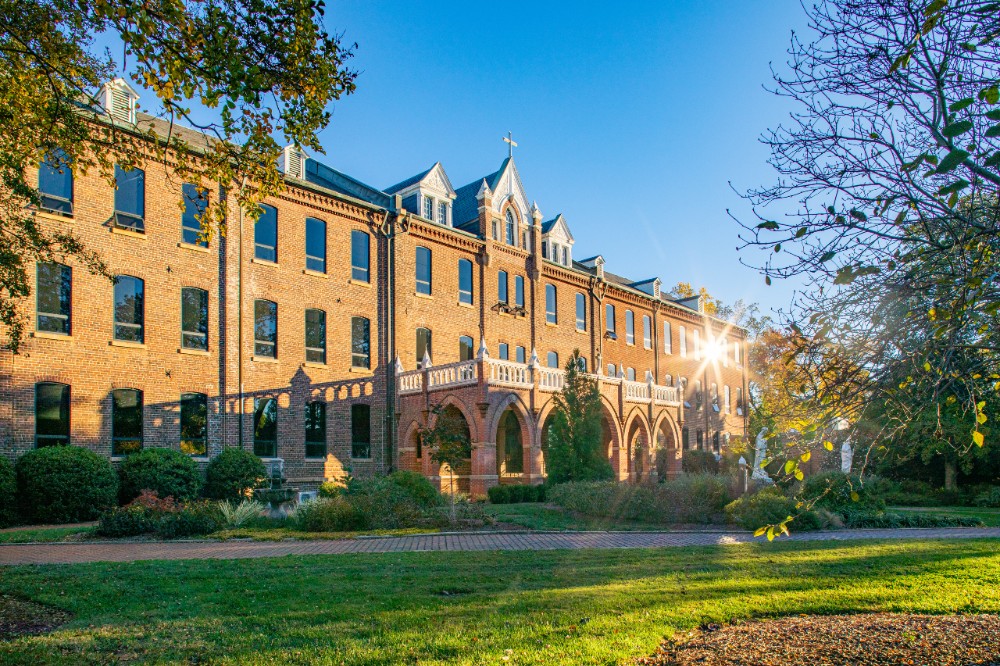
Belmont Abbey College seal · sourceCampus Map - Belmont Abbey College · sourceCampus Resources to Remember - Belmont Abbey College · sourceExploring Belmont Abbey College's History: A Journey Through Time - Belmont Abbey College · source