Admit rate has ranged 50%–55% over the last 5 years, though the latest figure above (44%) falls outside that window. Source: IPEDS via Urban Institute.
Acceptance & SAT from Common Data Set / IPEDS; net price, earnings & graduation from the U.S. Dept. of Education College Scorecard. Figures lag ~1–2 years — verify with the school.
Berklee College of Music isn't just a music school; it's a high-stakes, high-energy boot camp for the music industry, planted in the heart of Boston. With an acceptance rate that belies its intense selectivity for talent, it operates as a pre-professional ecosystem where the core curriculum is music and the campus hums with the sound of relentless practice and collaboration. Graduates enter a notoriously fickle industry, where the financial payoff is often measured in creative capital rather than a high starting salary, making the decision to attend a profound bet on one's artistic future.
Admission requirements
Test-blind — scores not considered
Required
High school transcript
Grade point average
Demonstrated competencies
TOEFL (non-native English)
Considered (not required)
Class rank
Letters of recommendation
Source: IPEDS Admissions survey (2022) via Urban Institute. Covers formal factors only — it does not reflect essays, extracurriculars, or other holistic criteria.
More details
Undergrad enrollment
7,468
In-state tuition
$52,040
Out-of-state tuition
$52,040
Campus Housing
22% of students
Standardized Tests
Not required
Most Popular Majors
Visual & Performing Arts
Application Deadline
Jan. 15
First-Year Retention
Not in sources
Graduation Rate (6-yr)
67%
Median Earnings (10yr)
$33,647
Outcomes & value
Outcomes & value
Median earnings (10 yr)
$33,647
Value (earnings ÷ net price)
0.7×
Median debt at graduation
$25,000
Graduation rate
67%
First-year retention
89%
Reducing loan balance (3 yr)
65%
Pell (lower-income) share
16%
First-gen share (among federal-aid recipients)
21%
Financial health
3.0 / 3.0Meets the federal financial-responsibility standard
U.S. Dept. of Education Financial Responsibility Composite Score (FY2022-23). Scale −1.0 to 3.0; ≥1.5 meets the standard. Reported for private nonprofit & for-profit institutions only — public universities are state-backed and not scored, so this is a stability signal, not a ranking.
Top-earning majors
Median earnings by field of study (highest credential), ~2 years after completion.
Arts, Entertainment, and Media Management$31,914
Teacher Education and Professional Development, Specific Subject Areas$29,685
Music$22,162
Dance$21,964
Visual and Performing Arts, Other$16,786
Source: U.S. Dept. of Education College Scorecard (field-of-study earnings). Figures cover graduates who received federal aid and lag ~2 years; not all programs report data.
Campus & location
Campus safety
On-campus violent crimes (2024)
6
Per 1,000 students
0.72
On-campus criminal offenses classed as violent (murder/non-negligent manslaughter, rape, robbery, aggravated assault) for the most recent reported year. Source: U.S. Dept. of Education Campus Safety and Security (Clery Act). Counts reflect what’s reported to the school, and urban campuses often report more partly due to non-student incidents nearby — read alongside campus size and setting, not as a standalone safety verdict.
Climate
Pleasant days / yr
91
Summer high
81°F
Winter low
25°F
Annual rain
49"
Annual snow
31.4"
Natural-hazard risk
Relatively Moderate
Pleasant days counts days per year with a mean temperature of 55–75°F, a high at or below 90°F, a low at or above 45°F, and little precipitation — a transparent comfort measure, not a weighting we invented. Computed from Open-Meteo ERA5 daily history (2019–2023). Natural-hazard risk is the county’s composite rating from the FEMA National Risk Index.
Deep dive — research, future-scholar output & economic mobility▾
Research output
Institutional h-index
32
Scholarly works
421
Institutional research volume and impact from OpenAlex. The h-index reflects large research universities and will be low for teaching-focused liberal-arts colleges — not a measure of undergraduate quality.
Economic mobility
Mobility rate
0.7%
Bottom → top quintile
20%
From bottom quintile
4%
Mobility rate = the share of students who both start in the bottom household-income quintile and reach the top quintile; bottom → top is that chance conditional on starting at the bottom. Source: Opportunity Insights Mobility Report Cards (Chetty, Friedman, Saez, Turner & Yagan). Reflects 1980–82 birth cohorts, so it’s directional, not current.
Quick answers
What is the acceptance rate at Berklee College of Music?
Berklee College of Music's acceptance rate is approximately 44% (Boston, MA), based on the most recent figures we compiled from public and primary sources.
How much does Berklee College of Music cost?
At Berklee College of Music, the average net price (after aid) is about $49,465 per year. Actual cost varies with financial aid and residency.
How many undergraduates attend Berklee College of Music?
Berklee College of Music enrolls approximately 7,468 undergraduate students.
Where is Berklee College of Music located?
Berklee College of Music is located in Boston, MA.
Admissions
Getting into Berklee is a unique dance that prioritizes musical talent and potential over traditional academic metrics. The college reports an of 44%, a figure that can be misleadingly high to outsiders who don't grasp the audition-centric process. For the 2023-2024 cycle, 7,050 applicants vied for admission, with 3,069 receiving offers. Of those accepted, a of approximately 42% ultimately enrolled, indicating that a significant number of admitted students choose other paths. The application deadline is January 15. Notably, Berklee does not require SAT or ACT scores for admission, shifting the entire weight of evaluation onto the audition, music theory assessment, and academic record. The process is designed to identify students who demonstrate the musicianship and drive to excel in a demanding, career-focused environment.
Earnings = median of students working ~10 years after entry; debt = median of graduates. Value divides 10-yr earnings by one year’s net price — read it as earnings per dollar of annual cost, not a full lifetime ROI; it favors lower-cost schools. Source: U.S. Dept. of Education College Scorecard. Figures lag ~2 years and reflect all students, not your intended major.
Berklee's academic engine is its Bachelor of Music degree, described as an interdisciplinary curriculum designed to immerse students in all aspects of the music industry. The program is built on a rigorous core music curriculum combined with intensive instruction on a principal instrument. Students can choose from a wide array of majors that reflect the modern music landscape, from traditional performance and composition to contemporary fields like Music Business/Management, Film Scoring, Electronic Production and Design, and Music Therapy. A distinct alternative is the Bachelor of Arts degree, which offers a foundation in design thinking and strategic leadership with less emphasis on the core music curriculum. The most popular majors cluster overwhelmingly in the Visual and Performing Arts, with a secondary focus on Computer and Information Sciences, likely tied to music technology and production programs. The environment is intensely practical; discussions among prospective students center not on abstract theory, but on whether the high-cost training translates to a viable career, framing Berklee as a high-risk, high-reward investment in professional music networks and skills.
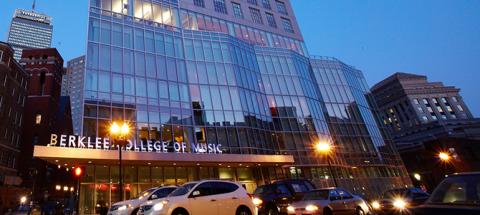
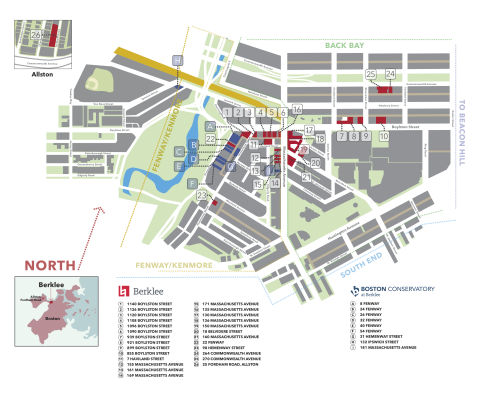
Life at Berklee is an immersive, 24/7 musical ecosystem situated in Boston's Back Bay and Fenway neighborhoods. The campus is overwhelmingly commuter-based, with only 22% of students living in college-owned or affiliated housing and 78% living off-campus. The Center for Campus Life exists to help students engage with this diverse community, fostering involvement through clubs, student government, and community service trips. The mission is explicitly career-oriented: to educate, train, and develop students to excel in music as a career. This creates a culture where practice rooms are perpetually occupied, impromptu jam sessions are currency, and networking begins on day one. Social media glimpses from the campus life account show a focus on building a vibrant community, highlighting commuter lounges, late-night café events, and student gatherings. It's a environment that demands self-motivation, especially for the majority navigating off-campus living, but offers unparalleled density of peer talent and industry-focused energy.
Berklee's outcomes narrative is complex, defined by its singular focus on the arts. The six-year graduation rate is 67%. Financially, the early-career earnings for graduates are modest compared to many four-year institutions. Data suggests average early-career earnings around $26,000, with one source noting this is about $3,000 worse than might be expected given the mix of majors. More granular data shows median earnings for music graduates around $20,512. The College Scorecard reports a median earnings figure of $33,647 ten years after entry. The central, often unspoken question for graduates is industry placement: what percentage actually work in music? While precise institutional data isn't provided in the sources, the very existence of the question on student forums underscores the defining anxiety and ambition of a Berklee degree. Success is measured in gigs, credits, and sustainable creative careers, not just starting salaries. The college's own mission frames success as excelling in music as a career, setting a high bar for post-graduation fulfillment.
Attending Berklee requires a significant financial commitment. The average after aid—the amount families actually pay—is $49,465 per year. The total (the sticker price before aid) is listed as $72,151. Berklee offers both merit-based and need-based institutional aid, with the average institutional aid package reported as $23,235. However, the college states it is only "able to offer limited institutional aid to students who demonstrate the highest financial need and have received merit." This indicates that while aid is available, it may not be sufficient to meet the full demonstrated need of all admitted students. The college provides a Net Price Calculator for families to estimate their individual cost, and has policies for financial aid appeals, allowing students to request consideration for temporary need-based funding. There is no indication in the provided sources of a "no-loan" policy where all need is met with grants; instead, aid packages likely include loans as a standard component.
Berklee stands out as the world's preeminent contemporary music college not for its ivy-covered halls, but for its unapologetic, real-world focus. It's a trade school for the 21st-century music industry at the highest level. What sets it apart is the total immersion: every student is a musician, the curriculum is the industry, and the city of Boston becomes a backdrop for constant creation. Unlike conservatories that might emphasize classical repertoire, Berklee's DNA is in jazz, rock, pop, film scoring, and electronic music—the genres that define commercial and artistic music today. This creates a unique culture where the line between classroom and career is deliberately blurred. The value proposition is stark and clear-cut: you are paying for unparalleled access to peer networks, faculty who are working professionals, and a brand name that carries weight in studio, stage, and scoring pit. The gamble—given the high and modest early-career earnings—is that this specific, industry-saturated education provides a launchpad and a community that no other school can match for those aiming at the heart of the modern music business.
Berklee College of Music seal · sourceBoston Campus | Berklee College of Music · sourceBerklee College of Music 360 Campus Tour | Berklee · sourceBoston Campus Map | Berklee College of Music · source
.jpg?width=1600)