Loading…
← All schools
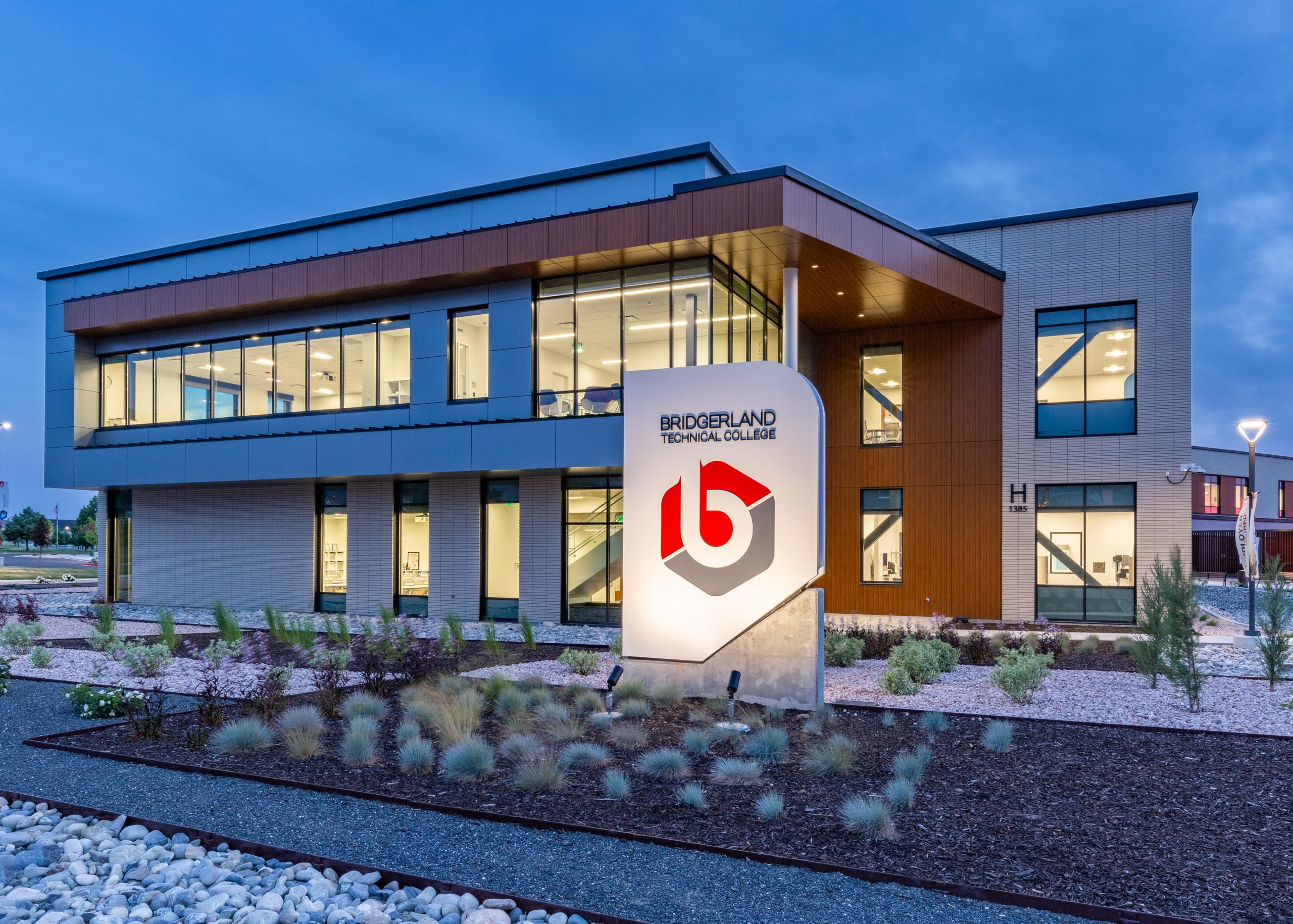
Bridgerland Technical College
Logan, UTpublicwww.btech.edu/
Avg net price
$2,338
Earnings (10 yr)
$38,347
Acceptance & SAT from Common Data Set / IPEDS; net price, earnings & graduation from the U.S. Dept. of Education College Scorecard. Figures lag ~1–2 years — verify with the school.
Bridgerland Technical College is Utah's unapologetically practical engine for workforce development, operating less like a traditional college and more like a high-efficiency trade academy. With an open-door admissions policy and a fiercely hands-on, competency-based curriculum, BTECH exists to funnel students directly into high-demand technical fields, from emergency medical services to data analytics, with minimal debt and maximum speed. Its culture is defined by a no-frills, daytime-campus rhythm and a clear-eyed focus on turning education into immediate earning power.
More details
- Undergrad enrollment
- 1,567
- Student Body
- 1,682 total (611 full-time, 1,071 part-time)
- No-Loan Policy
- Yes, institution does not participate in loan programs
- Curriculum Model
- Hands-on, competency-based
- Most Popular Major
- Emergency Medical Technology/Technician (EMT Paramedic)
- Median Earnings (10yr)
- $38,347
Outcomes & value
Outcomes & value
- Median earnings (10 yr)
- $38,347
- Value (earnings ÷ net price)
- 16.4×
- Pell (lower-income) share
- 9%
- First-gen share (among federal-aid recipients)
- 36%
Earnings = median of students working ~10 years after entry; debt = median of graduates. Value divides 10-yr earnings by one year’s net price — read it as earnings per dollar of annual cost, not a full lifetime ROI; it favors lower-cost schools. Source: U.S. Dept. of Education College Scorecard. Figures lag ~2 years and reflect all students, not your intended major.
Campus & location
Campus safety
- On-campus violent crimes (2024)
- 0
On-campus criminal offenses classed as violent (murder/non-negligent manslaughter, rape, robbery, aggravated assault) for the most recent reported year. Source: U.S. Dept. of Education Campus Safety and Security (Clery Act). Counts reflect what’s reported to the school, and urban campuses often report more partly due to non-student incidents nearby — read alongside campus size and setting, not as a standalone safety verdict.
Climate
- Pleasant days / yr
- 68
- Summer high
- 87°F
- Winter low
- 16°F
- Annual rain
- 19.2"
- Annual snow
- 54.8"
- Natural-hazard risk
- Relatively Low
Pleasant days counts days per year with a mean temperature of 55–75°F, a high at or below 90°F, a low at or above 45°F, and little precipitation — a transparent comfort measure, not a weighting we invented. Computed from Open-Meteo ERA5 daily history (2019–2023). Natural-hazard risk is the county’s composite rating from the FEMA National Risk Index.
Quick answers
- How much does Bridgerland Technical College cost?
- At Bridgerland Technical College, the average net price (after aid) is about $2,338 per year. Actual cost varies with financial aid and residency.
- How many undergraduates attend Bridgerland Technical College?
- Bridgerland Technical College enrolls approximately 1,567 undergraduate students.
- Where is Bridgerland Technical College located?
- Bridgerland Technical College is located in Logan, UT.
Admissions
Admission at Bridgerland Technical College is defined by accessibility, not selectivity. The institution maintains an open admission policy, with an of 100%—a stark contrast to the national average of around 68%. The process is procedural rather than competitive: prospective students follow a series of steps to enrollment, which includes applying, completing an assessment, and registering for their chosen program. Standardized test scores (SAT/ACT) are not a barrier to entry, as the college's policy on these scores is listed as unknown and they are considered optional for applicants. There is no indication of an Early Decision program or that demonstrated interest is a factor in admissions; the focus is squarely on readiness for technical training.
Academics
BTECH’s academic model is a pure distillation of career preparation. The college describes its curriculum as where learning occurs by working through modules designed to master a specific technical skill. This isn't a lecture-hall experience; it's a workshop and lab-driven education. Students must maintain , which includes a requirement of at least 90% attendance, underscoring the professional expectations of its programs. The college offers nearly 40 career-oriented certificates and degrees across eight fields of study. The most popular majors reflect local and national workforce needs: tops the list, followed by other applied fields. The college also offers preparatory courses, like a two-week course, to introduce students to fields like data analytics before they commit to a full program.
Compare Bridgerland Technical College
vs United States Air Force Academyvs United States Coast Guard Academyvs University of Hawaii at Hilovs Florida Polytechnic University
See colleges similar to Bridgerland Technical College →Sources
- Introduction to Data Technology Pre-Admission Course (CE)
- Common Data Set: Home
- Common Data Set 2025-2026
- Common Data Set Explorer 2026: Compare 100 Colleges
- The Common Data Set: What It Is & How to Use It In College Applications
- Common Data Set - Institutional Research & Planning - Georgia Tech
- Bridgerland Technical College
- Steps to Enrollment
- Bridgerland Technical College
- Bridgerland Technical College
- Bridgerland Technical College - Logan, UT
- Bridgerland Technical College Entering Class Stats & Admissions ...