Loading…
← All schools
Bull City Durham Beauty and Barber College
Durham, NCprivate forprofitwww.bullcitybarbercollege.com/
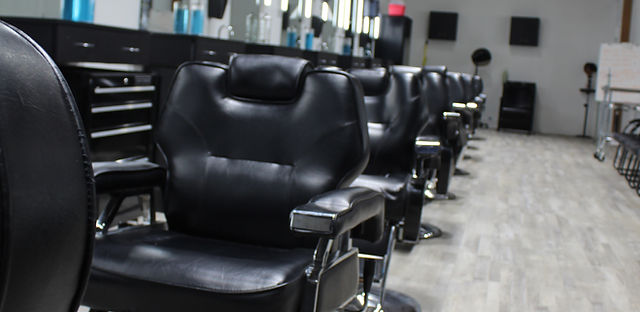
Bull City Durham Beauty and Barber College is a hyper-focused, for-profit trade school in Durham, North Carolina, built on a singular, no-nonsense mission: to train barbers. With an open-door admissions policy and a tiny, predominantly part-time student body, it operates more like a professional apprenticeship than a traditional college. Its entire existence revolves around a single, hands-on major, aiming to launch graduates directly into a skilled trade.
More details
- Undergrad enrollment
- 41
- Retention Rate
- 75%
- Graduation Rate
- 78%
- Single Major Offered
- Barbering
- Part-Time Student Share
- 82.9%
- Student-to-Faculty Ratio
- 20:1
- Average Total Aid Awarded
- $10,457
- On-Time Completion Rate (2024)
- 22.22%
- Median Earnings 1yr After Graduation
- $36,427
- Median Earnings 5yrs After Graduation
- $45,519
Outcomes & value
Outcomes & value
- Median debt at graduation
- $12,179
- Pell (lower-income) share
- 70%
Earnings = median of students working ~10 years after entry; debt = median of graduates. Value divides 10-yr earnings by one year’s net price — read it as earnings per dollar of annual cost, not a full lifetime ROI; it favors lower-cost schools. Source: U.S. Dept. of Education College Scorecard. Figures lag ~2 years and reflect all students, not your intended major.
Campus & location
Campus safety
- On-campus violent crimes (2024)
- 0
On-campus criminal offenses classed as violent (murder/non-negligent manslaughter, rape, robbery, aggravated assault) for the most recent reported year. Source: U.S. Dept. of Education Campus Safety and Security (Clery Act). Counts reflect what’s reported to the school, and urban campuses often report more partly due to non-student incidents nearby — read alongside campus size and setting, not as a standalone safety verdict.
Climate
- Pleasant days / yr
- 113
- Summer high
- 88°F
- Winter low
- 36°F
- Annual rain
- 34.3"
- Annual snow
- 2.8"
- Natural-hazard risk
- Relatively Moderate
Pleasant days counts days per year with a mean temperature of 55–75°F, a high at or below 90°F, a low at or above 45°F, and little precipitation — a transparent comfort measure, not a weighting we invented. Computed from Open-Meteo ERA5 daily history (2019–2023). Natural-hazard risk is the county’s composite rating from the FEMA National Risk Index.
Quick answers
- How much does Bull City Durham Beauty and Barber College cost?
- At Bull City Durham Beauty and Barber College, the average net price (after aid) is about $11,819 per year. Actual cost varies with financial aid and residency.
- How many undergraduates attend Bull City Durham Beauty and Barber College?
- Bull City Durham Beauty and Barber College enrolls approximately 41 undergraduate students.
- Where is Bull City Durham Beauty and Barber College located?
- Bull City Durham Beauty and Barber College is located in Durham, NC.
Admissions
Getting into Bull City Barber College is straightforward: they have an open admission policy, which means all applicants are accepted. The is 100%. This reflects the school's mission as a vocational training center focused on accessibility rather than selectivity. The student body is small and leans heavily toward part-time study; total undergraduate enrollment is 32 students, with only 7 attending full-time and 34 attending part-time (meaning part-time students make up 82.9% of the enrollment). There is no available information on standardized test requirements like SAT or ACT scores, as the admissions process is centered on enrolling students into the barbering program.
Academics
The academic offering here is as concentrated as a bottle of high-hold pomade: there is exactly one major available: Barbering. The institution is classified as a private, for-profit, less-than-2-year school. The student-to-faculty ratio is reported as 20:1, suggesting a potentially hands-on, workshop-style learning environment. Program completion can be a challenge; in 2024, only 22.22% of students graduated within 100% of the "normal time" for their program. However, the retention rate—the percentage of students who return after their first year—is a more encouraging 75%. The graduation rate is reported as 78%.
Compare Bull City Durham Beauty and Barber College
vs Livingstone Collegevs West Virginia University Institute of Technologyvs University of Virginia's College at Wisevs Thomas University
See colleges similar to Bull City Durham Beauty and Barber College →Sources
- Bull City Durham Beauty and Barber College | Data USA
- Bull City Durham Beauty and Barber College
- Bull City Barber College | Barber Careers | 931 East Main Street ...
- Bull City Durham Beauty and Barber College - Niche
- Bull City Durham Beauty And Barber College Tuition and Costs
- Bull City Durham Beauty and Barber College - EDsmart Data
- Bull City Durham Beauty and Barber College
- Bull City Durham Beauty And Barber College Admissions
- Bull City Durham Beauty And Barber College Admission