Admit rate has ranged 66%–68% over the last 5 years. Source: IPEDS via Urban Institute.
Acceptance & SAT from Common Data Set / IPEDS; net price, earnings & graduation from the U.S. Dept. of Education College Scorecard. Figures lag ~1–2 years — verify with the school.
Bushnell University is a small, private Christian university in Eugene, Oregon, that operates with a clear sense of purpose: to integrate faith, wisdom, and service into career-aligned education. It's a place where nearly every student receives financial aid, the campus vibe is described as welcoming and supportive, and the academic focus is shifting toward practical programs in health, business, and psychology. Think of it as a tight-knit community for students seeking a values-based education with a direct line to the outdoorsy, eclectic culture of the Pacific Northwest.
Admission requirements
Test-optional — scores considered if submitted
Required
High school transcript
Grade point average
TOEFL (non-native English)
Considered (not required)
Class rank
Letters of recommendation
Test scores (SAT/ACT)
College-prep program
Source: IPEDS Admissions survey (2022) via Urban Institute. Covers formal factors only — it does not reflect essays, extracurriculars, or other holistic criteria.
More details
Undergrad enrollment
517
In-state tuition
$35,800
Out-of-state tuition
$35,800
Early Action
Offered (Priority for Aid/Registration)
Graduation Rate
56%
On-Campus Housing
45%
First-Year Retention
76%
Student-Faculty Ratio
15:1
Median Earnings (10yr)
$53,623
Students Receiving Financial Aid
90-98%
Outcomes & value
Outcomes & value
Median earnings (10 yr)
$53,623
Value (earnings ÷ net price)
2.6×
Median debt at graduation
$23,500
Graduation rate
56%
First-year retention
76%
Reducing loan balance (3 yr)
54%
Pell (lower-income) share
33%
First-gen share (among federal-aid recipients)
35%
Financial health
2.5 / 3.0Meets the federal financial-responsibility standard
U.S. Dept. of Education Financial Responsibility Composite Score (FY2022-23). Scale −1.0 to 3.0; ≥1.5 meets the standard. Reported for private nonprofit & for-profit institutions only — public universities are state-backed and not scored, so this is a stability signal, not a ranking.
Campus & location
Campus safety
On-campus violent crimes (2024)
2
Per 1,000 students
2.64
On-campus criminal offenses classed as violent (murder/non-negligent manslaughter, rape, robbery, aggravated assault) for the most recent reported year. Source: U.S. Dept. of Education Campus Safety and Security (Clery Act). Counts reflect what’s reported to the school, and urban campuses often report more partly due to non-student incidents nearby — read alongside campus size and setting, not as a standalone safety verdict.
Climate
Pleasant days / yr
110
Summer high
81°F
Winter low
34°F
Annual rain
48.1"
Annual snow
14.3"
Natural-hazard risk
Relatively High
Pleasant days counts days per year with a mean temperature of 55–75°F, a high at or below 90°F, a low at or above 45°F, and little precipitation — a transparent comfort measure, not a weighting we invented. Computed from Open-Meteo ERA5 daily history (2019–2023). Natural-hazard risk is the county’s composite rating from the FEMA National Risk Index.
Deep dive — research, future-scholar output & economic mobility▾
Research output
Institutional h-index
31
Scholarly works
134
Institutional research volume and impact from OpenAlex. The h-index reflects large research universities and will be low for teaching-focused liberal-arts colleges — not a measure of undergraduate quality.
Quick answers
What is the acceptance rate at Bushnell University?
Bushnell University's acceptance rate is approximately 67% (Eugene, OR), based on the most recent figures we compiled from public and primary sources.
How much does Bushnell University cost?
At Bushnell University, the average net price (after aid) is about $20,789 per year. Actual cost varies with financial aid and residency.
How many undergraduates attend Bushnell University?
Bushnell University enrolls approximately 517 undergraduate students.
Where is Bushnell University located?
Bushnell University is located in Eugene, OR.
Admissions
Bushnell's admissions process is designed to be accessible. The university is , meaning SAT, ACT, or CLT scores are welcome but not required for undergraduate applicants. For those who do submit, typical admitted student scores fall within a broad range, with sources citing SAT scores between 1010–1315 or 1033–1200, and an average ACT score of 19. The process emphasizes early action, which provides early notification and priority status for financial aid and course registration. While the admissions rate is moderately selective, the environment is geared toward students who want to engage fully with the university's faith-based community and academic offerings.
Academics at Bushnell are structured through distinct schools and colleges, fostering an environment that aims to develop 'wisdom, faith, and service.' The curriculum is anchored by a core designed to help students explore diverse disciplines before committing to a major. The university is notably career-focused, with a significant portion of students majoring in Health Professions and Related Programs (28%), Business, Management, Marketing (15%), and Psychology (15%). In a move to stay current, Bushnell launched a suite of new career-aligned programs for Fall 2026, including studies in AI, finance, and public health. The student-faculty ratio is 15:1, supporting a more personalized classroom experience. Beyond the career-oriented majors, the university offers a range of humanities programs, including Biblical Studies, Communications, English, History, and Missionary Studies.
Earnings = median of students working ~10 years after entry; debt = median of graduates. Value divides 10-yr earnings by one year’s net price — read it as earnings per dollar of annual cost, not a full lifetime ROI; it favors lower-cost schools. Source: U.S. Dept. of Education College Scorecard. Figures lag ~2 years and reflect all students, not your intended major.
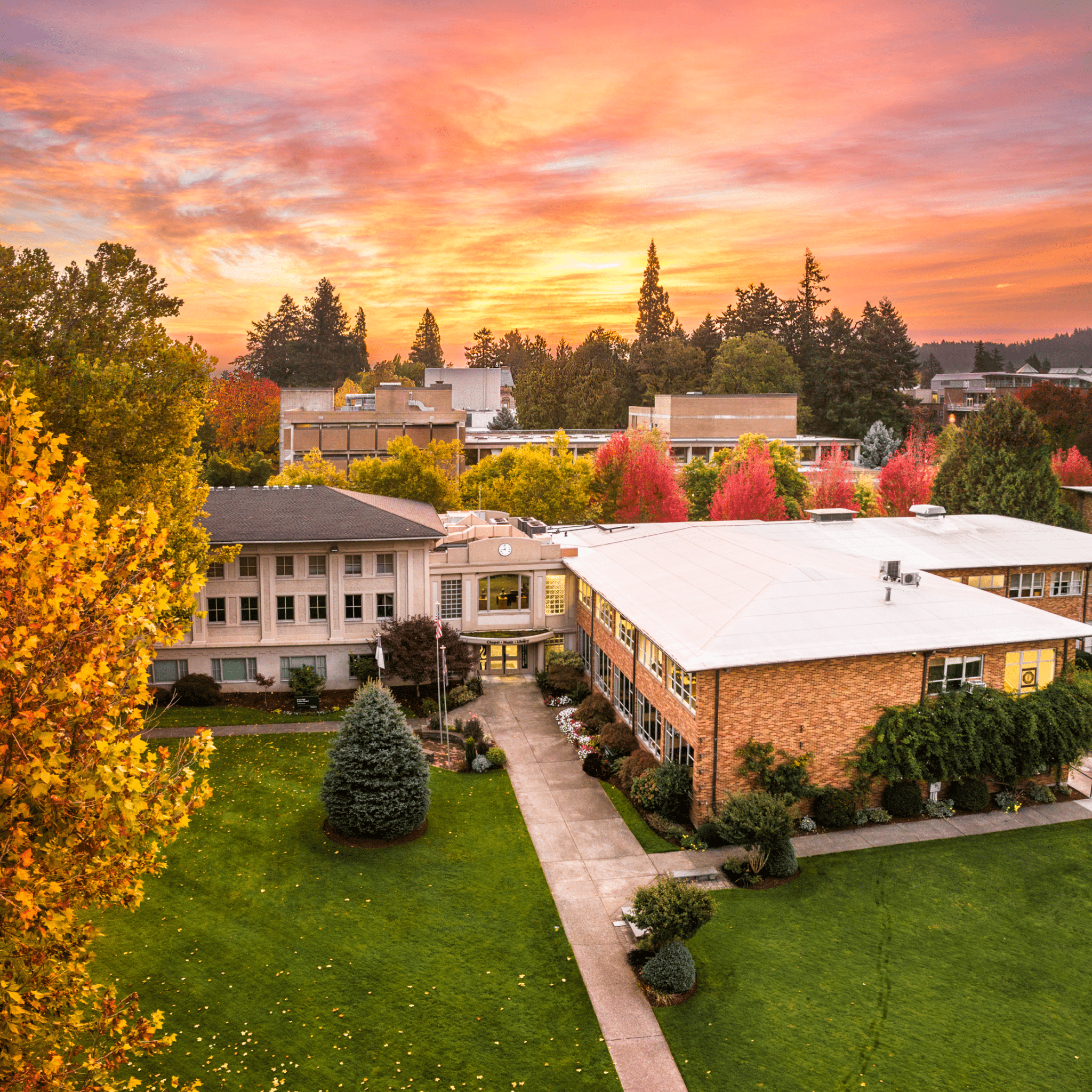
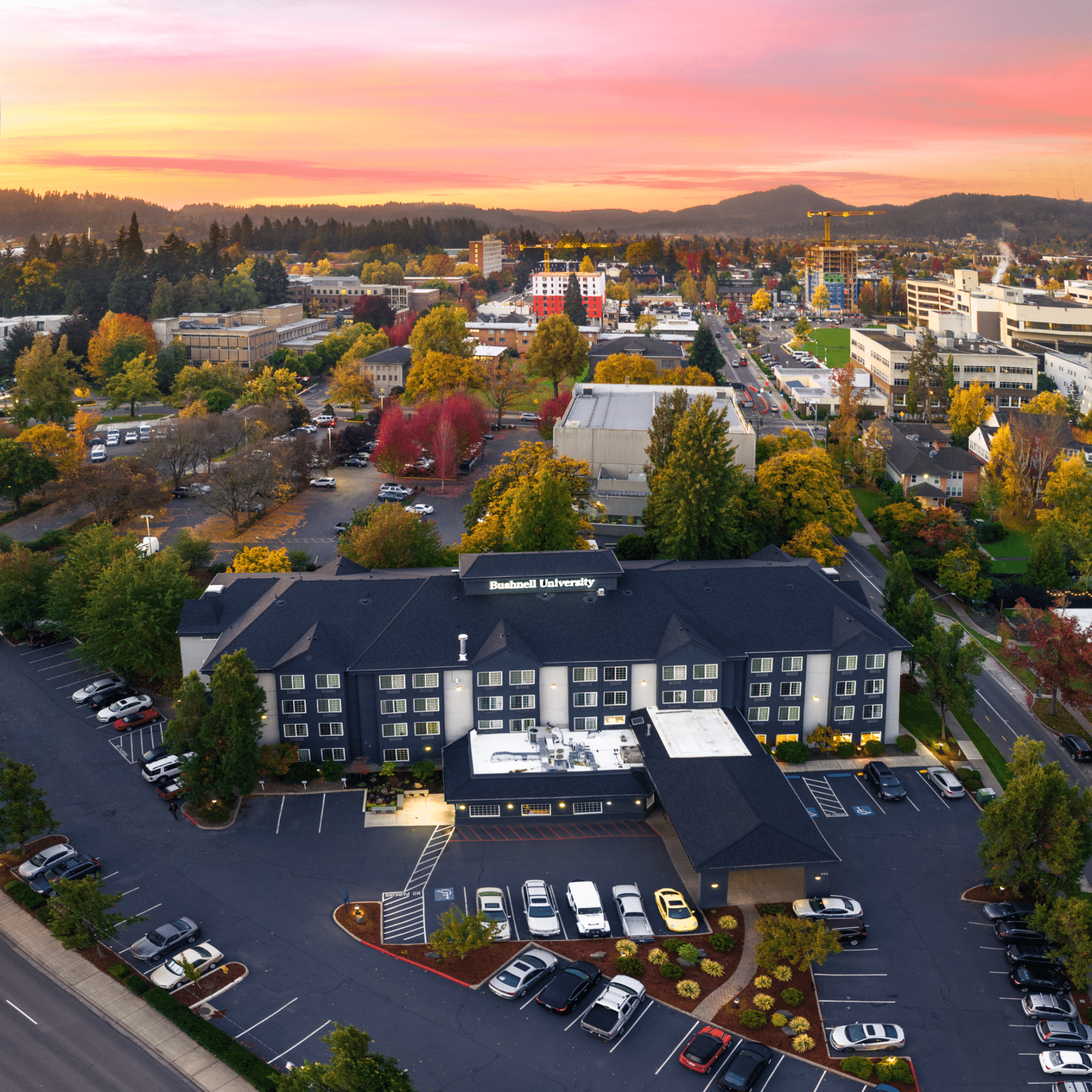
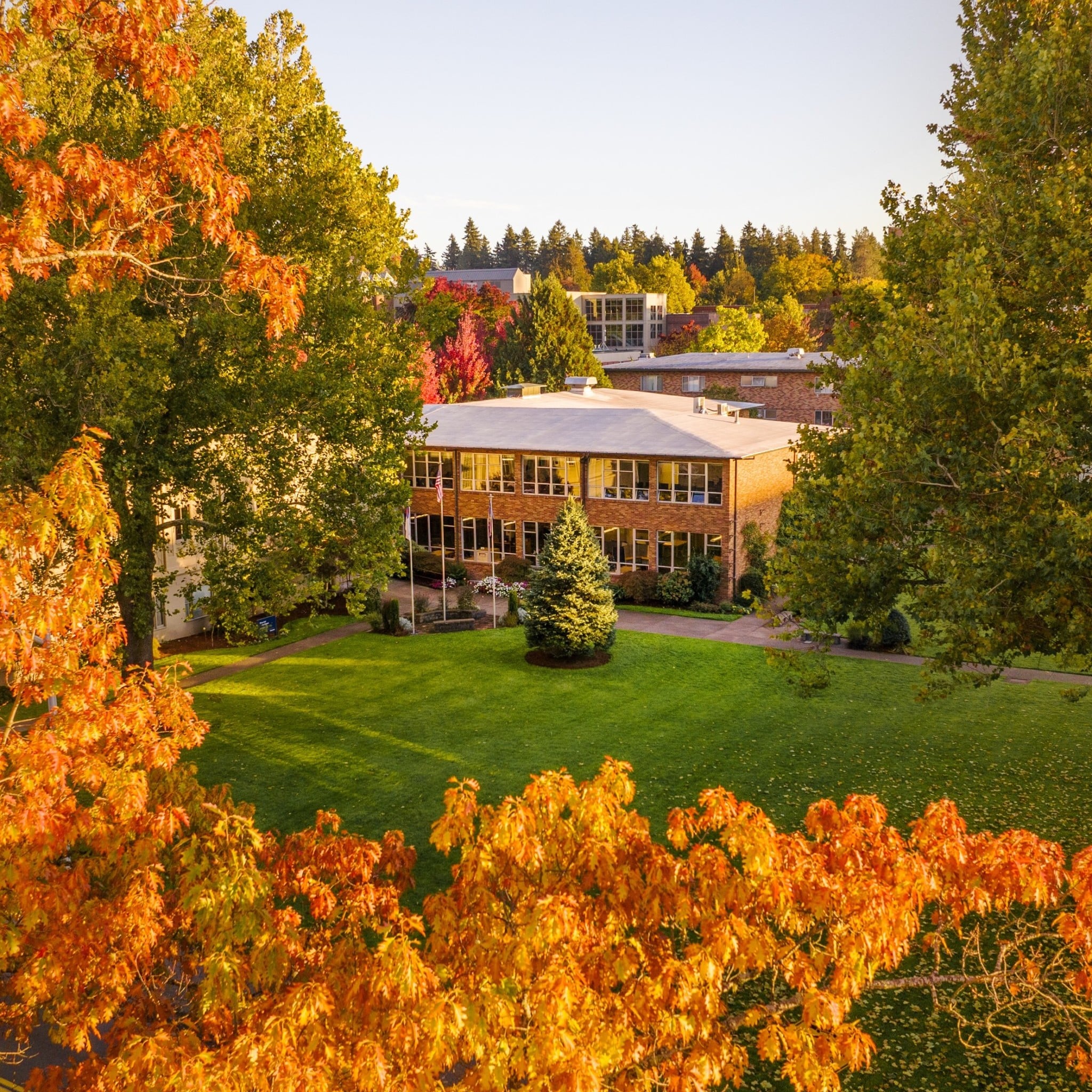
Life on Bushnell's Eugene campus is described as vibrant and supportive, with a focus on building community. Nearly half (45%) of students live in college-owned, -operated, or -affiliated housing, which the university frames as a 'microcosm of the greater community, church, and the world' where students encounter diverse opinions and lifestyles. The remaining 55% live off-campus. Student life is active, with involvement in a wide variety of activities, events, service opportunities, clubs, leadership roles, and intramural sports. Reviews suggest students feel well-supported in making friends and connecting socially, thanks to frequent campus events and a generally welcoming atmosphere. The campus's location in Eugene provides access to the distinctive culture and outdoor opportunities of the Willamette Valley.
Bushnell's outcomes reflect its mission to prepare students for careers and service. The first-year retention rate is reported at 76%. For specific programs like Accounting, graduation rates can be strong, with one source showing a 75% rate for that major. Earnings data shows progression: one year after graduation, alumni report average earnings of $45,673, which grows to $54,483 five years out. The university's investment in its mission is also reflected in its operations; in 2024, salaries represented 43.2% of its overall expenditure.
Financial accessibility is a cornerstone of the Bushnell experience. A remarkable 90% to 98% of all students receive some form of financial aid, and 100% of undergraduate students receiving aid are reported by one source. For first-time freshmen, the average total scholarship package is $23,133, and the average aid package is $20,971. The university offers need-based grants for students who file the FAFSA and emphasizes that tutoring and career services come at no additional cost. While the university provides substantial grant and scholarship aid, it also facilitates access to federal and private student loans for those who need them, with private loans available up to the minus other aid. The —the cost after aid—is a key figure for families.
Bushnell University stands out for its deliberate fusion of Christian faith with pragmatic, career-ready education. It’s not a liberal arts college hiding from the job market; it’s actively launching programs in AI and public health alongside its strengths in health professions and business, all within a framework that emphasizes wisdom and service. This creates a specific niche: a supportive, faith-based community that is also intently focused on post-graduate employability. The high rate of financial aid participation makes this private education a tangible option for many families. Furthermore, its identity is deeply intertwined with its location—Eureka, Oregon—offering students the unique culture and outdoor lifestyle of the Pacific Northwest as a backdrop to their studies. It’s a university for students who want their college experience to have a clear purpose, both spiritually and professionally.
Bushnell University seal · sourceCampus Visit | Bushnell University · sourceCampus Visit | Bushnell University · sourceCampus Safety | Bushnell University · source
.jpg?width=1600)