Admit rate has ranged 28%–49% over the last 5 years — notably volatile, though the latest figure above (23%) falls outside that window. Source: IPEDS via Urban Institute.
Acceptance & SAT from Common Data Set / IPEDS; net price, earnings & graduation from the U.S. Dept. of Education College Scorecard. Figures lag ~1–2 years — verify with the school.
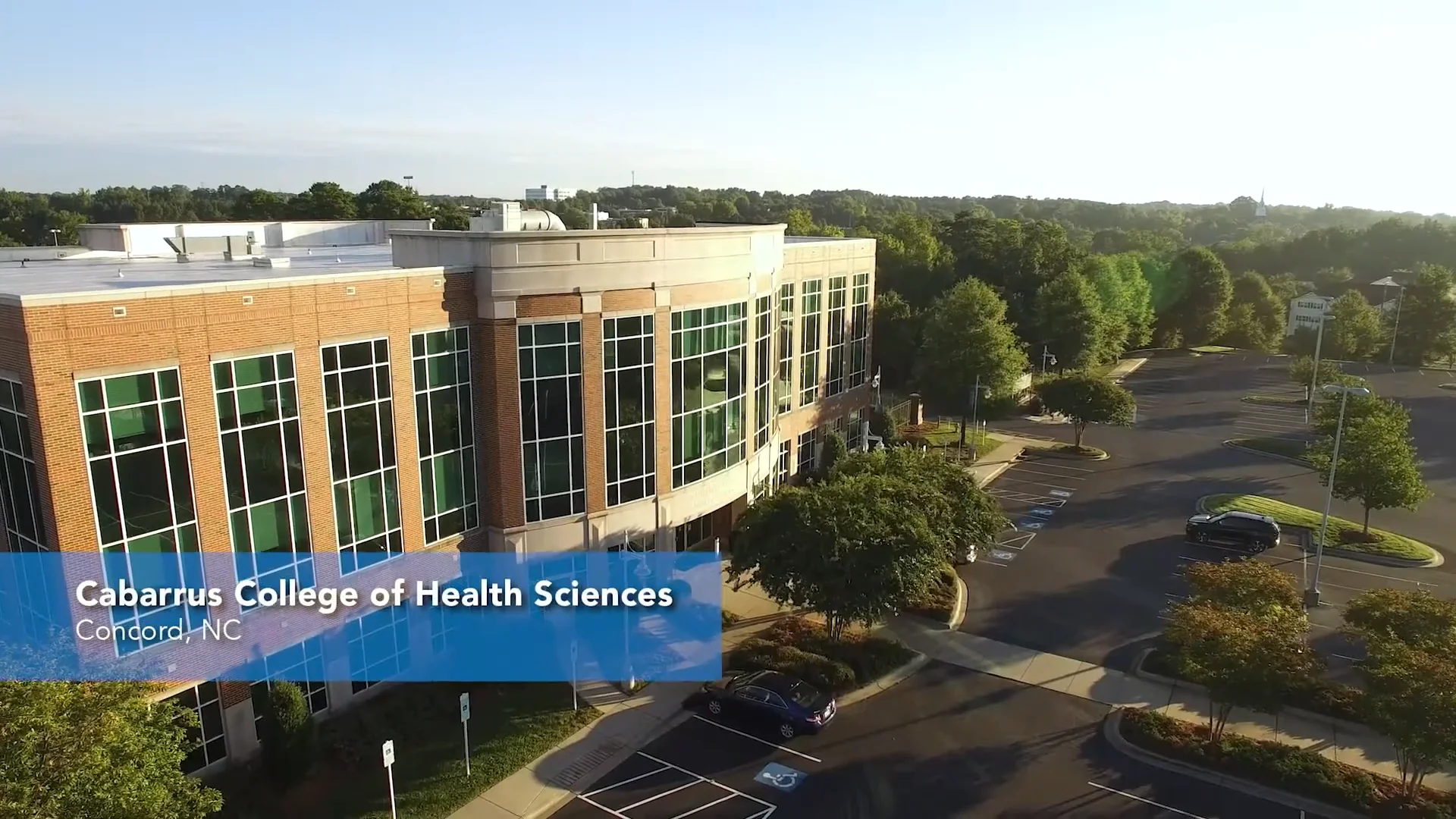
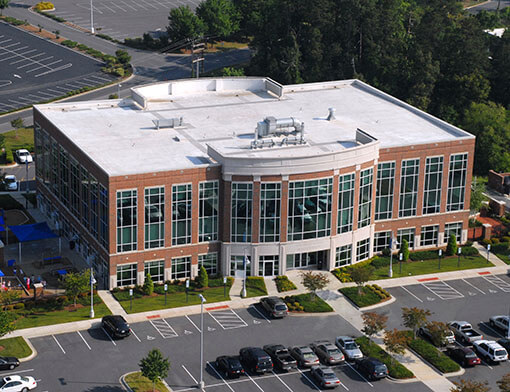
Cabarrus College of Health Sciences is not your typical liberal arts campus; it's a tightly focused, immersive training ground for healthcare professionals, embedded directly within the Atrium Health system in Concord, North Carolina. With a highly selective admissions process for its small cohort of students, the college delivers a pragmatic, hands-on education where the classroom is often a hospital floor and career outcomes are the primary metric of success. Its identity is defined by a singular mission: to produce skilled, compassionate practitioners ready to step into high-demand roles from day one.
Admission requirements
Test scores required
Required
High school transcript
Grade point average
Letters of recommendation
Test scores (SAT/ACT)
Considered (not required)
Class rank
College-prep program
TOEFL (non-native English)
Source: IPEDS Admissions survey (2022) via Urban Institute. Covers formal factors only — it does not reflect essays, extracurriculars, or other holistic criteria.
More details
Undergrad enrollment
712
In-state tuition
$16,550
Out-of-state tuition
$16,550
Graduation Rate
71%
First-Year Retention
100%
Median Earnings (10yr)
$58,708
Classes Under 20 Students
92%
Students Receiving Financial Aid
95%
Outcomes & value
Outcomes & value
Median earnings (10 yr)
$58,708
Value (earnings ÷ net price)
3.3×
Median debt at graduation
$16,000
Graduation rate
71%
First-year retention
100%
Reducing loan balance (3 yr)
70%
Pell (lower-income) share
29%
First-gen share (among federal-aid recipients)
37%
Financial health
3.0 / 3.0Meets the federal financial-responsibility standard
U.S. Dept. of Education Financial Responsibility Composite Score (FY2022-23). Scale −1.0 to 3.0; ≥1.5 meets the standard. Reported for private nonprofit & for-profit institutions only — public universities are state-backed and not scored, so this is a stability signal, not a ranking.
Top-earning majors
Median earnings by field of study (highest credential), ~2 years after completion.
Registered Nursing, Nursing Administration, Nursing Research and Clinical Nursing$63,997
Source: U.S. Dept. of Education College Scorecard (field-of-study earnings). Figures cover graduates who received federal aid and lag ~2 years; not all programs report data.
On-campus criminal offenses classed as violent (murder/non-negligent manslaughter, rape, robbery, aggravated assault) for the most recent reported year. Source: U.S. Dept. of Education Campus Safety and Security (Clery Act). Counts reflect what’s reported to the school, and urban campuses often report more partly due to non-student incidents nearby — read alongside campus size and setting, not as a standalone safety verdict.
Climate
Pleasant days / yr
102
Summer high
88°F
Winter low
37°F
Annual rain
46.5"
Annual snow
2.1"
Natural-hazard risk
Relatively Moderate
Pleasant days counts days per year with a mean temperature of 55–75°F, a high at or below 90°F, a low at or above 45°F, and little precipitation — a transparent comfort measure, not a weighting we invented. Computed from Open-Meteo ERA5 daily history (2019–2023). Natural-hazard risk is the county’s composite rating from the FEMA National Risk Index.
Deep dive — research, future-scholar output & economic mobility▾
Research output
Institutional h-index
23
Scholarly works
136
Institutional research volume and impact from OpenAlex. The h-index reflects large research universities and will be low for teaching-focused liberal-arts colleges — not a measure of undergraduate quality.
Quick answers
What is the acceptance rate at Cabarrus College of Health Sciences?
Cabarrus College of Health Sciences's acceptance rate is approximately 23% (Concord, NC), based on the most recent figures we compiled from public and primary sources.
How much does Cabarrus College of Health Sciences cost?
At Cabarrus College of Health Sciences, the average net price (after aid) is about $17,618 per year. Actual cost varies with financial aid and residency.
How many undergraduates attend Cabarrus College of Health Sciences?
Cabarrus College of Health Sciences enrolls approximately 712 undergraduate students.
Where is Cabarrus College of Health Sciences located?
Cabarrus College of Health Sciences is located in Concord, NC.
Admissions
Gaining entry to Cabarrus College is a competitive proposition, with an that signals a focused selection process for its intimate, career-oriented programs. The college evaluates applicants holistically but with a clear emphasis on academic preparedness for a rigorous health sciences curriculum. Applications are considered on a competitive basis related to test scores and academic history, with stated minimum score benchmarks of SAT 430 Reading and 380 Math, or an ACT composite of 18. The admissions office outlines two types of requirements: General Admissions Requirements and program-specific prerequisites, which include documentation, transcripts, and standardized test scores. While the is a documented source of institutional priorities, the specific Cabarrus College CDS detailing the weight given to factors like demonstrated interest, interviews, or extracurriculars is not provided in the source snippets. The rate—the percentage of admitted students who enroll—is reported at 44.44%, indicating that nearly half of those offered a spot choose to attend, a relatively strong commitment level for a specialized institution.
Earnings = median of students working ~10 years after entry; debt = median of graduates. Value divides 10-yr earnings by one year’s net price — read it as earnings per dollar of annual cost, not a full lifetime ROI; it favors lower-cost schools. Source: U.S. Dept. of Education College Scorecard. Figures lag ~2 years and reflect all students, not your intended major.
The academic experience at Cabarrus College is laser-focused on healthcare, offering a curriculum that is more apprenticeship than abstract theory. Programs span from associate to master's degrees, squarely within nursing and allied health disciplines. The college provides a unique, comprehensive curriculum and a solid foundation for success in healthcare, with its General Education component designed to support the specialized professional training. Students can choose from immersive, experiential education in nine allied health disciplines. The intimate scale of the college is a defining feature, with 92% of classes having fewer than 20 students, ensuring direct faculty interaction and tailored instruction. This small-class environment is crucial for the hands-on, skills-based learning that defines health professions education. The college serves a total enrollment of 753 students, with 661 being full-time, creating a close-knit academic community where everyone is on a similar, mission-driven path.
Life at Cabarrus College revolves around the shared identity of being future healthcare providers. The student experience is actively shaped by clubs, organizations, and honor societies that encourage professional development and community engagement. The college promotes involvement, stating that being part of the conversations, projects, and events shapes campus culture, and that a student's voice matters and involvement opens doors. Services are offered to help students balance multiple demands and stay healthy throughout their college journey, acknowledging the intense nature of health sciences programs. The campus culture is one of mutual support among peers who understand the pressures of the curriculum. Prospective students are encouraged to visit to begin meeting fellow students, learn how to be successful and involved in college life, and prepare for their first day of class—a process that integrates them into this specialized community from the start.
Cabarrus College measures its success by the readiness and employability of its graduates. The institution reports strong retention and graduation figures, with a first-year retention rate of 100% and a four-year graduation rate of 71%. The six-year graduation rate is also reported at 71% (and separately at 73%), indicating that most students who persist complete their degrees within a standard timeframe. Financially, graduates see a significant return on investment. Median earnings ten years after entry are robust, and earnings one year after graduation are reported at $58,074 per year, growing to $60,578 per year five years after graduation. These figures substantially outpace national averages for college graduates, underscoring the high demand and strong compensation in the healthcare fields for which the college prepares its students.
The college is committed to making its career-focused education accessible, with a significant majority of students receiving financial support. In fact, 95% of students receive financial aid, with awards averaging nearly $14,000+ per year. One source notes the average cost after scholarships and grants is $14,344, with an average aid package of $5,608. The calculator on the college's website is designed to provide prospective students with an estimated net price for tuition after factoring in estimated grant and scholarship aid. The college participates in federal student aid programs, including Direct Subsidized Loans for undergraduates with demonstrated need and Direct Unsubsidized Loans not based on need. Students must maintain Satisfactory Academic Progress (SAP), a policy meeting minimum statutory and regulatory requirements, to continue qualifying for financial aid. Direct-from-high school scholarships include the Cabarrus Cares Scholarship, among others. Additional cost estimates provided include books at $750 per semester and a miscellaneous allowance of $868 per semester.
Cabarrus College distinguishes itself through its pure, undiluted focus. It is not a college that dabbles in healthcare; it is a healthcare college, period. This singular mission manifests in every aspect: from its selective admissions seeking students prepared for a rigorous scientific curriculum, to its 9:1 student-to-faculty ratio in tiny classes ideal for clinical skill-building, to its 100% first-year retention rate showing a highly engaged student body. Its deep integration within the Atrium Health system provides an unmatched level of immersive, real-world training—the clinical environment isn't a distant possibility; it's the backdrop of daily education. The outcome is a graduate who is not just academically prepared but practically proven, commanding median early-career salaries nearly 60% above the national average. For a student certain of a healthcare path, it offers a direct, efficient, and high-return route into a profession, bypassing the exploratory detours of a traditional liberal arts education in favor of concentrated, applied learning.
Cabarrus College of Health Sciences seal · sourceCabarrus College of Health Sciences to Launch Cabarrus Health Sciences Institute | Cabarrus College of Health Sciences · sourceCabarrus College of Health Sciences - Wikipedia · sourceCabarrus College Virtual Tour.mp4 · source