Loading…
← All schools
Cal Poly Maritime Academy
Vallejo, CApublicmaritime.calpoly.edu
Acceptance
95%
Avg net price
$20,555
Earnings (10 yr)
$94,784
Graduation rate
60%
Admit rate has ranged 76%–99% over the last 5 years — notably volatile. Source: IPEDS via Urban Institute.
Acceptance & SAT from Common Data Set / IPEDS; net price, earnings & graduation from the U.S. Dept. of Education College Scorecard. Figures lag ~1–2 years — verify with the school.
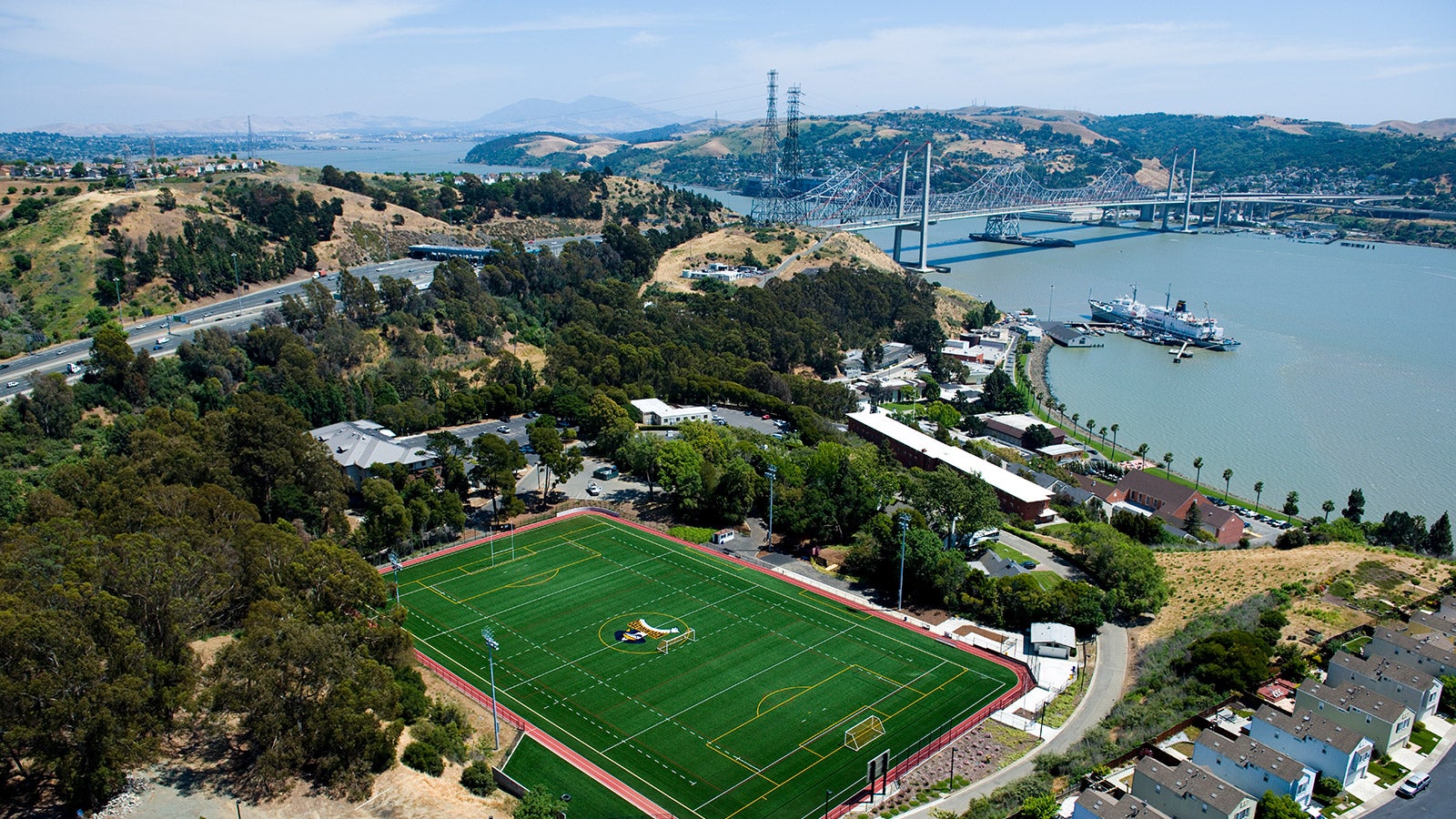
Cal Poly Maritime Academy is not a typical college; it's a specialized, quasi-military training ground for the global maritime industry, perched on a waterfront campus in Vallejo, California. With a culture defined by mandatory uniforms, room inspections, and a live-on-campus ethos, it delivers a hyper-focused, career-oriented education where graduates routinely command six-figure salaries on the high seas and in portside industries.
Admission requirements
Test-blind — scores not considered
Required
- High school transcript
- Grade point average
- College-prep program
- TOEFL (non-native English)
Source: IPEDS Admissions survey (2022) via Urban Institute. Covers formal factors only — it does not reflect essays, extracurriculars, or other holistic criteria.
More details
- Undergrad enrollment
- 804
- In-state tuition
- $9,944
- Out-of-state tuition
- $22,544
- Campus Culture
- Pseudo-military, Live-on-Campus Required
- Application Fee
- $70
- Graduation Rate
- 60%
- Total Applicants
- ~961
- Median Earnings (10yr)
- $94,784
Outcomes & value
Outcomes & value
- Median earnings (10 yr)
- $94,784
- Value (earnings ÷ net price)
- 4.6×
- Median debt at graduation
- $24,965
- Graduation rate
- 60%
- First-year retention
- 77%
- Reducing loan balance (3 yr)
- 82%
- Pell (lower-income) share
- 25%
- First-gen share (among federal-aid recipients)
- 20%
Top-earning majors
Median earnings by field of study (highest credential), ~2 years after completion.
- Marine Transportation$94,408
- Mechanical Engineering$78,971
- Mechanical Engineering Related Technologies/Technicians$66,171
- Business Administration, Management and Operations$52,107
- International Relations and National Security Studies$47,394
Source: U.S. Dept. of Education College Scorecard (field-of-study earnings). Figures cover graduates who received federal aid and lag ~2 years; not all programs report data.
Compare on earnings:
Campus & location
Campus safety
- On-campus violent crimes (2024)
- 2
- Per 1,000 students
- 2.39
On-campus criminal offenses classed as violent (murder/non-negligent manslaughter, rape, robbery, aggravated assault) for the most recent reported year. Source: U.S. Dept. of Education Campus Safety and Security (Clery Act). Counts reflect what’s reported to the school, and urban campuses often report more partly due to non-student incidents nearby — read alongside campus size and setting, not as a standalone safety verdict.
Climate
- Pleasant days / yr
- 200
- Summer high
- 78°F
- Winter low
- 43°F
- Annual rain
- 21.6"
- Natural-hazard risk
- Relatively High
Pleasant days counts days per year with a mean temperature of 55–75°F, a high at or below 90°F, a low at or above 45°F, and little precipitation — a transparent comfort measure, not a weighting we invented. Computed from Open-Meteo ERA5 daily history (2019–2023). Natural-hazard risk is the county’s composite rating from the FEMA National Risk Index.
Quick answers
- What is the acceptance rate at Cal Poly Maritime Academy?
- Cal Poly Maritime Academy's acceptance rate is approximately 95% (Vallejo, CA), based on the most recent figures we compiled from public and primary sources.
- How much does Cal Poly Maritime Academy cost?
- At Cal Poly Maritime Academy, the average net price (after aid) is about $20,555 per year. Actual cost varies with financial aid and residency.
- How many undergraduates attend Cal Poly Maritime Academy?
- Cal Poly Maritime Academy enrolls approximately 804 undergraduate students.
- Where is Cal Poly Maritime Academy located?
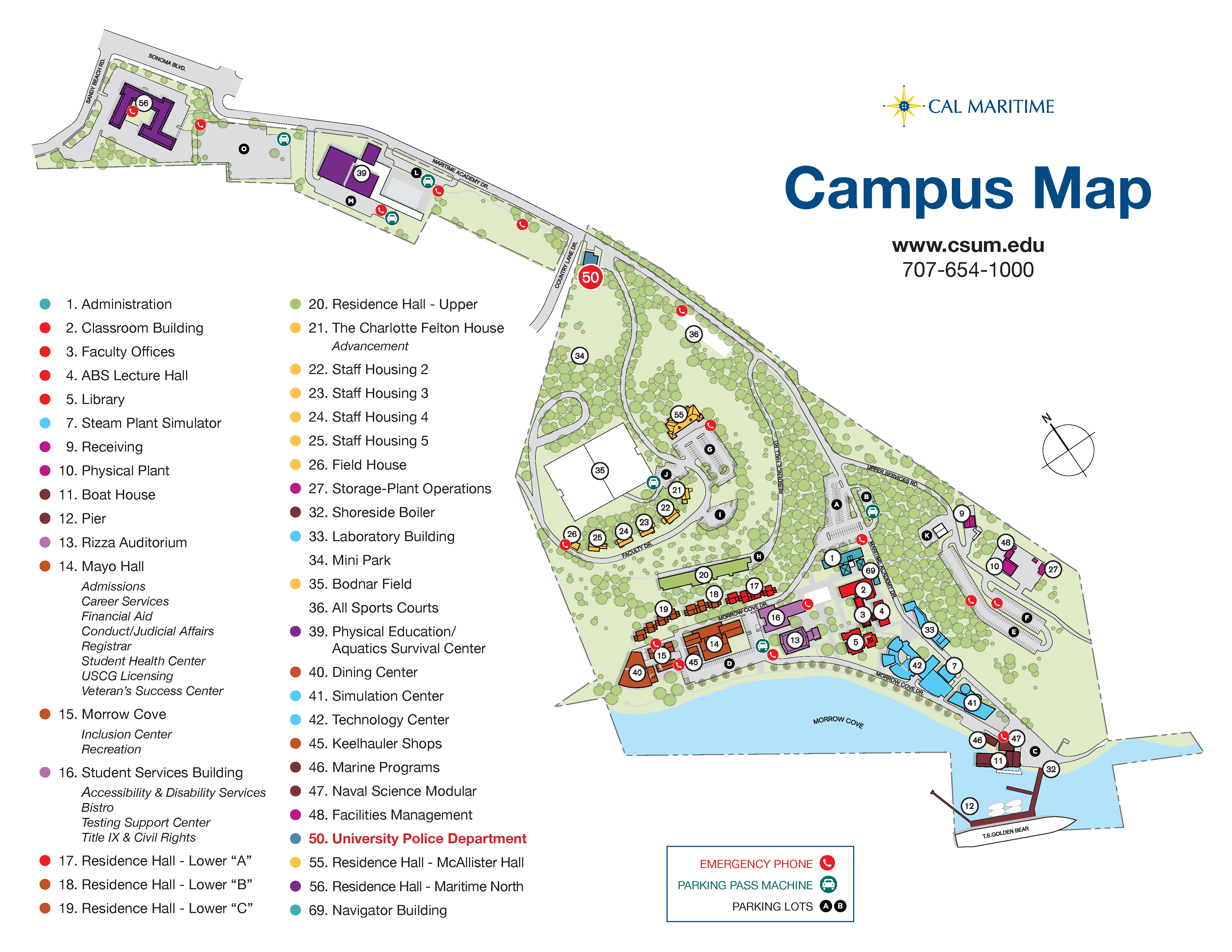
- Cal Poly Maritime Academy is located in Vallejo, CA.
Admissions
Admissions at Cal Maritime are notably accessible, with a high that reflects its mission as a public, specialized institution within the California State University system. The process is straightforward and , as SAT and ACT scores are not part of the admission evaluation process for most applicants. The primary academic gatekeeper is high school GPA; applicants with a GPA between 2.00 and 2.49 are considered, while those between 2.50 and 2.99 are more likely to be admitted. The admissions office receives applications from just under a thousand prospective first-year students. Notably, the rate—the percentage of admitted students who enroll—is relatively low at 15%, suggesting many admitted students ultimately choose other paths. There is no Early Decision program, and the application fee is $70.
Academics
The academic program is singularly focused on preparing leaders for high-demand maritime, engineering, business, and logistics industries. It is a technology- and engineering-centric institution where every degree is tied to a nautical curriculum. The undergraduate offerings are designed for direct career pathways, emphasizing real-world experience through mandatory internships and co-ops that place students directly into maritime operations. The academy thrives as a leading institution in technology, engineering, international business, global studies, and transportation. Its small, focused, and structured environment is a defining characteristic, offering a high-quality, hands-on education. In a recent curriculum expansion, an undergraduate Oceanography major was added in fall 2020, broadening its scientific scope while staying firmly within the marine realm.
Compare Cal Poly Maritime Academy
vs SUNY Maritime Collegevs Maine Maritime Academyvs Florida Polytechnic Universityvs Oregon State University-Cascades Campus
See colleges similar to Cal Poly Maritime Academy →Sources
- Common Data Set - CSUM - Cal Maritime Academy
- IR Dashboards - CSUM - Cal Maritime Academy
- Common Data Set - Institutional Research - Cal Poly, San Luis Obispo
- Facts + Figures | Massachusetts Maritime Academy
- Common Data Set Repository - College Transitions
- Institutional Research and Planning - CSUM - Cal Maritime Academy
- California State University - Maritime Academy Admissions - Niche
- California State University Maritime Academy: Statistics - EduRank
- First Time Freshmen - CSUM - Cal Maritime Academy
- California State University--Maritime Academy Admissions Stats