Admit rate has ranged 25%–29% over the last 5 years, though the latest figure above (32%) falls outside that window. Source: IPEDS via Urban Institute.
Acceptance & SAT from Common Data Set / IPEDS; net price, earnings & graduation from the U.S. Dept. of Education College Scorecard. Figures lag ~1–2 years — verify with the school.
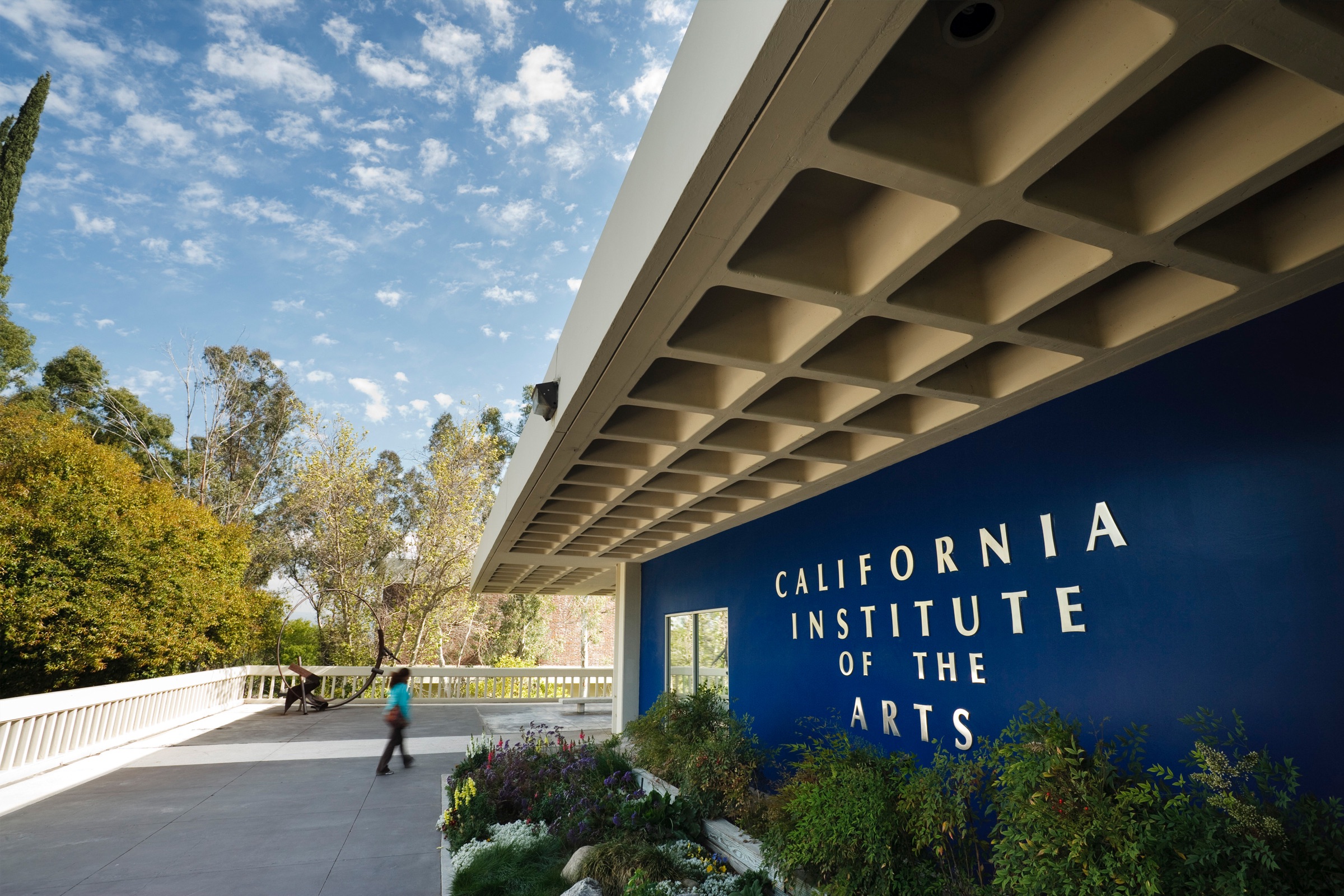
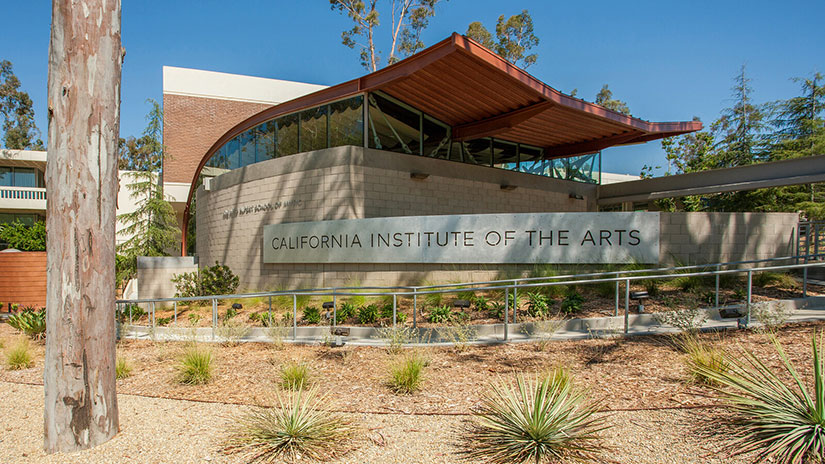
California Institute of the Arts (CalArts) isn't just an art school; it's a high-octane, interdisciplinary creative ecosystem forged in the 1960s and housed in a sprawling, 500,000-square-foot concrete crucible in Valencia. Its reputation is built on intensely training artists to become working professionals, fostering a nearly indescribable energy through relentless creative exchange across its six schools. This is a place where the portfolio is paramount, the community is fiercely like-minded, and the path forward is defined by artistic grit as much as genius.
Admission requirements
Test-blind — scores not considered
Required
High school transcript
Letters of recommendation
Demonstrated competencies
TOEFL (non-native English)
Considered (not required)
Grade point average
Class rank
College-prep program
Source: IPEDS Admissions survey (2022) via Urban Institute. Covers formal factors only — it does not reflect essays, extracurriculars, or other holistic criteria.
More details
Undergrad enrollment
860
In-state tuition
$58,996
Out-of-state tuition
$58,996
Core Philosophy
Intense professional training for working artists
Degrees Offered
BFA, MFA, MA, DMA
Graduation Rate
67%
Campus Centerpiece
500,000 sq ft Main Building
Median Earnings (10yr)
$41,198
Outcomes & value
Outcomes & value
Median earnings (10 yr)
$41,198
Value (earnings ÷ net price)
0.9×
Median debt at graduation
$25,000
Graduation rate
67%
First-year retention
82%
Reducing loan balance (3 yr)
67%
Pell (lower-income) share
24%
First-gen share (among federal-aid recipients)
16%
Financial health
2.9 / 3.0Meets the federal financial-responsibility standard
U.S. Dept. of Education Financial Responsibility Composite Score (FY2022-23). Scale −1.0 to 3.0; ≥1.5 meets the standard. Reported for private nonprofit & for-profit institutions only — public universities are state-backed and not scored, so this is a stability signal, not a ranking.
Top-earning majors
Median earnings by field of study (highest credential), ~2 years after completion.
Design and Applied Arts$49,840
Drama/Theatre Arts and Stagecraft$22,420
Film/Video and Photographic Arts$20,140
Dance$15,182
Source: U.S. Dept. of Education College Scorecard (field-of-study earnings). Figures cover graduates who received federal aid and lag ~2 years; not all programs report data.
Campus & location
Campus safety
On-campus violent crimes (2024)
0
Per 1,000 students
0.00
On-campus criminal offenses classed as violent (murder/non-negligent manslaughter, rape, robbery, aggravated assault) for the most recent reported year. Source: U.S. Dept. of Education Campus Safety and Security (Clery Act). Counts reflect what’s reported to the school, and urban campuses often report more partly due to non-student incidents nearby — read alongside campus size and setting, not as a standalone safety verdict.
Climate
Pleasant days / yr
158
Summer high
92°F
Winter low
44°F
Annual rain
18.4"
Natural-hazard risk
Very High
Pleasant days counts days per year with a mean temperature of 55–75°F, a high at or below 90°F, a low at or above 45°F, and little precipitation — a transparent comfort measure, not a weighting we invented. Computed from Open-Meteo ERA5 daily history (2019–2023). Natural-hazard risk is the county’s composite rating from the FEMA National Risk Index.
Deep dive — research, future-scholar output & economic mobility▾
Research output
Institutional h-index
30
Scholarly works
304
Institutional research volume and impact from OpenAlex. The h-index reflects large research universities and will be low for teaching-focused liberal-arts colleges — not a measure of undergraduate quality.
Economic mobility
Mobility rate
0.9%
Bottom → top quintile
12%
From bottom quintile
8%
Mobility rate = the share of students who both start in the bottom household-income quintile and reach the top quintile; bottom → top is that chance conditional on starting at the bottom. Source: Opportunity Insights Mobility Report Cards (Chetty, Friedman, Saez, Turner & Yagan). Reflects 1980–82 birth cohorts, so it’s directional, not current.
Quick answers
What is the acceptance rate at California Institute of the Arts?
California Institute of the Arts's acceptance rate is approximately 32% (Valencia, CA), based on the most recent figures we compiled from public and primary sources.
How much does California Institute of the Arts cost?
At California Institute of the Arts, the average net price (after aid) is about $46,080 per year. Actual cost varies with financial aid and residency.
How many undergraduates attend California Institute of the Arts?
California Institute of the Arts enrolls approximately 860 undergraduate students.
Where is California Institute of the Arts located?
California Institute of the Arts is located in Valencia, CA.
Admissions
Getting into CalArts is a selective, portfolio-centric endeavor. The institute is selective, with an of 32%. In a recent cycle, it received 2,004 applications and admitted 648 students, representing a 23.4% growth in admissions from the prior year. While some sources note an SAT score range of 1090–1260 for admitted students, the primary gatekeepers are artistic merit and potential, not standardized test scores. The admissions process is distinct from open-admission policies and applies to first-time, degree/certificate-seeking undergraduates. Prospective students navigate a dedicated application process with specific requirements for international and transfer applicants.
Earnings = median of students working ~10 years after entry; debt = median of graduates. Value divides 10-yr earnings by one year’s net price — read it as earnings per dollar of annual cost, not a full lifetime ROI; it favors lower-cost schools. Source: U.S. Dept. of Education College Scorecard. Figures lag ~2 years and reflect all students, not your intended major.
Academics
CalArts operates as a comprehensive conservatory, structured around six schools: Art, Critical Studies, Dance, Film/Video, Music, and Theater. It offers a focused suite of degrees including the Bachelor of Fine Arts (BFA), Master of Fine Arts (MFA), Master of Arts (MA), and Doctor of Musical Arts (DMA). The curriculum is designed to intensely train young artists to become working professionals, optimizing programs for a new kind of artist. A defining and praised feature is the deeply interdisciplinary environment; students consistently note the opportunity to take courses across different art fields regardless of their major. This breaks down silos and fosters the kind of cross-pollination that defines the modern creative landscape. The academic reputation is one of rigorous classroom and studio training aimed at producing well-rounded and educated artists.
Life at CalArts is immersive, communal, and centered almost entirely within its massive, five-level Main Building—a 500,000-square-foot hub that houses everything from classrooms and art studios to animation labs and music rehearsal spaces. This design physically manifests the school's interdisciplinary ethos, forcing constant interaction. Students describe an inclusive community with a nearly indescribable energy, fueled by vibrant interpersonal creative exchanges. The vibe is one of intense, friendly collaboration; since everyone is so like-minded in their dedication to artistry, it isn't hard to find a community. The entire student experience is centered by values of inclusivity, experimentation, and critical inquiry. Founded in 1961 and located in Santa Clarita (Valencia), California, the campus becomes a 24/7 live-work environment for its students.
The CalArts journey leads to a distinct set of career outcomes reflective of the professional arts world. The graduation rate is 67%. Post-graduation earnings for artists often start lower but can grow with career establishment. Data shows average earnings of $22,659 one year after graduation, rising to $37,136 after five years, and reaching a median of $41,198 ten years after entry. Other sources note average earnings of $33,500 after six years, climbing to $40,500 after nine years. The overall graduation rate has also been reported at 64%, placing CalArts in the top 40% percentile for this metric. The path is not traditionally linear, but the institute's focus on creating working professionals provides a foundational launchpad into competitive creative industries.
Attending CalArts represents a significant financial investment, typical of a private, specialized arts conservatory. The average after aid and scholarships is $46,080 per year. The institute provides a net price calculator for families to estimate their actual cost, which is defined as the estimated (including tuition, fees, books, and supplies) minus grant and scholarship aid. Financial aid packages, which include grants, loans, and scholarships, average $15,861. Some reports suggest that students with high academic achievement (3.8+ GPA), leadership roles, or unique talents can sometimes secure substantial , ranging from $20,000 to over $40,000. The key for applicants is to use the official calculator and engage with the financial aid office to understand the full package, as the net price represents the cost after all aid is applied.
CalArts stands out not for ivy-covered halls, but for its raw, interdisciplinary creative forge. It is the antithesis of a traditional liberal arts college—it's a professional training ground with a singular, all-consuming focus. What defines it is the complete integration of life and art within its massive Main Building, a structure that physically mandates the collision of disciplines, from experimental animation to critical dance studies. This creates its legendary "nearly indescribable energy." Its reputation is brutally pragmatic: to intensely train young artists to become working professionals. There's no hiding behind a minor; every student is here to make art, constantly, surrounded by peers who are doing the same. This produces graduates who are not just skilled in a technique, but are innovators who understand how their work fits into and challenges the broader cultural conversation. It's a high-stakes, high-reward environment for those whose identity is irrevocably tied to creating.
California Institute of the Arts seal · sourceCalArts Home | CalArts · sourceCalifornia College of the Arts / Studio Gang | ArchDaily · sourceCalifornia Institute of the Arts (CalArts) - Santa Monica College · source