Admit rate has ranged 22%–66% over the last 5 years — notably volatile, though the latest figure above (18%) falls outside that window. Source: IPEDS via Urban Institute.
Acceptance & SAT from Common Data Set / IPEDS; net price, earnings & graduation from the U.S. Dept. of Education College Scorecard. Figures lag ~1–2 years — verify with the school.
California Miramar University carves out a distinct niche as a San Diego-based institution built for the working adult. Its model is unapologetically pragmatic: flexible, career-focused online and hybrid programs in business and technology, designed to be navigated alongside a full-time job. While its graduation metrics are a point of concern, its admissions are selective and its cost structure is aggressively transparent, positioning it as a direct, no-frills pathway for career advancement.
Admission requirements
Test-blind — scores not considered
Required
High school transcript
Grade point average
TOEFL (non-native English)
Source: IPEDS Admissions survey (2022) via Urban Institute. Covers formal factors only — it does not reflect essays, extracurriculars, or other holistic criteria.
More details
Undergrad enrollment
135
In-state tuition
$12,442
Out-of-state tuition
$12,442
Setting
Suburban
Graduation Rate
50%
Student Body Size
~105 undergraduates
Instructional Model
Hybrid & Online
Student-Faculty Ratio
13:1
Median Earnings (10yr)
$67,386
Outcomes & value
Outcomes & value
Median debt at graduation
$31,000
Graduation rate
50%
First-year retention
92%
Pell (lower-income) share
48%
First-gen share (among federal-aid recipients)
48%
Earnings = median of students working ~10 years after entry; debt = median of graduates. Value divides 10-yr earnings by one year’s net price — read it as earnings per dollar of annual cost, not a full lifetime ROI; it favors lower-cost schools. Source: U.S. Dept. of Education College Scorecard. Figures lag ~2 years and reflect all students, not your intended major.
Financial health
2.1 / 3.0Meets the federal financial-responsibility standard
U.S. Dept. of Education Financial Responsibility Composite Score (FY2022-23). Scale −1.0 to 3.0; ≥1.5 meets the standard. Reported for private nonprofit & for-profit institutions only — public universities are state-backed and not scored, so this is a stability signal, not a ranking.
Campus & location
Campus safety
On-campus violent crimes (2024)
0
Per 1,000 students
0.00
On-campus criminal offenses classed as violent (murder/non-negligent manslaughter, rape, robbery, aggravated assault) for the most recent reported year. Source: U.S. Dept. of Education Campus Safety and Security (Clery Act). Counts reflect what’s reported to the school, and urban campuses often report more partly due to non-student incidents nearby — read alongside campus size and setting, not as a standalone safety verdict.
Climate
Pleasant days / yr
273
Summer high
75°F
Winter low
47°F
Annual rain
15.1"
Natural-hazard risk
Very High
Pleasant days counts days per year with a mean temperature of 55–75°F, a high at or below 90°F, a low at or above 45°F, and little precipitation — a transparent comfort measure, not a weighting we invented. Computed from Open-Meteo ERA5 daily history (2019–2023). Natural-hazard risk is the county’s composite rating from the FEMA National Risk Index.
Deep dive — research, future-scholar output & economic mobility▾
Research output
Institutional h-index
40
Scholarly works
460
Institutional research volume and impact from OpenAlex. The h-index reflects large research universities and will be low for teaching-focused liberal-arts colleges — not a measure of undergraduate quality.
Quick answers
What is the acceptance rate at California Miramar University?
California Miramar University's acceptance rate is approximately 18% (San Diego, CA), based on the most recent figures we compiled from public and primary sources.
How much does California Miramar University cost?
At California Miramar University, the average net price (after aid) is about $12,480 per year. Actual cost varies with financial aid and residency.
How many undergraduates attend California Miramar University?
California Miramar University enrolls approximately 135 undergraduate students.
Where is California Miramar University located?
California Miramar University is located in San Diego, CA.
Admissions
Admissions at California Miramar University are competitive, with an of 18%. The university employs a rolling admissions process and does not require SAT or ACT scores for admission, making it a institution. While specific data on the relative importance of factors like class rank, recommendations, or extracurriculars is not detailed in the provided sources, the focus appears squarely on academic readiness for its career-oriented programs. The university does not offer an Early Decision option, and there is no available data on an Early Decision acceptance rate. Demonstrated interest—tracking an applicant's engagement with the school—is a factor some colleges weigh heavily, but its specific consideration at CalMU is not defined in the provided snippets. Prospective undergraduate students must have a high school diploma and demonstrate English proficiency, typically via tests like the TOEFL or IELTS.
CalMU’s academic identity is defined by flexibility and career immediacy. The university offers Associate, Bachelor’s, and Master’s degrees primarily through distance education and a hybrid model that combines online and classroom delivery. This structure is explicitly designed to cater to those working full time. The curriculum is concentrated in pragmatic fields:
Business: Associate and Bachelor's degrees.
Technology: Associate and Bachelor's degrees, including a Data Science and Analytics course designed to provide fundamental concepts and techniques.
STEM: Programs are highlighted as a pathway to advance one's career.
The university promotes accelerated pathways for faster graduation. Faculty are described as supportive and knowledgeable, with students citing the gain of valuable skills through hybrid and in-person learning. The student-to-faculty ratio is reported as 13:1. For international students on F-1 visas wishing to work while studying, the university requires maintaining status for at least one full academic year and being in good academic standing (a minimum 3.0 GPA for graduate students, 2.0 for undergraduates).
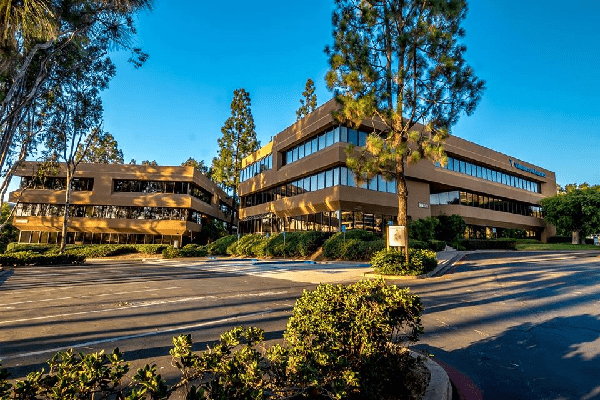
Life at CalMU is inherently non-traditional, reflecting its mission to serve working adults. With a small undergraduate population of around 105 students, the experience is intimate and focused. The main San Diego campus is located at 3550 Camino Del Rio N., Suite #208, in a suburban setting. The campus provides a vibrant academic experience in a city known for its beaches and culture, featuring modern classrooms, computer labs, student lounges, and administrative offices. Student housing and meal plans are not a central feature of the campus model. The university maintains an active online presence promoting student life and campus events, suggesting a community that connects both digitally and in person when possible.
Outcome data presents a mixed picture that is crucial for prospective students to weigh. The graduation rate is notably low, placing the institution in the bottom 5% nationally. However, for those who do graduate, the financial payoff appears significant. The median earnings for graduates ten years after starting are $67,386, which is above the midpoint ($60,377) for four-year colleges nationally. This suggests that while persistence to graduation is a challenge, the career-oriented curriculum delivers strong results for completers. Institutional data shows growth in expenditure on salaries, representing a major part of its budget.
CalMU positions itself as an affordable, transparent option. The average after grants and scholarships is reported between $9,298 and $10,207 per year. The university provides a net price calculator for personalized estimates and emphasizes completing the FAFSA to unlock federal aid. It offers various scholarship opportunities, including a $3,000 scholarship disbursed in installments after the completion of the first session. The average total aid awarded is $6,587 per year, with additional federal, state, and institutional grant aid available. The university promotes a scenario where the direct cost can be as low as $7,780, which it describes as potentially "doable without a loan." It is FAFSA-approved and charges no application fee. The provided sources do not indicate that CalMU has a policy of meeting 100% of demonstrated financial need or a formal "no-loan" policy for low-income students.
California Miramar University stands out for its ruthless practicality. It is not a school for the traditional residential college experience. Instead, it is a focused platform for career acceleration, built from the ground up for the working professional. Its hybrid and online delivery model, concentrated in high-demand fields like business and IT, offers a level of scheduling flexibility that few traditional universities can match. This comes with a clear trade-off: the graduation rate is a serious caution flag, indicating the difficulty many students face in balancing these programs with other life commitments. Yet, for those who persist, the median graduate earnings are compelling, suggesting the curriculum effectively translates into market value. Its selective admissions and straightforward, low-cost financial model complete the picture of an institution that strips away the pomp of college to focus on a direct return on investment.
California Miramar University seal · sourceHousing - California Miramar University · sourceCalifornia Miramar University - Niche · sourceCMU Unveils Cutting-Edge Campus in San Jose · source