Admit rate has ranged 70%–98% over the last 3 years — notably volatile. Source: IPEDS via Urban Institute.
Acceptance & SAT from Common Data Set / IPEDS; net price, earnings & graduation from the U.S. Dept. of Education College Scorecard. Figures lag ~1–2 years — verify with the school.
Campbellsville University is a Christ-centered, regionally accredited institution in rural Kentucky that operates with a distinctly open-access mission. It serves a large undergraduate population with over 80 majors, a sprawling online footprint, and a campus life built around faith and community, but its academic outcomes—including a graduation rate well below the national average—reflect the challenges of its student body and its role as a gateway to higher education for many first-generation and lower-income students.
More details
Undergrad enrollment
2,840
In-state tuition
$27,998
Out-of-state tuition
$27,998
Graduation Rate
42%
Student-Faculty Ratio
21:1
Median Earnings (10yr)
$41,583
First-Year Retention Rate
60%
Outcomes & value
Outcomes & value
Median earnings (10 yr)
$41,583
Value (earnings ÷ net price)
2.1×
Median debt at graduation
$17,156
Graduation rate
42%
First-year retention
65%
Reducing loan balance (3 yr)
44%
Pell (lower-income) share
20%
First-gen share (among federal-aid recipients)
47%
Financial health
2.7 / 3.0Meets the federal financial-responsibility standard
U.S. Dept. of Education Financial Responsibility Composite Score (FY2022-23). Scale −1.0 to 3.0; ≥1.5 meets the standard. Reported for private nonprofit & for-profit institutions only — public universities are state-backed and not scored, so this is a stability signal, not a ranking.
Top-earning majors
Median earnings by field of study (highest credential), ~2 years after completion.
Registered Nursing, Nursing Administration, Nursing Research and Clinical Nursing$54,035
Business/Commerce, General$35,213
Social Work$30,228
Teacher Education and Professional Development, Specific Levels and Methods$28,055
Criminal Justice and Corrections$26,739
Psychology, General
Campus & location
Campus safety
On-campus violent crimes (2024)
2
Per 1,000 students
0.29
On-campus criminal offenses classed as violent (murder/non-negligent manslaughter, rape, robbery, aggravated assault) for the most recent reported year. Source: U.S. Dept. of Education Campus Safety and Security (Clery Act). Counts reflect what’s reported to the school, and urban campuses often report more partly due to non-student incidents nearby — read alongside campus size and setting, not as a standalone safety verdict.
Climate
Pleasant days / yr
88
Summer high
86°F
Winter low
33°F
Annual rain
55.7"
Annual snow
7"
Natural-hazard risk
Very Low
Pleasant days counts days per year with a mean temperature of 55–75°F, a high at or below 90°F, a low at or above 45°F, and little precipitation — a transparent comfort measure, not a weighting we invented. Computed from Open-Meteo ERA5 daily history (2019–2023). Natural-hazard risk is the county’s composite rating from the FEMA National Risk Index.
Deep dive — research, future-scholar output & economic mobility▾
Research output
Institutional h-index
29
Scholarly works
516
Institutional research volume and impact from OpenAlex. The h-index reflects large research universities and will be low for teaching-focused liberal-arts colleges — not a measure of undergraduate quality.
Economic mobility
Mobility rate
1.8%
Bottom → top quintile
15%
From bottom quintile
12%
Mobility rate = the share of students who both start in the bottom household-income quintile and reach the top quintile; bottom → top is that chance conditional on starting at the bottom. Source: Opportunity Insights Mobility Report Cards (Chetty, Friedman, Saez, Turner & Yagan). Reflects 1980–82 birth cohorts, so it’s directional, not current.
Quick answers
What is the acceptance rate at Campbellsville University?
Campbellsville University's acceptance rate is approximately 80% (Campbellsville, KY), based on the most recent figures we compiled from public and primary sources.
How much does Campbellsville University cost?
At Campbellsville University, the average net price (after aid) is about $19,341 per year. Actual cost varies with financial aid and residency.
How many undergraduates attend Campbellsville University?
Campbellsville University enrolls approximately 2,840 undergraduate students.
Where is Campbellsville University located?
Campbellsville University is located in Campbellsville, KY.
Admissions
Campbellsville's admissions process is designed to be accessible, not exclusive. The university is "not selective," with an of 80%, meaning the vast majority of applicants are admitted. The process is straightforward: a minimum GPA of 2.0 is generally required for consideration. Standardized test scores (SAT/ACT) are "Not considered for admission," placing the emphasis squarely on a student's academic record. The admitted student profile shows a middle 50% SAT range of 910–1130 and an ACT range of 17–24, with 36% of admitted students reporting a GPA of 3.75 or higher. The rate—the percentage of admitted students who enroll—is reported at 28.9%. There is no mention of an Early Decision program or policy in the provided sources, and demonstrated interest is not addressed in the context of Campbellsville's admissions factors.
Earnings = median of students working ~10 years after entry; debt = median of graduates. Value divides 10-yr earnings by one year’s net price — read it as earnings per dollar of annual cost, not a full lifetime ROI; it favors lower-cost schools. Source: U.S. Dept. of Education College Scorecard. Figures lag ~2 years and reflect all students, not your intended major.
$20,140
Source: U.S. Dept. of Education College Scorecard (field-of-study earnings). Figures cover graduates who received federal aid and lag ~2 years; not all programs report data.
Campbellsville offers a broad, career-oriented curriculum with "more than 80 majors and certifications" across undergraduate, graduate, and online programs. The academic structure is pragmatic, with popular majors including Cosmetology, Business, Nursing, Social Work and Youth Services, and Liberal Arts and Humanities. The College of Business and Enterprise, for example, focuses on equipping graduates with "critical thinking and quantitative skills" for careers in economics, finance, and public policy. The student-faculty ratio is 21:1, which suggests larger introductory classes. The institution is accredited by the Commission on Colleges of the Southern Association of Colleges and Schools, ensuring its degrees are recognized. A key indicator of academic challenge and support is the freshman retention rate, which stands at 60%, signaling that a significant portion of the incoming class does not return for a second year.
Life at Campbellsville is defined by its "Christ-centered" identity and its effort to create a "vibrant campus life" for a large and geographically diverse student body. The total undergraduate enrollment is 6,853, creating a substantial community on a small-town Kentucky campus. The university promotes engagement through "various student organizations, recreational activities, and events, all designed to help students connect with peers." This includes intramural sports and co-curricular activities. The student body is described as "diverse and welcoming," with "students from all over the world contributing to a rich cultural environment." The campus serves as a hub for this community, though a significant portion of the student population is likely enrolled in online programs, given the university's extensive online offerings.
Graduation and career outcomes at Campbellsville present a mixed picture, reflecting its open-access mission and the profile of its student population. The four-year graduation rate is 35%, while the six-year rate is 42%, both figures significantly below the national midpoint for four-year colleges (59%). The university itself sets ambitious internal benchmarks for course completion, aiming for a 92% success rate with an 85% threshold. Post-graduation, median earnings ten years after entry are $41,583, which is also below the national midpoint of $60,377 for four-year colleges. These metrics underscore the university's role as a point of entry into higher education, where many students may face financial, academic, or personal challenges that extend their time to degree or limit early-career earnings potential.
Affordability is a central part of Campbellsville's appeal. The average after aid is $19,341. A high percentage of students (87.87%) receive financial aid, with the average aid package totaling $20,147. This aid comes from a mix of institutional scholarships and grants (averaging $17,187), federal grants ($5,927), and student loans ($6,000 on average). Tuition varies by program, with per-credit-hour rates for online programs ranging from $399 to $479. The university has financial aid policies and procedures in place, requiring students to be "admitted and working toward a degree" to receive aid. The provided sources do not indicate that Campbellsville has a "no-loan" policy or a commitment to meeting 100% of demonstrated financial need without loans.
Campbellsville University stands out not for prestige or selectivity, but for its specific mission: to provide a Christ-centered, accessible, and affordable education to a broad population, including many who might not otherwise attend a four-year university. Its 80% and policy are deliberate choices that lower barriers to entry. It distinguishes itself with an enormous catalog of over 80 majors and a significant online presence, offering flexibility for non-traditional and working students. The campus culture is explicitly built around faith and community, aiming to support students through "personal transformation." However, its identity is inseparable from its outcomes—the low retention and graduation rates paint a clear picture of the struggles its student body faces. For the right student—one seeking a faith-based environment, a practical degree, and a low-stakes admissions process—Campbellsville serves a distinct purpose. For others, the statistical realities of student success there are a crucial part of the equation.
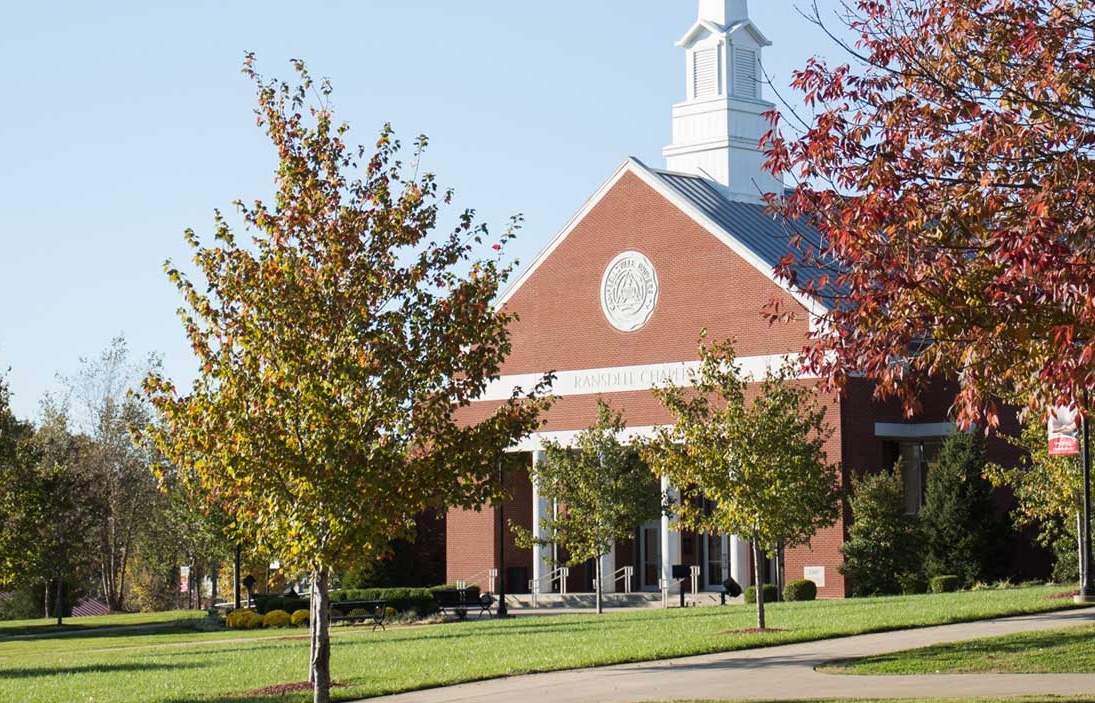
Campbellsville University seal · sourceVisit Campbellsville University | Campus Tours and Preview Day · sourceCampbellsville University - Tuition Rewards by SAGE Scholars · sourceGDL: Visit Campbellsville University in Taylor County · source