Loading…
← All schools
Capital Health School of Radiologic Technology
Trenton, NJprivate nonprofitwww.capitalhealth.org/professionals/school-of-radiologic-technology
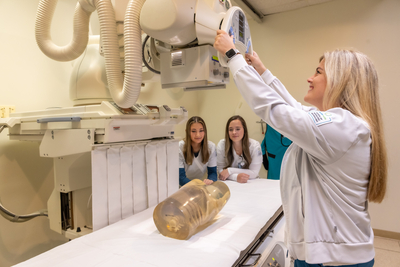
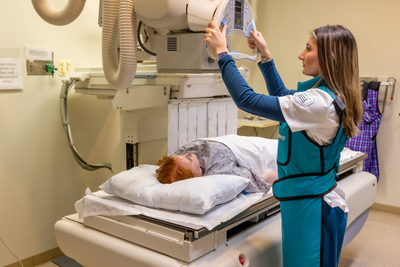
Capital Health School of Radiologic Technology is a singularly focused, hospital-based program that operates more like a professional apprenticeship than a traditional college. It’s a direct pipeline into the medical field, where students spend two years immersed in the clinical environment of Capital Health in Trenton, New Jersey, training to become radiologic technologists. The program’s identity is defined by its 100% acceptance rate, its intense, hands-on curriculum, and a track record of producing graduates who ace their certification exams and secure immediate employment.
More details
- Undergrad enrollment
- 16
- Program Type
- Hospital-based certification
- Financial Aid
- Title IV eligible (Pell Grants, Direct Loans)
- Program Length
- 24 months
- Application Fee
- $50
- Housing Provided
- No
- Application Window
- Sept 1 - Feb 15
- Community Service Requirement
- 4 hours minimum
- Median Earnings 1yr After Graduation
- $36,427
Outcomes & value
Outcomes & value
- Pell (lower-income) share
- 27%
Earnings = median of students working ~10 years after entry; debt = median of graduates. Value divides 10-yr earnings by one year’s net price — read it as earnings per dollar of annual cost, not a full lifetime ROI; it favors lower-cost schools. Source: U.S. Dept. of Education College Scorecard. Figures lag ~2 years and reflect all students, not your intended major.
Campus & location
Campus safety
- On-campus violent crimes (2024)
- 0
On-campus criminal offenses classed as violent (murder/non-negligent manslaughter, rape, robbery, aggravated assault) for the most recent reported year. Source: U.S. Dept. of Education Campus Safety and Security (Clery Act). Counts reflect what’s reported to the school, and urban campuses often report more partly due to non-student incidents nearby — read alongside campus size and setting, not as a standalone safety verdict.
Climate
- Pleasant days / yr
- 94
- Summer high
- 85°F
- Winter low
- 30°F
- Annual rain
- 38.8"
- Annual snow
- 14.2"
- Natural-hazard risk
- Relatively High
Pleasant days counts days per year with a mean temperature of 55–75°F, a high at or below 90°F, a low at or above 45°F, and little precipitation — a transparent comfort measure, not a weighting we invented. Computed from Open-Meteo ERA5 daily history (2019–2023). Natural-hazard risk is the county’s composite rating from the FEMA National Risk Index.
Quick answers
- How many undergraduates attend Capital Health School of Radiologic Technology?
- Capital Health School of Radiologic Technology enrolls approximately 16 undergraduate students.
- Where is Capital Health School of Radiologic Technology located?
- Capital Health School of Radiologic Technology is located in Trenton, NJ.
Admissions
Admissions at Capital Health School of Radiologic Technology is characterized by an open-access philosophy for a highly specialized professional track. The school reports a 100% , which is notably higher than the New Jersey state average of 87% for similar institutions. This does not imply a lack of standards, but rather reflects the program's mission to train healthcare professionals directly within its hospital system.
The application window is strictly defined, running from September 1st through February 15th each year. A completed application must be accompanied by a non-refundable $50.00 fee. While the provided sources do not detail specific requirements like minimum GPA or standardized test scores, the process is clearly structured and time-bound, focusing on identifying candidates ready for an intensive, two-year hospital-based certification program.
Academics
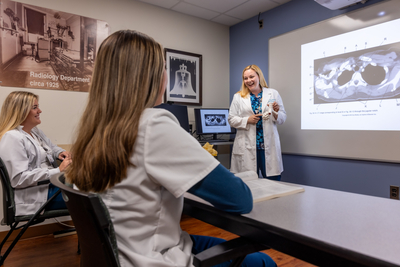
The academic experience is a concentrated, 24-month hospital-based program designed to certify radiologic technologists. It is not a traditional associate or bachelor's degree program in a collegiate setting, but a focused course of study offered directly at Capital Health. The curriculum blends classroom instruction with extensive clinical work, immersing students in the practical realities of medical imaging from day one.
The program's ultimate academic benchmark is the American Registry of Radiologic Technologists (ARRT) national certification exam. While specific pass rates for Capital Health are not provided in the sources, a similar hospital-based radiologic technology school reported a 100% pass rate for its graduates, highlighting the potential outcomes of this intensive training model. The core educational objectives are explicitly clinical: graduates must demonstrate knowledge of radiation safety principles and employ those safety skills in the clinical area.
Compare Capital Health School of Radiologic Technology
See colleges similar to Capital Health School of Radiologic Technology →Sources
- School of Radiologic Technology Admissions - Capital Health
- Capital Health School of Radiologic Technology - DFR Report HTML
- Capital Health School of Radiologic Technology - Sallie
- Capital Health's School of Radiologic Technology - Niche
- Capital Health School of Radiologic Technology - Clema.ai
- Capital Health School of Radiologic Technology
- Capital Health School of Radiologic Technology
- Capital Health School of Radiologic Technology Statistics
- radiologic technologist
- Capital Health School of Radiologic Technology – East Trenton