Loading…
← All schools
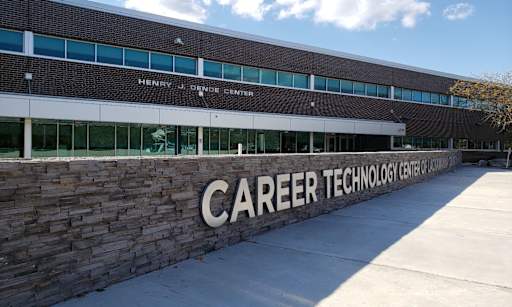
Career Technology Center of Lackawanna County
Scranton, PApublicctclcpn.ctclc.edu
Acceptance
100%
Avg net price
$22,521
Earnings (10 yr)
$45,555
Admit rate has ranged 75%–100% over the last 4 years — notably volatile. Source: IPEDS via Urban Institute.
Acceptance & SAT from Common Data Set / IPEDS; net price, earnings & graduation from the U.S. Dept. of Education College Scorecard. Figures lag ~1–2 years — verify with the school.
The Career Technology Center of Lackawanna County (CTCLC) is a singular institution—not a traditional college but a public career and technical education center in Scranton, PA, that operates with the open-access mission of a community college. It’s a place where the application is essentially a formality, with a 100% acceptance rate, and the real gatekeeper is a student’s commitment to mastering a hands-on trade. The vibe is intensely practical, focused on turning out graduates with certificates in fields from welding and auto body repair to practical nursing and computer systems, ready for immediate entry into the workforce.
Admission requirements
Test-blind — scores not considered
Required
- High school transcript
- Letters of recommendation
Considered (not required)
- Grade point average
- TOEFL (non-native English)
Source: IPEDS Admissions survey (2022) via Urban Institute. Covers formal factors only — it does not reflect essays, extracurriculars, or other holistic criteria.
More details
- Undergrad enrollment
- 113
- Program Areas
- 17
- Total Students
- 12
- Graduation Rate
- 57%
- Typical Student Debt
- $17,200
- Median Earnings (10yr)
- $45,555
Outcomes & value
Outcomes & value
- Median earnings (10 yr)
- $45,555
- Value (earnings ÷ net price)
- 2.0×
- Median debt at graduation
- $17,200
- Reducing loan balance (3 yr)
- 53%
- Pell (lower-income) share
- 66%
- First-gen share (among federal-aid recipients)
- 56%
Earnings = median of students working ~10 years after entry; debt = median of graduates. Value divides 10-yr earnings by one year’s net price — read it as earnings per dollar of annual cost, not a full lifetime ROI; it favors lower-cost schools. Source: U.S. Dept. of Education College Scorecard. Figures lag ~2 years and reflect all students, not your intended major.
Campus & location
Campus safety
- On-campus violent crimes (2024)
- 0
On-campus criminal offenses classed as violent (murder/non-negligent manslaughter, rape, robbery, aggravated assault) for the most recent reported year. Source: U.S. Dept. of Education Campus Safety and Security (Clery Act). Counts reflect what’s reported to the school, and urban campuses often report more partly due to non-student incidents nearby — read alongside campus size and setting, not as a standalone safety verdict.
Climate
- Pleasant days / yr
- 96
- Summer high
- 80°F
- Winter low
- 24°F
- Annual rain
- 48.7"
- Annual snow
- 40.3"
- Natural-hazard risk
- Relatively Moderate
Pleasant days counts days per year with a mean temperature of 55–75°F, a high at or below 90°F, a low at or above 45°F, and little precipitation — a transparent comfort measure, not a weighting we invented. Computed from Open-Meteo ERA5 daily history (2019–2023). Natural-hazard risk is the county’s composite rating from the FEMA National Risk Index.
Quick answers
- What is the acceptance rate at Career Technology Center of Lackawanna County?
- Career Technology Center of Lackawanna County's acceptance rate is approximately 100% (Scranton, PA), based on the most recent figures we compiled from public and primary sources.
- How much does Career Technology Center of Lackawanna County cost?
- At Career Technology Center of Lackawanna County, the average net price (after aid) is about $22,521 per year. Actual cost varies with financial aid and residency.
- How many undergraduates attend Career Technology Center of Lackawanna County?
- Career Technology Center of Lackawanna County enrolls approximately 113 undergraduate students.
- Where is Career Technology Center of Lackawanna County located?
- Career Technology Center of Lackawanna County is located in Scranton, PA.
Admissions
Admissions at CTCLC is defined by its open-access mission. The school reports a 100% , meaning it welcomes virtually all applicants. This aligns with its role as a public career and technical education center focused on workforce development rather than selective academic screening. The process appears straightforward, with sources indicating there is a $35 application fee. Unlike highly selective colleges, there is no available data on standardized test score ranges (SAT/ACT) or high school GPA expectations for admitted students, suggesting these are not primary factors in the admissions decision. The institution's rate—the percentage of admitted students who enroll—is also reported as 100%, indicating that those who apply are highly likely to attend, likely because they are seeking specific, skills-based training. There is no indication of an Early Decision or Early Action program; admissions operates on a standard, rolling basis typical of career-focused schools.
- Acceptance Rate: 100%
- Yield Rate: 100%
- Application Fee: $35
Compare Career Technology Center of Lackawanna County
vs SUNY College at Potsdamvs SUNY at Purchase Collegevs Lincoln Universityvs Thaddeus Stevens College of Technology
See colleges similar to Career Technology Center of Lackawanna County →Sources
- Career Technology Center of Lackawanna County - Sallie
- Career Technology Center of Lackawanna County: Home
- Common Data Set: Home
- Common Data Set - Institutional Research & Planning - Georgia Tech
- Decoding the Common Data Set What You Need to Know for Your ...
- Common Data Set | Office of Planning, Assessment, and ... - opair
- Career Technology Center of Lackawanna County - Niche
- Career Technology Center of Lackawanna County | My Future
- Career Technology Center Of Lackawanna County Admissions
- Career Technology Center Of Lackawanna County Admission