Loading…
← All schools
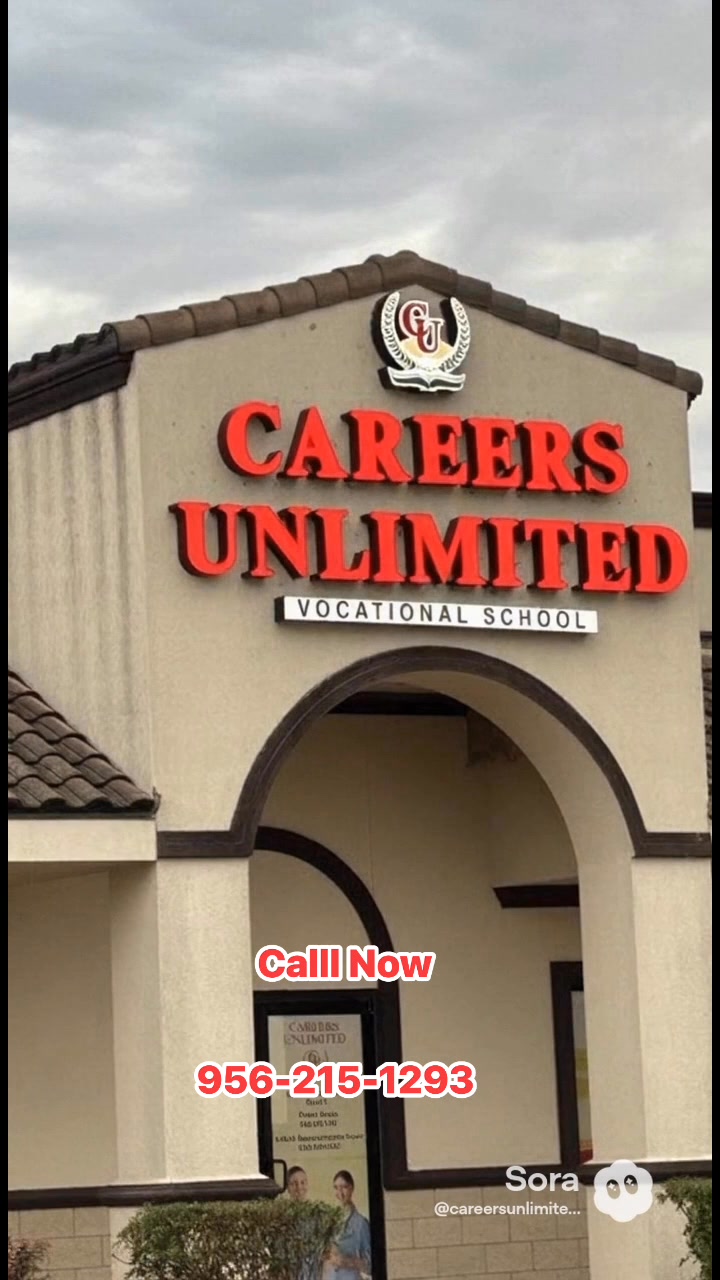
Careers Unlimited
Orem, UTprivate forprofitucdh.edu
Careers Unlimited is a small, for-profit, four-year commuter campus in Orem, Utah, with an unorthodox and opaque admissions profile. Its defining characteristic is a singular, utilitarian focus on career outcomes, reflected in its name and operational ethos. The institution functions more as a focused career-training conduit than a traditional residential college, prioritizing direct pathways from enrollment to employment.
More details
- Undergrad enrollment
- 118
- Campus Setting
- Urban, commuter campus
- Institution Type
- Private, for-profit, 4-year
- Student-Faculty Ratio
- 13.0
- Median Earnings (10yr)
- $30,829
Outcomes & value
Outcomes & value
- Median earnings (10 yr)
- $30,829
- Reducing loan balance (3 yr)
- 90%
- Pell (lower-income) share
- 54%
Earnings = median of students working ~10 years after entry; debt = median of graduates. Value divides 10-yr earnings by one year’s net price — read it as earnings per dollar of annual cost, not a full lifetime ROI; it favors lower-cost schools. Source: U.S. Dept. of Education College Scorecard. Figures lag ~2 years and reflect all students, not your intended major.
Financial health
2.2 / 3.0Meets the federal financial-responsibility standard
U.S. Dept. of Education Financial Responsibility Composite Score (FY2022-23). Scale −1.0 to 3.0; ≥1.5 meets the standard. Reported for private nonprofit & for-profit institutions only — public universities are state-backed and not scored, so this is a stability signal, not a ranking.
Top-earning majors
Median earnings by field of study (highest credential), ~2 years after completion.
- Dental Support Services and Allied Professions$45,175
Source: U.S. Dept. of Education College Scorecard (field-of-study earnings). Figures cover graduates who received federal aid and lag ~2 years; not all programs report data.
Campus & location
Campus safety
- On-campus violent crimes (2024)
- 0
On-campus criminal offenses classed as violent (murder/non-negligent manslaughter, rape, robbery, aggravated assault) for the most recent reported year. Source: U.S. Dept. of Education Campus Safety and Security (Clery Act). Counts reflect what’s reported to the school, and urban campuses often report more partly due to non-student incidents nearby — read alongside campus size and setting, not as a standalone safety verdict.
Climate
- Pleasant days / yr
- 83
- Summer high
- 88°F
- Winter low
- 25°F
- Annual rain
- 17.6"
- Annual snow
- 49.8"
- Natural-hazard risk
- Relatively High
Pleasant days counts days per year with a mean temperature of 55–75°F, a high at or below 90°F, a low at or above 45°F, and little precipitation — a transparent comfort measure, not a weighting we invented. Computed from Open-Meteo ERA5 daily history (2019–2023). Natural-hazard risk is the county’s composite rating from the FEMA National Risk Index.
Quick answers
- How many undergraduates attend Careers Unlimited?
- Careers Unlimited enrolls approximately 118 undergraduate students.
- Where is Careers Unlimited located?
- Careers Unlimited is located in Orem, UT.
Admissions
The admissions process at Careers Unlimited is notably enigmatic. Publicly available data suggests an exceptionally selective—or perhaps uniquely structured—process. One source reports that "last year Careers Unlimited's was 0.0," a figure that defies conventional interpretation and may indicate a highly targeted recruitment model or a reliance on alternative enrollment pathways rather than a traditional selective admissions cycle. The school does not appear to publicize standardized test score ranges for admitted students; third-party profiles consistently list SAT/ACT scores as "Not" required or reported, and note that "SAT/ACT score requirements" are not part of its published admissions criteria. This lack of transparent, standardized metrics makes it difficult to benchmark the academic profile of incoming students against other institutions. The school's small size, with a total enrollment reported at 119 students, further contributes to its opaque admissions character. Prospective students must navigate an application landscape with little of the typical comparative data found in s from other colleges.
Academics
Academics at Careers Unlimited are explicitly and singularly oriented toward career preparation. The institution is classified as a "small, 4-year, for-profit school" and is "primarily a commuter campus," indicating a practical, non-residential approach to education. The curriculum logic appears to be reverse-engineered from labor market demands, emphasizing the direct alignment of academic programs with career trajectories. This philosophy is encapsulated in resources that discuss "careers that align with strengths" and "the benefits of picking the right major and minor for your career goals." The academic model likely involves an "intricate process of learning about yourself (strengths, values, personality) and matching what you learn with" potential fields, suggesting a highly individualized, advising-intensive approach. While specific majors are not detailed in the provided sources, the institution's name and focus imply programs designed to cultivate "strategic planning and decision-making; Financial analysis and management; Leadership and team coordination; Marketing and communication" and similar professional competencies. The student-to-faculty ratio is reported as 13.0, which suggests the potential for more direct instructional interaction than at larger institutions, potentially supporting its career-focused mentoring model.
Compare Careers Unlimited
vs Livingstone Collegevs United States Coast Guard Academyvs The College of Idahovs University of Alaska Southeast
See colleges similar to Careers Unlimited →Sources
- Common Data Set 2025-2026 - Academic Planning and Budget
- Common Data Set: Home
- The Common Data Set: What It Is & How to Use It In College Applications
- Common Data Set - Office of Institutional Research
- How To Use a Common Data Set
- CDS Reports - Institutional Planning and Research - University of Florida
- Careers Unlimited: 2026 Requirements, Scores & GPAs
- Careers Unlimited Admissions - BigFuture College Search
- Careers Unlimited Admission, Acceptance Rate, SAT, ACT & GPA
- Careers Unlimited Rankings Details
- SAT and ACT Policies and Score Ranges for Popular Colleges and ...

:quality(70))