Admit rate has ranged 69%–84% over the last 5 years — notably volatile. Source: IPEDS via Urban Institute.
Acceptance & SAT from Common Data Set / IPEDS; net price, earnings & graduation from the U.S. Dept. of Education College Scorecard. Figures lag ~1–2 years — verify with the school.
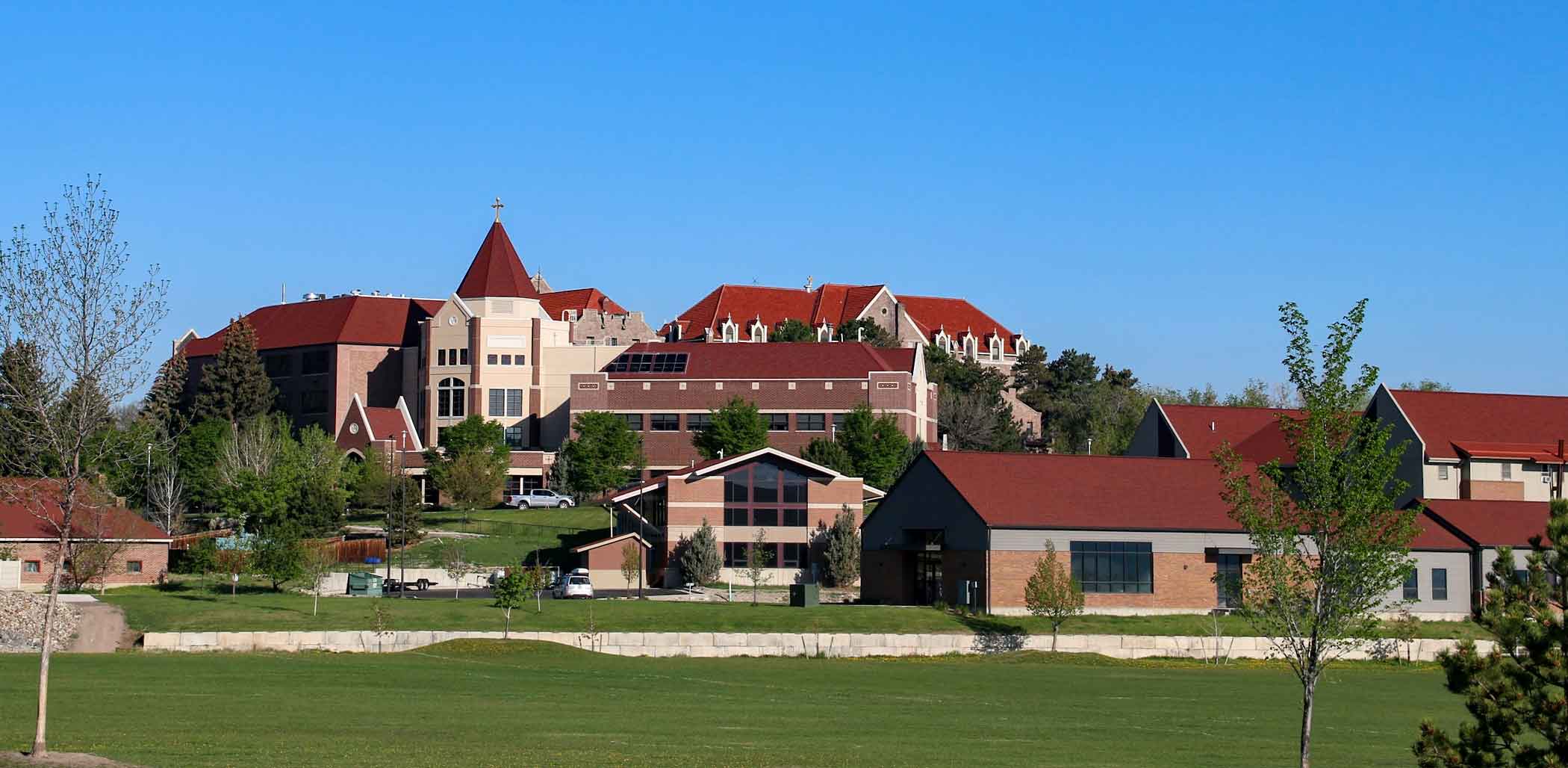
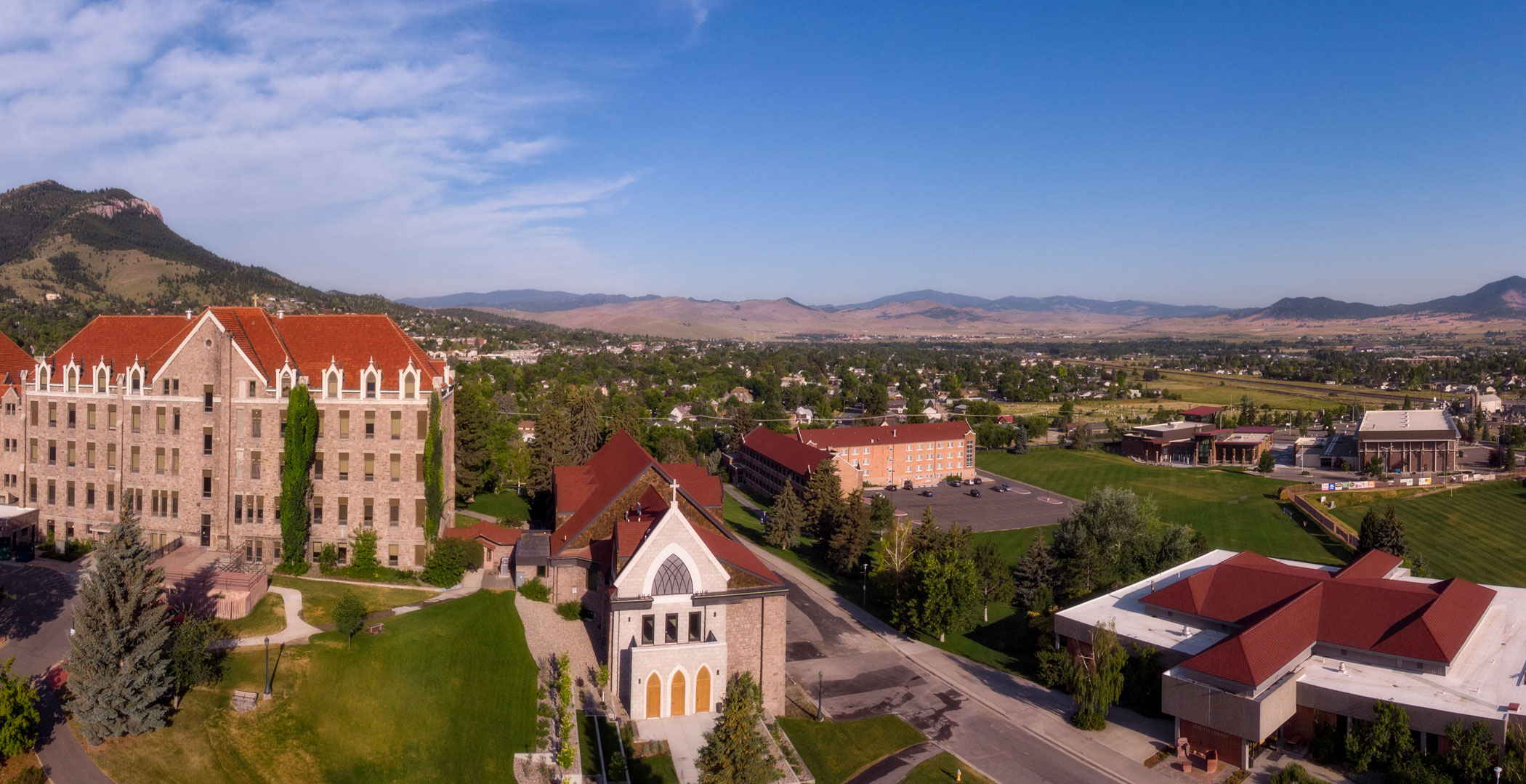
Carroll College is a small, Catholic liberal arts college in Helena, Montana that feels like a high-achieving academic outpost in the Rockies. It’s a place where nursing students dissect cadavers alongside philosophy majors debating ethics, and where the outdoors isn't just a backdrop but a core part of the curriculum. With a focus on personal growth and community, Carroll delivers a surprisingly robust return on investment, boasting the highest median graduate earnings in the state.
Admission requirements
Test-optional — scores considered if submitted
Required
High school transcript
Grade point average
TOEFL (non-native English)
Considered (not required)
Letters of recommendation
Test scores (SAT/ACT)
Source: IPEDS Admissions survey (2022) via Urban Institute. Covers formal factors only — it does not reflect essays, extracurriculars, or other holistic criteria.
More details
Undergrad enrollment
1,092
In-state tuition
$41,484
Out-of-state tuition
$41,484
Top Major
Nursing
Graduation Rate
69%
Median Earnings (10yr)
$61,772
First-Year Receiving Aid
99%
Average Financial Aid Package
$31,353
Outcomes & value
Outcomes & value
Median earnings (10 yr)
$61,772
Value (earnings ÷ net price)
2.6×
Median debt at graduation
$25,757
Graduation rate
69%
First-year retention
82%
Reducing loan balance (3 yr)
79%
Pell (lower-income) share
20%
First-gen share (among federal-aid recipients)
20%
Financial health
2.7 / 3.0Meets the federal financial-responsibility standard
U.S. Dept. of Education Financial Responsibility Composite Score (FY2022-23). Scale −1.0 to 3.0; ≥1.5 meets the standard. Reported for private nonprofit & for-profit institutions only — public universities are state-backed and not scored, so this is a stability signal, not a ranking.
Top-earning majors
Median earnings by field of study (highest credential), ~2 years after completion.
Registered Nursing, Nursing Administration, Nursing Research and Clinical Nursing$60,325
Civil Engineering$50,856
Business Administration, Management and Operations$34,526
Teacher Education and Professional Development, Specific Levels and Methods$33,993
Sociology$33,281
Health Services/Allied Health/Health Sciences, General
Campus & location
Campus safety
On-campus violent crimes (2024)
0
Per 1,000 students
0.00
On-campus criminal offenses classed as violent (murder/non-negligent manslaughter, rape, robbery, aggravated assault) for the most recent reported year. Source: U.S. Dept. of Education Campus Safety and Security (Clery Act). Counts reflect what’s reported to the school, and urban campuses often report more partly due to non-student incidents nearby — read alongside campus size and setting, not as a standalone safety verdict.
Climate
Pleasant days / yr
78
Summer high
81°F
Winter low
16°F
Annual rain
14"
Annual snow
36"
Natural-hazard risk
Relatively Low
Pleasant days counts days per year with a mean temperature of 55–75°F, a high at or below 90°F, a low at or above 45°F, and little precipitation — a transparent comfort measure, not a weighting we invented. Computed from Open-Meteo ERA5 daily history (2019–2023). Natural-hazard risk is the county’s composite rating from the FEMA National Risk Index.
Deep dive — research, future-scholar output & economic mobility▾
Research output
Institutional h-index
45
Scholarly works
407
Institutional research volume and impact from OpenAlex. The h-index reflects large research universities and will be low for teaching-focused liberal-arts colleges — not a measure of undergraduate quality.
Economic mobility
Mobility rate
1.8%
Bottom → top quintile
35%
From bottom quintile
5%
Mobility rate = the share of students who both start in the bottom household-income quintile and reach the top quintile; bottom → top is that chance conditional on starting at the bottom. Source: Opportunity Insights Mobility Report Cards (Chetty, Friedman, Saez, Turner & Yagan). Reflects 1980–82 birth cohorts, so it’s directional, not current.
Quick answers
What is the acceptance rate at Carroll College?
Carroll College's acceptance rate is approximately 71% (Helena, MT), based on the most recent figures we compiled from public and primary sources.
What SAT score do you need for Carroll College?
Admitted students at Carroll College typically score 1050–1300 on the SAT (the middle-50% range). Scores outside this band are still admitted, especially with strong applications.
How much does Carroll College cost?
At Carroll College, the average net price (after aid) is about $23,960 per year. Actual cost varies with financial aid and residency.
How many undergraduates attend Carroll College?
Carroll College enrolls approximately 1,092 undergraduate students.
Where is Carroll College located?
Carroll College is located in Helena, MT.
Admissions
Carroll College operates with a moderately selective admissions process, offering a relatively accessible pathway for a wide range of students. The college provides a 48-hour admission decision guarantee for applicants who meet the minimum standard of a cumulative high school GPA of 2.85 on a 4.0 scale. This streamlined process emphasizes academic readiness over extreme selectivity. While test scores are considered, the middle 50% range for admitted students who submit them spans from 1050 to 1300 on the SAT and 21 to 27 on the ACT. The admissions approach is holistic, though the provided sources do not specify whether demonstrated interest is a formal factor in their evaluation. The process is designed to be transparent and efficient, aligning with the college's community-focused ethos.
Carroll's identity is rooted in its , a model designed to develop wide-ranging skills and personal growth. The college offers a personalized educational experience, frequently highlighted for its and supportive faculty. While nursing is repeatedly cited as its , the academic portfolio is broad, encompassing undergraduate, graduate, post-baccalaureate, and pre-professional programs. Students can explore passions across the liberal arts and sciences. The rigor is notable even for student-athletes, who successfully complete demanding programs like pre-medicine and nursing while competing. This creates an environment where intellectual engagement is expected across disciplines, from the sciences to the humanities.
Earnings = median of students working ~10 years after entry; debt = median of graduates. Value divides 10-yr earnings by one year’s net price — read it as earnings per dollar of annual cost, not a full lifetime ROI; it favors lower-cost schools. Source: U.S. Dept. of Education College Scorecard. Figures lag ~2 years and reflect all students, not your intended major.
$30,119
Rehabilitation and Therapeutic Professions$26,353
Psychology, General$25,194
Source: U.S. Dept. of Education College Scorecard (field-of-study earnings). Figures cover graduates who received federal aid and lag ~2 years; not all programs report data.
Life at Carroll is defined by community, connection, and the majestic Rockies. With a total undergraduate enrollment of about 1,062 students, the campus fosters a close-knit and welcoming atmosphere where students often know each other well. This strong sense of community is built through enduring friendships and shared experiences, both on campus and in the surrounding natural landscape. Helena provides easy access to the outdoors, making hiking, skiing, and exploration a central part of the student experience. Campus life is characterized by opportunity and togetherness, supported by a variety of student groups and clubs. The environment is intentionally crafted to be inclusive and engaging, where memorable experiences are the norm.
Carroll College delivers strong post-graduation results, particularly for the region. The median annual earnings for Carroll graduates is $62,000, a figure the college notes is 19% higher than the national average for four-year college graduates. This earning power contributes to Carroll graduates achieving the highest median earnings of any college in Montana. The six-year graduation rate is 66%, allowing students to begin earning a salary sooner and leading to higher lifetime earnings. Furthermore, 72% of Carroll graduates either secure employment or enroll in graduate school within a year of completing their degree. These outcomes underscore the value of the college's focused, liberal arts professional preparation.
Carroll is proactive in making its education affordable. A striking 99% of full-time, first-year undergraduate students receive assistance through scholarships and grants. The average full-time financial aid package for the 2024-2025 academic year is $31,353, which the college states is over half the total . The average need-based scholarship is $26,328. The college uses a calculator to help families estimate costs, and it awards more than $40 million in financial aid annually. requires a demonstration of financial need, calculated as the difference between the cost of attendance and a student's Student Aid Index (SAI). This substantial institutional investment significantly reduces the net price for most families.
Carroll College carves out a distinctive niche by merging the rigorous, personable environment of a classic liberal arts college with the professional outcomes of a pre-professional powerhouse. It’s not trying to be an Ivy clone; it’s a Montana institution where the breathtaking landscape is part of the campus fabric and the Catholic intellectual tradition informs a education focused on ethical development. The college’s most compelling claim is its results: it produces graduates who earn the highest salaries in the state, a powerful testament to the market value of its degrees, particularly in health sciences. This combination—a tight-knit community in an epic natural setting, a values-based education, and a clear, demonstrable return on investment—makes Carroll a unique and pragmatic choice for students seeking both personal formation and professional readiness.
Carroll College seal · sourceCarroll Campus | Carroll College · sourceCampus Safety | Carroll College · sourceCFO/VP of Finance & Administration | Carroll College · source