Admit rate has ranged 54%–64% over the last 5 years — notably volatile. Source: IPEDS via Urban Institute.
Acceptance & SAT from Common Data Set / IPEDS; net price, earnings & graduation from the U.S. Dept. of Education College Scorecard. Figures lag ~1–2 years — verify with the school.
Centenary College of Louisiana is a small, residential liberal arts college in Shreveport that operates with the intimate, hands-on ethos of a classic liberal arts school but with a distinctly Southern, pre-professional tilt. Its identity is split between a rigorous core curriculum that sends a significant portion of graduates to medical school and a vibrant campus life anchored by Division I athletics and Greek life. Think of it as a place where you can conduct research with a professor as a freshman, cheer on the Gents at a baseball game, and still be within driving distance of crawfish étouffée.
Admission requirements
Test-optional — scores considered if submitted
Required
High school transcript
Grade point average
TOEFL (non-native English)
Considered (not required)
Class rank
Letters of recommendation
Test scores (SAT/ACT)
College-prep program
Source: IPEDS Admissions survey (2022) via Urban Institute. Covers formal factors only — it does not reflect essays, extracurriculars, or other holistic criteria.
More details
Undergrad enrollment
685
In-state tuition
$41,200
Out-of-state tuition
$41,200
Top Majors
Biological Sciences, Business, Psychology
Graduation Rate
56%
On-Campus Housing
87%
Median Earnings (10yr)
$50,330
First-Year Retention Rate
70%
Students Receiving Financial Aid
100%
Outcomes & value
Outcomes & value
Median earnings (10 yr)
$50,330
Value (earnings ÷ net price)
2.1×
Median debt at graduation
$27,000
Graduation rate
56%
First-year retention
70%
Reducing loan balance (3 yr)
72%
Pell (lower-income) share
45%
First-gen share (among federal-aid recipients)
22%
Financial health
1.9 / 3.0Meets the federal financial-responsibility standard
U.S. Dept. of Education Financial Responsibility Composite Score (FY2022-23). Scale −1.0 to 3.0; ≥1.5 meets the standard. Reported for private nonprofit & for-profit institutions only — public universities are state-backed and not scored, so this is a stability signal, not a ranking.
Top-earning majors
Median earnings by field of study (highest credential), ~2 years after completion.
Communication and Media Studies$33,459
Business Administration, Management and Operations$32,925
Source: U.S. Dept. of Education College Scorecard (field-of-study earnings). Figures cover graduates who received federal aid and lag ~2 years; not all programs report data.
On-campus criminal offenses classed as violent (murder/non-negligent manslaughter, rape, robbery, aggravated assault) for the most recent reported year. Source: U.S. Dept. of Education Campus Safety and Security (Clery Act). Counts reflect what’s reported to the school, and urban campuses often report more partly due to non-student incidents nearby — read alongside campus size and setting, not as a standalone safety verdict.
Climate
Pleasant days / yr
93
Summer high
92°F
Winter low
42°F
Annual rain
52.3"
Annual snow
2.5"
Natural-hazard risk
Relatively Moderate
Pleasant days counts days per year with a mean temperature of 55–75°F, a high at or below 90°F, a low at or above 45°F, and little precipitation — a transparent comfort measure, not a weighting we invented. Computed from Open-Meteo ERA5 daily history (2019–2023). Natural-hazard risk is the county’s composite rating from the FEMA National Risk Index.
Deep dive — research, future-scholar output & economic mobility▾
Research output
Institutional h-index
66
Scholarly works
970
Institutional research volume and impact from OpenAlex. The h-index reflects large research universities and will be low for teaching-focused liberal-arts colleges — not a measure of undergraduate quality.
Economic mobility
Mobility rate
1.5%
Bottom → top quintile
28%
From bottom quintile
5%
Mobility rate = the share of students who both start in the bottom household-income quintile and reach the top quintile; bottom → top is that chance conditional on starting at the bottom. Source: Opportunity Insights Mobility Report Cards (Chetty, Friedman, Saez, Turner & Yagan). Reflects 1980–82 birth cohorts, so it’s directional, not current.
Quick answers
What is the acceptance rate at Centenary College of Louisiana?
Centenary College of Louisiana's acceptance rate is approximately 56% (Shreveport, LA), based on the most recent figures we compiled from public and primary sources.
What SAT score do you need for Centenary College of Louisiana?
Admitted students at Centenary College of Louisiana typically score 1060–1210 on the SAT (the middle-50% range). Scores outside this band are still admitted, especially with strong applications.
How much does Centenary College of Louisiana cost?
At Centenary College of Louisiana, the average net price (after aid) is about $23,624 per year. Actual cost varies with financial aid and residency.
How many undergraduates attend Centenary College of Louisiana?
Centenary College of Louisiana enrolls approximately 685 undergraduate students.
Where is Centenary College of Louisiana located?
Centenary College of Louisiana is located in Shreveport, LA.
Admissions
Centenary's admissions process is moderately selective, prioritizing students who show clear college readiness. The college encourages applicants to present a minimum 3.0 core academic GPA and a 22 ACT superscore (or 1100 SAT) to strengthen their application. While the process is not among the nation's most competitive, it is not open-door; about half of all applicants are admitted. The middle 50% SAT range for admitted students who submit scores is 1060–1210, with a corresponding ACT range of 20–25 according to some sources, though others report a higher ACT ceiling. The college participates in federal and state financial aid programs, and students must demonstrate financial need according to Federal Methodology to qualify for . There is no indication in the provided sources that Centenary employs a binding Early Decision plan or that it formally considers demonstrated interest as a significant factor in admissions decisions.
Earnings = median of students working ~10 years after entry; debt = median of graduates. Value divides 10-yr earnings by one year’s net price — read it as earnings per dollar of annual cost, not a full lifetime ROI; it favors lower-cost schools. Source: U.S. Dept. of Education College Scorecard. Figures lag ~2 years and reflect all students, not your intended major.
Centenary offers a classic liberal arts education through majors in the arts and sciences leading to a Bachelor of Arts or Bachelor of Science. The curriculum is designed to encourage critical thinking and exploration beyond memorization, particularly in departments like Sociology and Biology. The college has developed a notable reputation for preparing graduates for medical and other professional schools through rigorous coursework and research opportunities. According to recent data, the largest shares of graduates come from Biological and Biomedical Sciences (31%), Business, Management, Marketing, and Related Support Services (25%), and Psychology (11%). Students highlight the social sciences department for fostering exceptional student-faculty research collaboration and independent research opportunities. The academic portfolio includes programs in biology, computer science, psychology, and languages like French and Spanish, providing a blend of traditional liberal arts and pre-professional tracks.
Life at Centenary is intensely residential and communal, with 87% of students living in college-owned, -operated, or -affiliated housing. The campus is described as a "welcoming and spirited community" and a "home base" anchored by over 60 student organizations. A full schedule of activities keeps students busy outside the classroom, including athletics, art exhibits, community service, clubs, and a prominent Greek life system. As a member of the NCAA Division I (for most sports), athletics are a significant part of the campus culture. The college promotes a packed calendar of events, suggesting a typical experience is active and socially engaged, far from a purely studious retreat.
Graduation rates at Centenary show a steady path to degree completion for many, but not all, students. The six-year graduation rate (150% of normal time) is reported at 56%. The first-year retention rate—a key indicator of student satisfaction and academic fit—is 70%. For graduates, median earnings ten years after entry are $50,330. Earlier post-graduation data shows earnings one year after graduation at approximately $36,427. These outcomes reflect the mix of liberal arts and pre-professional majors, with a notable pipeline into further education in the health professions.
Centenary's stated annual tuition is $43,450, but the —the average cost after aid and scholarships—is significantly lower. The college emphasizes that 100% of full-time undergraduate students qualify for scholarships and financial aid, and its financial aid program is both merit- and need-based. Students are automatically considered for academic merit scholarships upon application. is determined through Federal Methodology, and the college participates in federal, state, and institutional programs, including the need-based Louisiana GO Grant. Loans are offered to help meet financial need not covered by scholarships. The sources do not indicate that Centenary has a "no-loan" policy for low-income students or a commitment to meet 100% of demonstrated financial need without loans.
Centenary College carves out a unique niche as a small, Division I liberal arts college in the South—a rare combination. Its strength isn't just in its intimate class sizes or core curriculum, but in its potent pre-health pipeline; the college has engineered a program where rigorous science coursework and accessible faculty research collaborations reliably propel graduates into medical and professional schools. This creates a distinctive campus culture: one part intense academic preparation for future doctors, and another part spirited, traditional residential college life fueled by Greek organizations and D-I athletics. It’s not a sprawling research university, but it offers more laboratory and research access than many liberal arts colleges. It’s not a secluded New England campus, but a community embedded in Shreveport, offering a specific blend of Southern tradition and pre-professional ambition. For a student seeking the close-knit support of a liberal arts college but with the tangible, career-oriented outcome of a health professions feeder school—and who wants big-time sports as part of the deal—Centenary is a singular option.
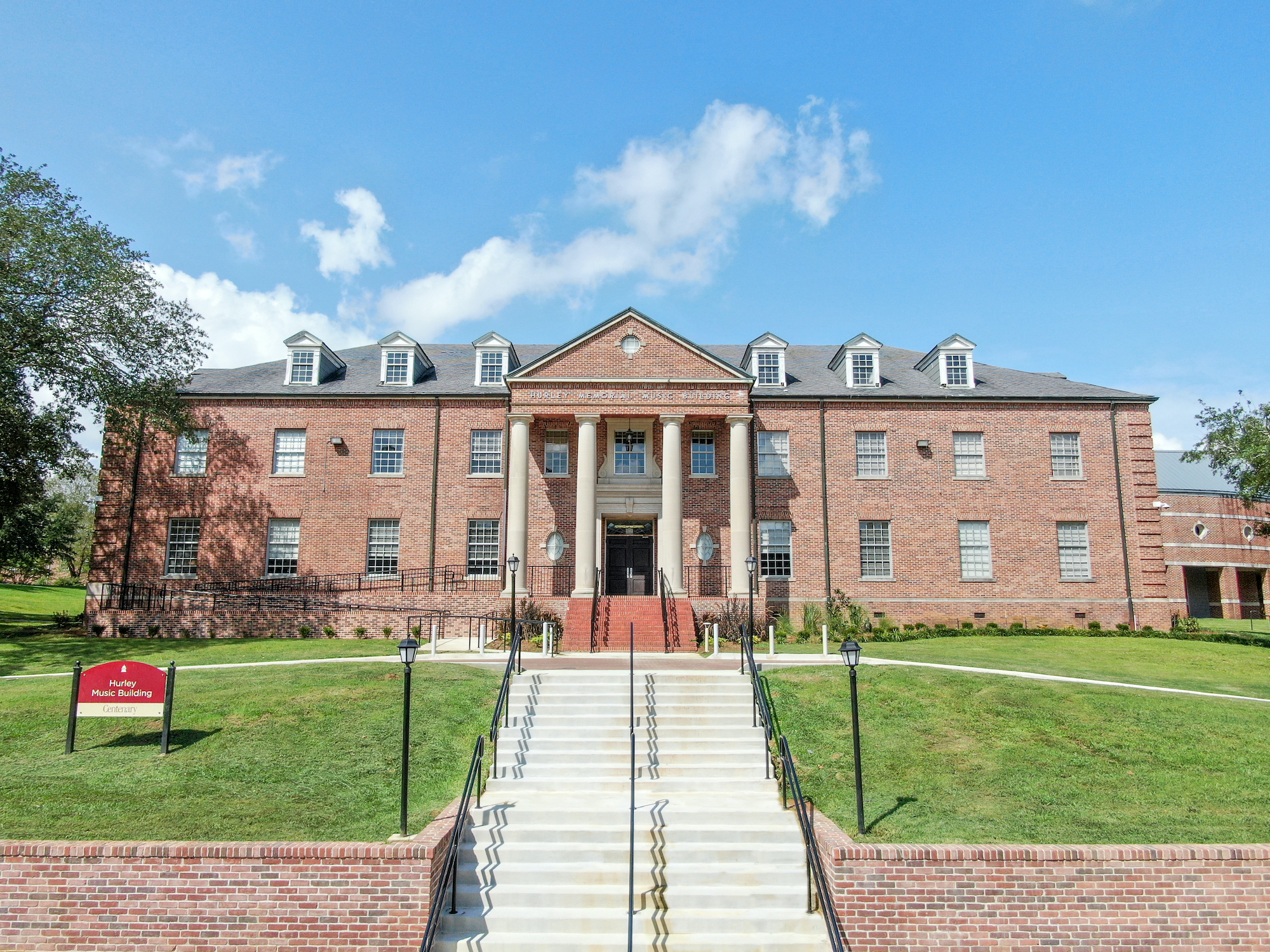
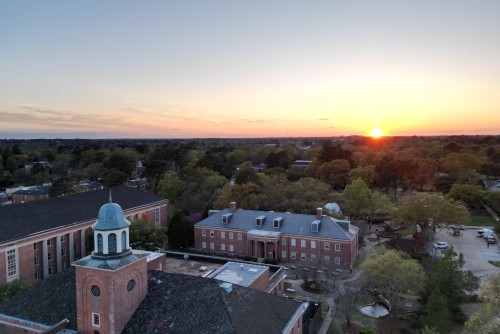
Centenary College of Louisiana seal · sourceFacilities | Centenary College of Louisiana · sourceMyLiaison - Centenary College of Louisiana · sourceVisit Centenary | Centenary College of Louisiana · source