Admit rate has ranged 19%–28% over the last 3 years — notably volatile. Source: IPEDS via Urban Institute.
Acceptance & SAT from Common Data Set / IPEDS; net price, earnings & graduation from the U.S. Dept. of Education College Scorecard. Figures lag ~1–2 years — verify with the school.
The Center for Allied Health Education (CAHE) in Brooklyn is a fiercely selective, hyper-focused institution that operates less like a traditional college and more like a direct pipeline into high-demand medical technology fields. With an acceptance rate hovering around 19%—far lower than the New York state average—it attracts applicants who are dead-set on a hands-on, career-specific education, trading a broad liberal arts experience for a fast track into a profession where graduates can command a median salary exceeding $100,000 within a decade. The vibe is intensely practical, the stakes are high, and the return on investment, for those who gain entry and persist, is starkly tangible.
Admission requirements
Test-blind — scores not considered
Required
Letters of recommendation
Considered (not required)
High school transcript
Grade point average
Class rank
College-prep program
TOEFL (non-native English)
Source: IPEDS Admissions survey (2022) via Urban Institute. Covers formal factors only — it does not reflect essays, extracurriculars, or other holistic criteria.
More details
Undergrad enrollment
437
Graduation Rate
81%
Typical Student Debt
$13,626
Student-Faculty Ratio
10:1
Median Earnings (10yr)
$107,249
First-Year Retention Rate
87%
Students Receiving Grants
42%
Outcomes & value
Outcomes & value
Median earnings (10 yr)
$107,249
Value (earnings ÷ net price)
2.2×
Median debt at graduation
$13,626
Reducing loan balance (3 yr)
61%
Pell (lower-income) share
41%
First-gen share (among federal-aid recipients)
48%
Earnings = median of students working ~10 years after entry; debt = median of graduates. Value divides 10-yr earnings by one year’s net price — read it as earnings per dollar of annual cost, not a full lifetime ROI; it favors lower-cost schools. Source: U.S. Dept. of Education College Scorecard. Figures lag ~2 years and reflect all students, not your intended major.
Financial health
2.0 / 3.0Meets the federal financial-responsibility standard
U.S. Dept. of Education Financial Responsibility Composite Score (FY2022-23). Scale −1.0 to 3.0; ≥1.5 meets the standard. Reported for private nonprofit & for-profit institutions only — public universities are state-backed and not scored, so this is a stability signal, not a ranking.
Campus & location
Campus safety
On-campus violent crimes (2024)
0
On-campus criminal offenses classed as violent (murder/non-negligent manslaughter, rape, robbery, aggravated assault) for the most recent reported year. Source: U.S. Dept. of Education Campus Safety and Security (Clery Act). Counts reflect what’s reported to the school, and urban campuses often report more partly due to non-student incidents nearby — read alongside campus size and setting, not as a standalone safety verdict.
Climate
Pleasant days / yr
96
Summer high
80°F
Winter low
31°F
Annual rain
51.1"
Annual snow
15.9"
Natural-hazard risk
Relatively High
Pleasant days counts days per year with a mean temperature of 55–75°F, a high at or below 90°F, a low at or above 45°F, and little precipitation — a transparent comfort measure, not a weighting we invented. Computed from Open-Meteo ERA5 daily history (2019–2023). Natural-hazard risk is the county’s composite rating from the FEMA National Risk Index.
Quick answers
What is the acceptance rate at Center for Allied Health Education?
Center for Allied Health Education's acceptance rate is approximately 19% (Brooklyn, NY), based on the most recent figures we compiled from public and primary sources.
How much does Center for Allied Health Education cost?
At Center for Allied Health Education, the average net price (after aid) is about $48,150 per year. Actual cost varies with financial aid and residency.
How many undergraduates attend Center for Allied Health Education?
Center for Allied Health Education enrolls approximately 437 undergraduate students.
Where is Center for Allied Health Education located?
Center for Allied Health Education is located in Brooklyn, NY.
Admissions
Gaining admission to CAHE is a highly competitive proposition, with the school accepting roughly one in five applicants—a rate significantly more selective than the broader landscape of community and technical colleges in New York. Sources consistently report an of around 19%, a figure that underscores its status as a destination for students with clear, focused career ambitions in allied health. For context, this selectivity is dramatically lower than the New York state average acceptance rate for similar institutions, which sits at 78%. The admissions process appears to prioritize applicants who demonstrate a readiness for its intensive, clock-hour-based academic model, though specific factors like GPA, test scores, and extracurriculars are detailed in the , a key resource for understanding institutional priorities. Notably, the school does not appear to have an Early Decision program, a common feature at many selective colleges that can significantly boost admit odds for binding applicants.
Acceptance Rate: ~19% (Canonical figure, also supported by multiple sources).
Selectivity Context: Far more selective than the NY state average of 78% for similar institutions.
Application Volume: One source notes 135 applicants for a recent cycle, with 25 admitted.
Admissions Factors: The Common Data Set (CDS) is cited as the definitive source for understanding how colleges weigh factors like GPA, test scores, and extracurricular activities in their decisions.
Demonstrated Interest: While the importance of 'demonstrated interest' varies by school and is detailed in section C7 of the Common Data Set, no specific CAHE CDS data is provided in the sources to confirm its role here.
CAHE’s academic model is unapologetically narrow and professional. The institution is singularly known for its programs in Allied Health Diagnostic, Intervention, and Treatment Professions, with a published catalog specifically outlining its rigorous Radiation Therapy program. The pedagogy is intensely hands-on and progress is measured in clock hours, not credit hours, emphasizing the mastery of technical skills required for immediate job placement. This focus creates an intimate learning environment, supported by a remarkably low student-to-faculty ratio of 10:1 (with one source even suggesting a 6:1 ratio), which allows for significant individual attention in clinical and lab settings. However, this high-touch, high-stakes approach comes with administrative challenges; a notable Reddit discussion indicated that approximately 60% of students reported dissatisfaction with the academic and administrative support systems, a critique that potential applicants should weigh against the program's strong outcomes. The first-year retention rate is a solid 87%, suggesting that most students who start are committed enough to continue, a critical metric in a demanding, career-focused program.
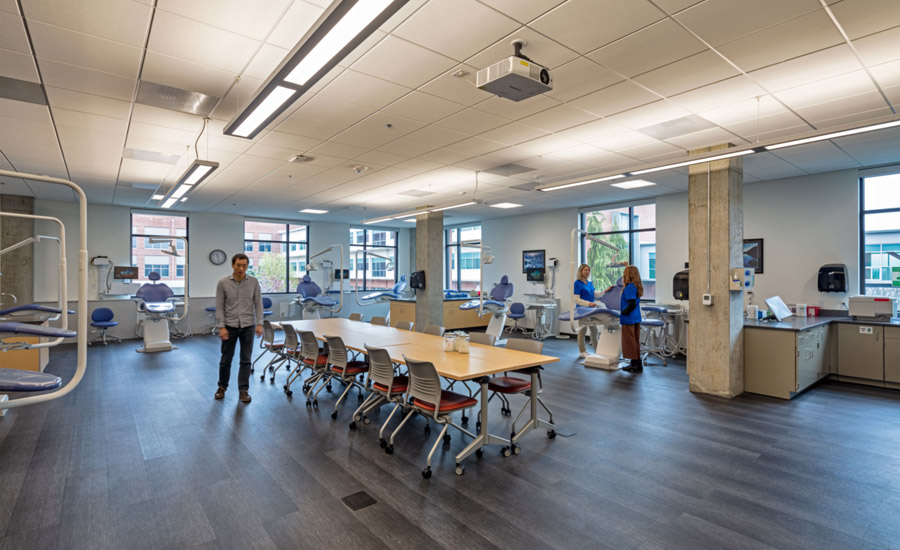
Life at CAHE is defined by immersion in a healthcare-centric environment. The institution promotes its culture through a dedicated 'Our Students' page, highlighting student leadership, resources, and a photo gallery, aiming to foster a sense of community among its career-focused cohort. The experience is heavily oriented toward hands-on, interprofessional learning, often facilitated in simulation labs and clinical settings that mimic real-world healthcare environments—a feature common to leading allied health programs. While the provided sources don't detail traditional campus amenities like dorms or athletics (suggesting a commuter-school model), they hint at a 'Culture of Care' philosophy that aims to support students' personal growth and professional identity. One comparative source from another allied health school mentions an on-campus daycare, a potential resource for non-traditional students, though it's not confirmed for CAHE specifically. The overall impression is of a no-frills, professionally intense atmosphere where student life revolves around mastering a trade and building a network within the New York medical community.
This is where CAHE’s model delivers its most compelling argument. Graduates enter the workforce with a highly specialized credential and the results are striking. The median earnings ten years after entry are $107,249, a figure that dramatically outpaces the typical median for certificate-granting colleges ($34,519) and underscores the high wage potential in allied health fields like radiation therapy. The institution reports a strong 81% graduation rate, and a typical graduate carries a relatively manageable $13,626 in student debt—a combination that paints a picture of high return on investment. The school's consumer information page provides specific data on retention, graduation, and job placement, allowing prospective students to scrutinize these critical outcomes. When evaluated through a purely economic lens—comparing debt load to future earnings—CAHE presents a compelling case for students committed to this specific career path.
The sticker price for a CAHE education is substantial, but significant financial aid brings the net cost down for many students. The average net price after grants and scholarships is $48,150. This is calculated after subtracting aid, and the school provides a Net Price Calculator to help families estimate their individual cost. A notable 42% of first-time students receive grants or scholarships, with the average total aid awarded reported as $587 per year. The school strongly encourages students to first complete the FAFSA to access federal aid, which may offer more favorable terms than private loans, and it publishes a Preferred Lender List for those who need to borrow beyond federal options. There is no indication in the provided sources that CAHE has a 'no-loan' policy or commits to meeting 100% of demonstrated financial need with grant aid alone; the financial model appears to be a mix of grants, federal loans, and private financing. The high net price, even after aid, must be weighed against the powerful earnings outcomes.
CAHE stands out as a pure-play, high-stakes bet on a specific technical career. It rejects the model of exploratory liberal arts education in favor of laser-focused, clock-hour training for the medical technology sector. Its defining characteristics are a potent combination of extreme selectivity (more akin to a top-tier liberal arts college than a trade school), exceptional postgraduate earnings, and an intimate, hands-on instructional format. This creates a unique niche: it's for the student who knows exactly what they want to do, is willing to endure a rigorous and sometimes bureaucratically challenging program, and seeks a direct, financially lucrative path into the healthcare workforce without the detours of a general education curriculum. The trade-off is clear: you gain a near-guarantee of high income in a stable field, but you sacrifice the breadth, traditional campus life, and exploratory freedom of a four-year university. In the ecosystem of higher education, CAHE is a specialist—a scalpel, not a Swiss Army knife.
Center for Allied Health Education seal · sourceA sneak peek at our new Staten Island campus. We cannot wait to welcome our new students this Fall! For campus tours or to get more information about the programs offered in Staten Island, contact our ... · sourceCenter for Allied Health Education | LinkedIn · sourceBack Button · source