Admit rate has ranged 25%–80% over the last 5 years — notably volatile. Source: IPEDS via Urban Institute.
Acceptance & SAT from Common Data Set / IPEDS; net price, earnings & graduation from the U.S. Dept. of Education College Scorecard. Figures lag ~1–2 years — verify with the school.
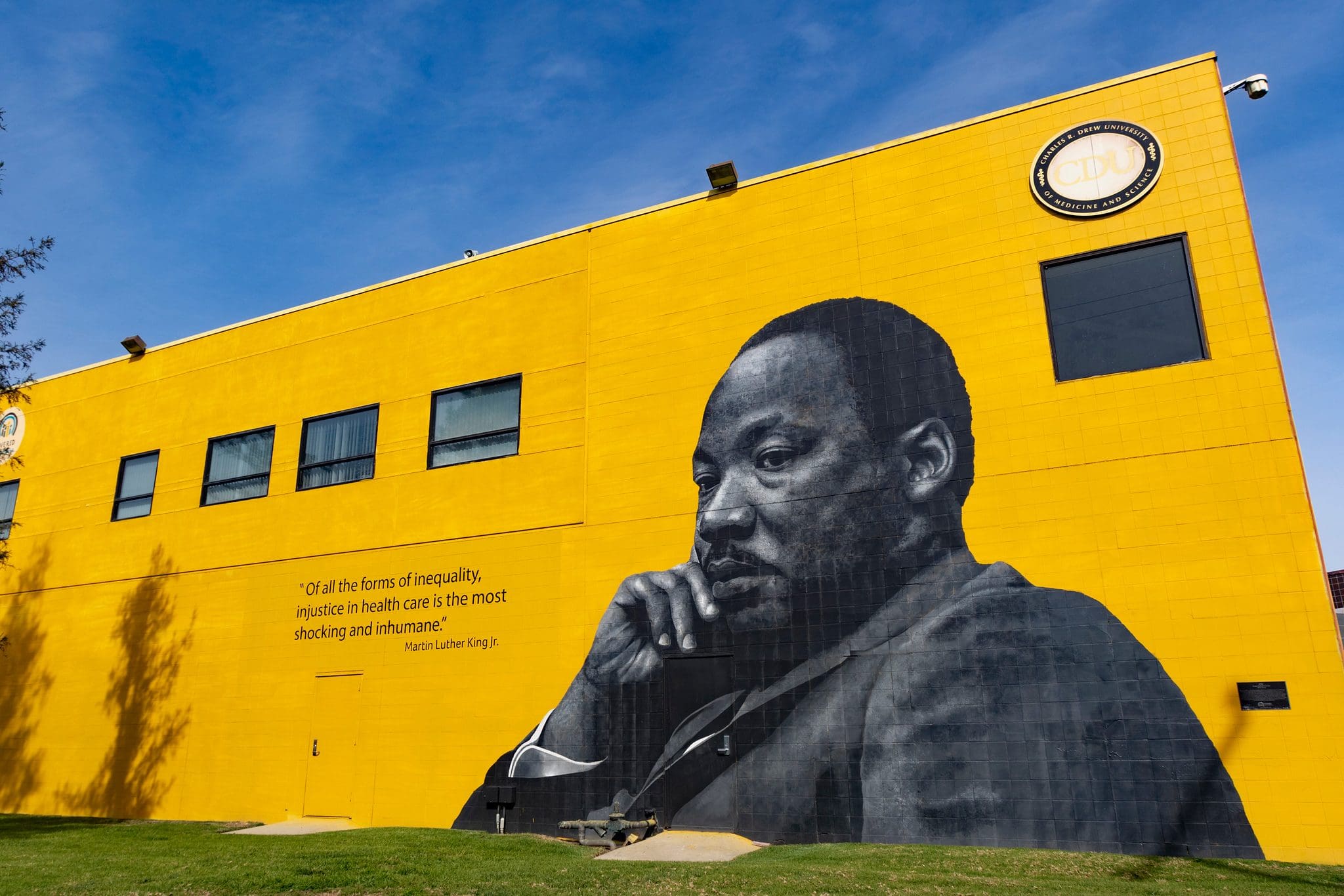
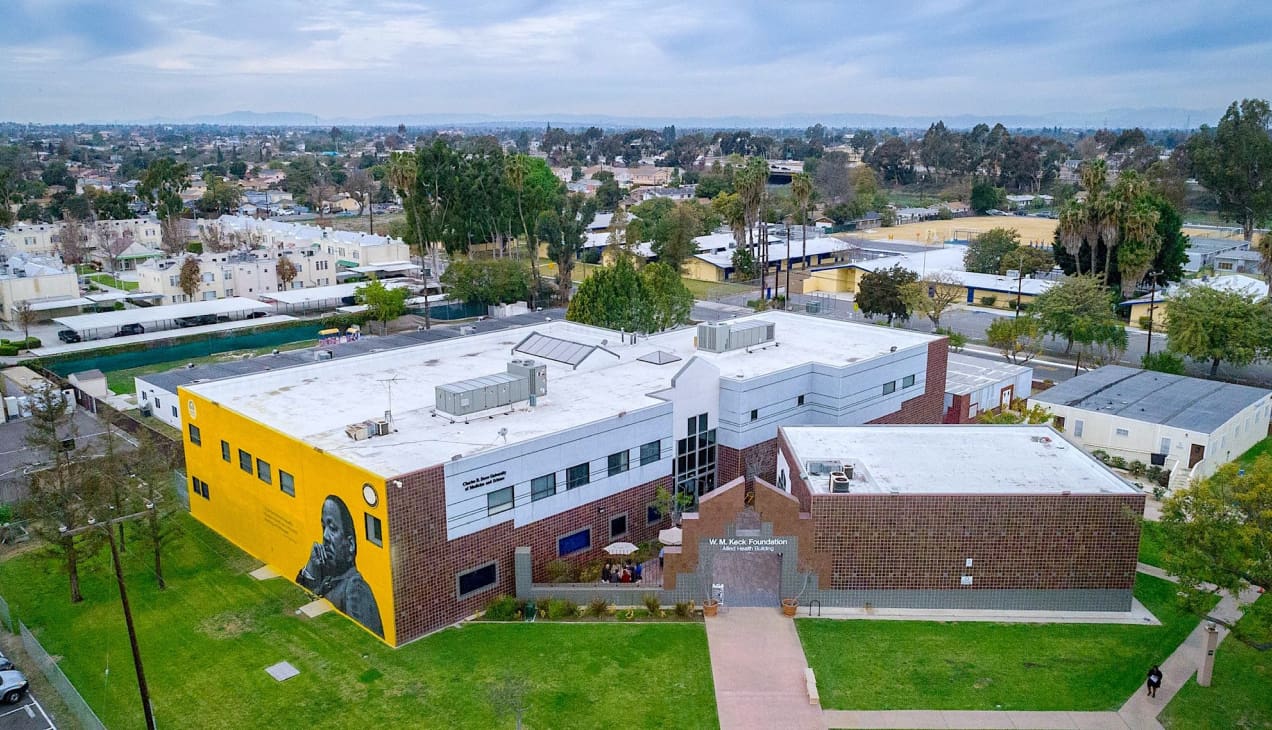
Charles R. Drew University of Medicine and Science is not your typical undergraduate college; it's a specialized, mission-driven institution laser-focused on health equity and training professionals for underserved communities. As one of the nation's only historically Black medical universities, its identity is inseparable from its location in South Los Angeles and its commitment to urban health. The vibe is purposeful and collaborative, where students are immersed in a curriculum designed to build not just clinical skills but community leadership.
Admission requirements
Test-blind — scores not considered
Required
High school transcript
Grade point average
TOEFL (non-native English)
Considered (not required)
Letters of recommendation
College-prep program
Demonstrated competencies
Source: IPEDS Admissions survey (2022) via Urban Institute. Covers formal factors only — it does not reflect essays, extracurriculars, or other holistic criteria.
More details
Undergrad enrollment
282
In-state tuition
$23,000
Out-of-state tuition
$23,000
Popular Majors
Health Professions, Biomedical Sciences, Nursing
Application Fee
$50
Graduation Rate
30%
Median Earnings (10yr)
$83,438
First-Year Retention Rate
50%
Outcomes & value
Outcomes & value
Median earnings (10 yr)
$83,438
Value (earnings ÷ net price)
2.3×
Median debt at graduation
$18,750
Graduation rate
30%
First-year retention
50%
Reducing loan balance (3 yr)
46%
Pell (lower-income) share
54%
First-gen share (among federal-aid recipients)
48%
Financial health
2.6 / 3.0Meets the federal financial-responsibility standard
U.S. Dept. of Education Financial Responsibility Composite Score (FY2022-23). Scale −1.0 to 3.0; ≥1.5 meets the standard. Reported for private nonprofit & for-profit institutions only — public universities are state-backed and not scored, so this is a stability signal, not a ranking.
Campus & location
Campus safety
On-campus violent crimes (2024)
1
Per 1,000 students
1.17
On-campus criminal offenses classed as violent (murder/non-negligent manslaughter, rape, robbery, aggravated assault) for the most recent reported year. Source: U.S. Dept. of Education Campus Safety and Security (Clery Act). Counts reflect what’s reported to the school, and urban campuses often report more partly due to non-student incidents nearby — read alongside campus size and setting, not as a standalone safety verdict.
Climate
Pleasant days / yr
240
Summer high
81°F
Winter low
45°F
Annual rain
16.2"
Natural-hazard risk
Very High
Pleasant days counts days per year with a mean temperature of 55–75°F, a high at or below 90°F, a low at or above 45°F, and little precipitation — a transparent comfort measure, not a weighting we invented. Computed from Open-Meteo ERA5 daily history (2019–2023). Natural-hazard risk is the county’s composite rating from the FEMA National Risk Index.
Deep dive — research, future-scholar output & economic mobility▾
Research output
Institutional h-index
283
Scholarly works
5,744
Institutional research volume and impact from OpenAlex. The h-index reflects large research universities and will be low for teaching-focused liberal-arts colleges — not a measure of undergraduate quality.
Quick answers
What is the acceptance rate at Charles R Drew University of Medicine and Science?
Charles R Drew University of Medicine and Science's acceptance rate is approximately 39% (Los Angeles, CA), based on the most recent figures we compiled from public and primary sources.
How much does Charles R Drew University of Medicine and Science cost?
At Charles R Drew University of Medicine and Science, the average net price (after aid) is about $35,558 per year. Actual cost varies with financial aid and residency.
How many undergraduates attend Charles R Drew University of Medicine and Science?
Charles R Drew University of Medicine and Science enrolls approximately 282 undergraduate students.
Where is Charles R Drew University of Medicine and Science located?
Charles R Drew University of Medicine and Science is located in Los Angeles, CA.
Admissions
Admissions at Charles R. Drew University (CDU) is a selective, holistic process centered on identifying future health professionals committed to the university's mission. The is reported at 39%, with sources also citing figures of 38.78% and 90%, indicating variability in reporting across different cohorts and programs. The university received 985 applicants in a recent cycle. The application fee is $50, and while some sources note an average high school GPA of 3.26 for admitted students, standardized test submission is not universal—only 14% of students submitted SAT scores in one reported cycle. The university encourages early engagement, hosting virtual info sessions and in-person coffee chats, and has noted a priority consideration deadline of February 27 for prospective students. Notably, the university's Postbaccalaureate Leadership Program in Pre-Medicine boasts a 94% medical school acceptance rate among its graduates who apply. The admissions process is designed to evaluate candidates who have fulfilled the requirements for consideration, as outlined in documentation.
Earnings = median of students working ~10 years after entry; debt = median of graduates. Value divides 10-yr earnings by one year’s net price — read it as earnings per dollar of annual cost, not a full lifetime ROI; it favors lower-cost schools. Source: U.S. Dept. of Education College Scorecard. Figures lag ~2 years and reflect all students, not your intended major.
CDU's academic identity is singular: every one of its 18 academic programs is concentrated in health professions and health equity, offering associate, bachelor’s, and graduate degrees. The curriculum is built around the 'CDU Advantage,' a framework designed to equip graduates with integrated knowledge and skills in five key areas, though the specific areas are not detailed in the provided sources. The College of Science and Health serves as the undergraduate core, emphasizing integrated learning, research, leadership training, and community service. The most popular majors are consistently in Health Professions and Related Programs and Biological and Biomedical Sciences, with Nursing, Radiologic Technician, and Biomedical Sciences and Molecular Medicine cited as specific examples. The university is perhaps best known historically as a medical school designed to train physicians for urban environments, and this mission-driven focus permeates all levels of study. The academic environment is intensely focused, preparing students not just for clinical roles but for leadership in addressing health disparities.
Student life at CDU is deeply shaped by its identity as a Historically Black Medical College and its location in Los Angeles. The on-campus culture is described as "very chill, very live-and-let-live," with a strong sense of community among students united by a professional health mission. The university actively fosters engagement through initiatives like "University Hour," launched in September 2023 to enrich the undergraduate experience. Social and professional opportunities are constantly present, with organizations scouting for talent on campus. The geographic reach of student life extends far beyond the campus itself; students live across the vast Los Angeles basin—from Downtown and Santa Monica to Long Beach and the Inland Empire—immersing them in the city's diverse cultural and professional landscape. This integration with the city provides both the "cultural surroundings" and the "live-work" opportunities essential for aspiring health professionals.
Outcomes for CDU graduates are characterized by strong earning potential, particularly in the years following graduation, reflecting the high demand for its health-focused degrees. The university has been ranked 26th nationally for highest-paid graduates based on mid-career salary data. Specific earnings figures from various sources show a compelling trajectory: average annual earnings for Bachelor of Science holders in the first five years after graduation are reported at $90,800. Data from the College Scorecard indicates earnings of $112,516 at the midpoint of a typical career, while other sources cite earnings of $85,673 five years after graduation and $60,316 one year after graduation. A retention rate of 50% is reported alongside these outcomes. The high earnings underscore the strong return on investment for graduates who enter the healthcare field.
The at CDU is significant, but the university provides financial aid to help offset expenses. The average need-based scholarship or grant awarded to first-year students is $12,545. The average financial aid package is reported as $11,002, and the after scholarships and grants is listed as $27,789 by one source. Aid comes from a mix of sources: federal grant aid averages $2,683, state grant aid $9,358, and institutional grant aid $2,125. The university requires applicants for aid to be U.S. citizens or eligible non-citizens and to maintain satisfactory academic progress. CDU encourages all students to use its online Net Price Calculator to generate a personalized estimate of cost of attendance minus potential grants and scholarships. It's important to note that specific tuition figures, like the $69,000 cited for one graduate program, are not representative of undergraduate costs.
Charles R. Drew University stands out as an institution of rare and uncompromising purpose. It is not merely a health sciences school; it is one of America's only historically Black medical universities, with a DNA encoded for service to urban and underserved communities. Its entire academic architecture—18 programs across all levels—is dedicated to health equity, a focus so total it feels more like a calling than a curriculum. This mission manifests in the 'CDU Advantage' and in outcomes that see graduates commanding high salaries precisely because they are trained to address critical gaps in the healthcare system. The student life is inextricably linked to its Los Angeles setting, turning the entire metropolis into a classroom and proving that its community is as much the city's streets as its campus grounds. For a student determined to merge clinical skill with social justice, CDU offers a path with few parallels.
Charles R Drew University of Medicine and Science seal · sourceStudents At CDU, a Historically Black Medical College · sourceCharles R. Drew University - Santa Monica College · sourceCollege of Medicine | Charles R. Drew University of Medicine and Science · source