Loading…
← All schools
Chief Dull Knife College
Lame Deer, MTpubliccdkc.edu/
Avg net price
$14,010
Earnings (10 yr)
$20,073
Acceptance & SAT from Common Data Set / IPEDS; net price, earnings & graduation from the U.S. Dept. of Education College Scorecard. Figures lag ~1–2 years — verify with the school.
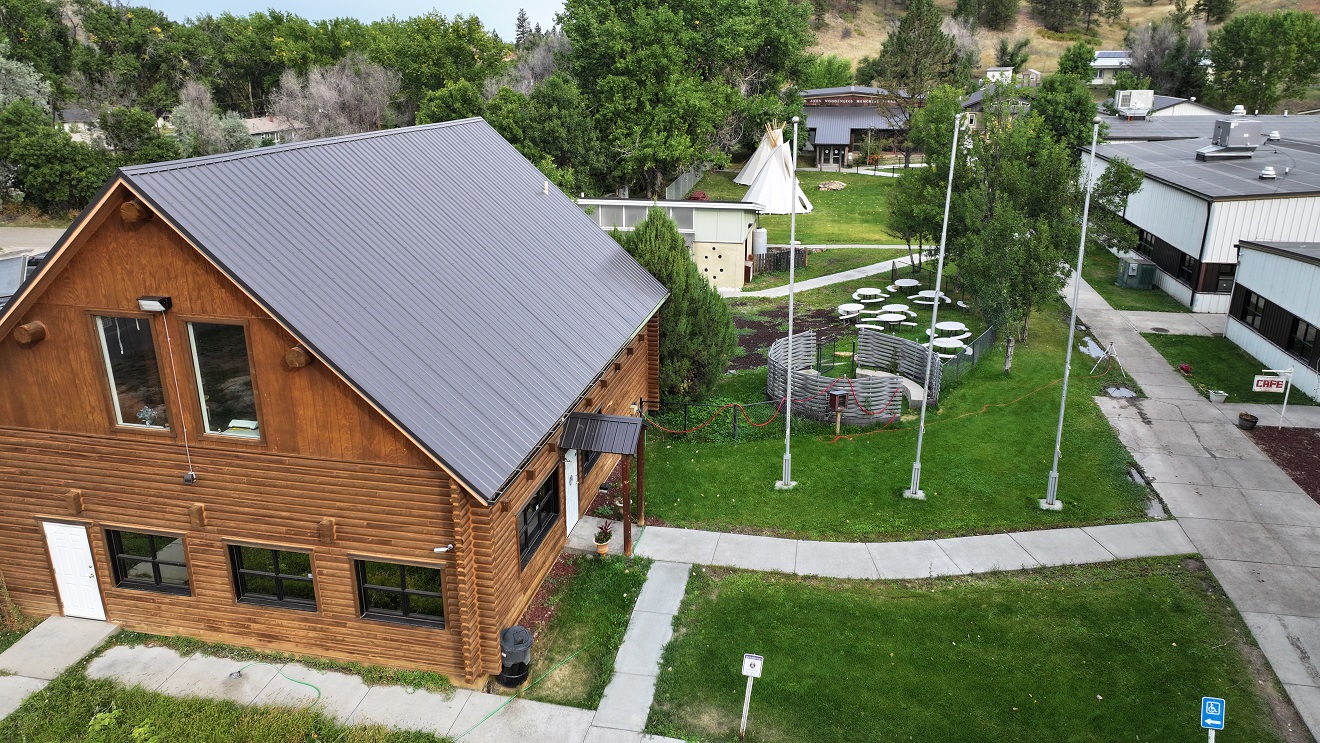
Chief Dull Knife College is not a typical community college; it is a tribally controlled, public land-grant institution on the Northern Cheyenne Indian Reservation, built on a mission of cultural preservation and accessible education. With an open admissions policy and a focus on associate degrees and certificates, it serves as a vital educational and community hub for its students, many of whom are the first in their families to pursue higher education. The college's identity is inextricably linked to its place, offering a deeply rooted, supportive environment where academic pursuits are woven together with Cheyenne language, history, and values.
More details
- Undergrad enrollment
- 183
- In-state tuition
- $1,960
- Out-of-state tuition
- $1,960
- Tribal Control
- Yes, Northern Cheyenne
- Land-Grant Status
- Yes, tribal land-grant
- Median Earnings (10yr)
- $20,073
- Six-Year Graduation Rate
- 13%
Outcomes & value
Outcomes & value
- Median earnings (10 yr)
- $20,073
- Value (earnings ÷ net price)
- 1.4×
- Pell (lower-income) share
- 33%
- First-gen share (among federal-aid recipients)
- 47%
Earnings = median of students working ~10 years after entry; debt = median of graduates. Value divides 10-yr earnings by one year’s net price — read it as earnings per dollar of annual cost, not a full lifetime ROI; it favors lower-cost schools. Source: U.S. Dept. of Education College Scorecard. Figures lag ~2 years and reflect all students, not your intended major.
Campus & location
Campus safety
- On-campus violent crimes (2024)
- 0
On-campus criminal offenses classed as violent (murder/non-negligent manslaughter, rape, robbery, aggravated assault) for the most recent reported year. Source: U.S. Dept. of Education Campus Safety and Security (Clery Act). Counts reflect what’s reported to the school, and urban campuses often report more partly due to non-student incidents nearby — read alongside campus size and setting, not as a standalone safety verdict.
Climate
- Pleasant days / yr
- 82
- Summer high
- 84°F
- Winter low
- 17°F
- Annual rain
- 13.6"
- Annual snow
- 41.8"
- Natural-hazard risk
- Relatively Low
Pleasant days counts days per year with a mean temperature of 55–75°F, a high at or below 90°F, a low at or above 45°F, and little precipitation — a transparent comfort measure, not a weighting we invented. Computed from Open-Meteo ERA5 daily history (2019–2023). Natural-hazard risk is the county’s composite rating from the FEMA National Risk Index.
Deep dive — research, future-scholar output & economic mobility
Research output
- Institutional h-index
- 15
- Scholarly works
- 68
Institutional research volume and impact from OpenAlex. The h-index reflects large research universities and will be low for teaching-focused liberal-arts colleges — not a measure of undergraduate quality.
Quick answers
- How much does Chief Dull Knife College cost?
- At Chief Dull Knife College, the average net price (after aid) is about $14,010 per year. Actual cost varies with financial aid and residency.
- How many undergraduates attend Chief Dull Knife College?
- Chief Dull Knife College enrolls approximately 183 undergraduate students.
- Where is Chief Dull Knife College located?
- Chief Dull Knife College is located in Lame Deer, MT.
Admissions
Chief Dull Knife College operates on an open admissions model, prioritizing access over selectivity. Multiple sources report a 100% , indicating that all applicants who complete an actionable application are admitted. One source notes that out of 1,298 applicants, 1,298 were accepted, with 185 enrolling, translating to a of about 14%. This open-door policy is central to the college's mission as a tribal community college. Standardized test scores (SAT/ACT) are not a barrier to entry, and the admissions process does not appear to hinge on competitive academic metrics in the way selective institutions do. The focus is on providing an entry point to higher education for residents of the reservation and surrounding communities.
Academics
The academic structure is that of a comprehensive community college, offering career-oriented and transfer-focused pathways. Students can pursue Associate of Arts, Associate of Science, and Associate in Applied Science degrees, alongside a range of certificate programs. The curriculum is designed to provide both immediate workforce skills and a foundation for further study. According to degree completion data, the most specialized majors are Education and Liberal Arts & Humanities (12 degrees awarded each), followed by Public Administration. The college maintains articulation agreements with the Montana University System to facilitate transfer for students aiming for bachelor's degrees. As a tribal land-grant institution, its academic offerings are infused with a commitment to serving the Northern Cheyenne community, likely incorporating cultural knowledge and relevant local studies into its programs.
Compare Chief Dull Knife College
vs United States Air Force Academyvs United States Coast Guard Academyvs Florida Polytechnic Universityvs University of Alaska Southeast
See colleges similar to Chief Dull Knife College →Sources
- Common Data Set: Home
- Common Data Set 2025-2026
- Decoding the Common Data Set What You Need to Know for ...
- How To Use a Common Data Set
- Common Data Set
- Common Data Set 2023-2024
- Chief Dull Knife College - Niche
- Chief Dull Knife College - Tuition and Acceptance Rate - Peterson's
- http://www.cdkc.edu/?q=node/14
- Chief Dull Knife College | CollegeXpress
- Chief Dull Knife College Acceptance Rate, SAT, GPA & ACT ...
- Compare Chief Dull Knife College with other colleges - CollegeSimply