Loading…
← All schools
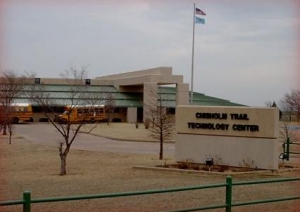
Chisholm Trail Technology Center
Omega, OKpubliccttc.edu
Chisholm Trail Technology Center is not a traditional university but a public career and technical education center in rural Omega, Oklahoma, operating with a distinctly open-access, workforce-first philosophy. Its entire identity is built around providing direct, hands-on pathways into skilled trades and technical careers, with a student body of fewer than 200 learners. The vibe is pragmatic and local, focused on equipping in-district high school students and adult learners with certifications and real-world skills, not on a residential college experience.
More details
- Undergrad enrollment
- 34
- Graduation Rate
- 71%
- Student-Faculty Ratio
- 6:1
- Median Earnings (10yr)
- $27,170
- First-Year Retention Rate
- 75%
- Federal Pell Grant Recipients
- 33%
Outcomes & value
Outcomes & value
- Median earnings (10 yr)
- $27,170
- Pell (lower-income) share
- 8%
Earnings = median of students working ~10 years after entry; debt = median of graduates. Value divides 10-yr earnings by one year’s net price — read it as earnings per dollar of annual cost, not a full lifetime ROI; it favors lower-cost schools. Source: U.S. Dept. of Education College Scorecard. Figures lag ~2 years and reflect all students, not your intended major.
Campus & location
Campus safety
- On-campus violent crimes (2024)
- 0
On-campus criminal offenses classed as violent (murder/non-negligent manslaughter, rape, robbery, aggravated assault) for the most recent reported year. Source: U.S. Dept. of Education Campus Safety and Security (Clery Act). Counts reflect what’s reported to the school, and urban campuses often report more partly due to non-student incidents nearby — read alongside campus size and setting, not as a standalone safety verdict.
Climate
- Pleasant days / yr
- 81
- Summer high
- 93°F
- Winter low
- 32°F
- Annual rain
- 22"
- Annual snow
- 9.1"
- Natural-hazard risk
- Relatively Low
Pleasant days counts days per year with a mean temperature of 55–75°F, a high at or below 90°F, a low at or above 45°F, and little precipitation — a transparent comfort measure, not a weighting we invented. Computed from Open-Meteo ERA5 daily history (2019–2023). Natural-hazard risk is the county’s composite rating from the FEMA National Risk Index.
Quick answers
- How many undergraduates attend Chisholm Trail Technology Center?
- Chisholm Trail Technology Center enrolls approximately 34 undergraduate students.
- Where is Chisholm Trail Technology Center located?
- Chisholm Trail Technology Center is located in Omega, OK.
Admissions
Chisholm Trail operates on an open admission policy, meaning it admits virtually all secondary school graduates or students with GED equivalency diplomas without regard to academic record or standardized test scores. The institution itself confirms it is an open-admission school, and external sources like the College Scorecard and Niche list its as 100%. Admissions are not competitive in the traditional sense; the process is more about enrollment timing and program capacity. High school students in the district are enrolled during the spring semester for the upcoming school year, while in-district adults may enroll at designated times. There is no mention of Early Decision, Early Action, or any form of demonstrated interest being part of the admissions calculus—the process is purely administrative, focused on getting students into the appropriate career program.
Academics
The academic model is purely career-technical. CTTC offers a portfolio of full-time programs designed to deliver specific, marketable skills for immediate workforce entry or advancement. The curriculum is hands-on and practical, with the explicit goal of helping students "gain valuable skills, become certified in a trade, and step directly into the workforce." Descriptions emphasize building "real skills" and "hands-on experience." For high school students, these programs are integrated into their school day, effectively providing career training concurrent with a high school diploma. The center also serves adult learners seeking to upskill or change careers. A notable feature is that in-district high school students pay no tuition for full-time career programs, though some programs may have associated kit, uniform, or certification testing fees. The pedagogical approach is summed up by the institution's own tagline: "Earn while you learn."
Compare Chisholm Trail Technology Center
vs Florida Polytechnic Universityvs University of Science and Arts of Oklahomavs University of Arkansas at Pine Bluffvs United States Coast Guard Academy
See colleges similar to Chisholm Trail Technology Center →Sources
- Applications/Admissions
- Common Data Set: Home
- Common Data Set 2025-2026
- Chisholm Trail Technology Center - DFR Report HTML
- Chisholm Trail Technology Center
- Common Data Set - Data, Analytics & Institutional Research
- Chisholm Trail Technology Center - Niche
- Chisholm Trail Technology Center - Sallie
- Chisholm Trail Technology Center - College Scorecard
- Frequently Asked Questions - Chisholm Trail Technology Center
- Chisholm Trail Technology Center - Home