Loading…
← All schools
Cincinnati College of Mortuary Science
Cincinnati, OHprivate nonprofitwww.ccms.edu/
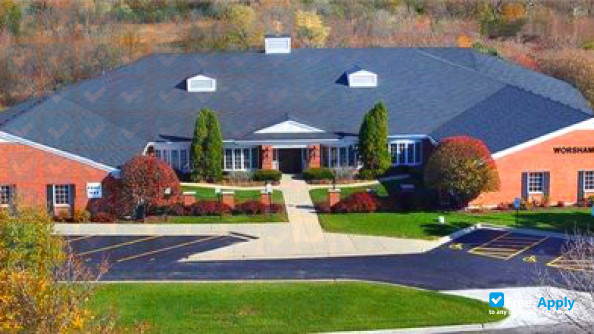
Founded in 1882 as the nation's first mortuary school, the Cincinnati College of Mortuary Science is a singular institution dedicated to the funeral service profession. It operates with the intensity and focus of a trade school, offering a rigorously practical curriculum that prepares students for state and national board exams within its one-of-a-kind, on-campus lab facilities. This is not a traditional liberal arts campus; it's a highly specialized, accredited program for those committed to entering the field of death care.
More details
- Undergrad enrollment
- 107
- Founded
- 1882 (Nation's first mortuary school)
- Accreditation
- American Board of Funeral Service Education (ABFSE)
- Campus Feature
- On-campus, custom-built lab facilities
- Degrees Offered
- Associate & Bachelor of Mortuary Science
- Graduation Rate
- 100%
- Median Earnings (10yr)
- $55,695
- Specialized Certifications
- Crematory operations, Celebrant training
Outcomes & value
Outcomes & value
- Median earnings (10 yr)
- $55,695
- Median debt at graduation
- $15,000
- Reducing loan balance (3 yr)
- 57%
- Pell (lower-income) share
- 26%
Earnings = median of students working ~10 years after entry; debt = median of graduates. Value divides 10-yr earnings by one year’s net price — read it as earnings per dollar of annual cost, not a full lifetime ROI; it favors lower-cost schools. Source: U.S. Dept. of Education College Scorecard. Figures lag ~2 years and reflect all students, not your intended major.
Financial health
2.2 / 3.0Meets the federal financial-responsibility standard
U.S. Dept. of Education Financial Responsibility Composite Score (FY2022-23). Scale −1.0 to 3.0; ≥1.5 meets the standard. Reported for private nonprofit & for-profit institutions only — public universities are state-backed and not scored, so this is a stability signal, not a ranking.
Top-earning majors
Median earnings by field of study (highest credential), ~2 years after completion.
- Funeral Service and Mortuary Science$38,597
Source: U.S. Dept. of Education College Scorecard (field-of-study earnings). Figures cover graduates who received federal aid and lag ~2 years; not all programs report data.
Campus & location
Campus safety
- On-campus violent crimes (2024)
- 0
On-campus criminal offenses classed as violent (murder/non-negligent manslaughter, rape, robbery, aggravated assault) for the most recent reported year. Source: U.S. Dept. of Education Campus Safety and Security (Clery Act). Counts reflect what’s reported to the school, and urban campuses often report more partly due to non-student incidents nearby — read alongside campus size and setting, not as a standalone safety verdict.
Climate
- Pleasant days / yr
- 91
- Summer high
- 84°F
- Winter low
- 29°F
- Annual rain
- 34.6"
- Annual snow
- 14.7"
- Natural-hazard risk
- Relatively High
Pleasant days counts days per year with a mean temperature of 55–75°F, a high at or below 90°F, a low at or above 45°F, and little precipitation — a transparent comfort measure, not a weighting we invented. Computed from Open-Meteo ERA5 daily history (2019–2023). Natural-hazard risk is the county’s composite rating from the FEMA National Risk Index.
Deep dive — research, future-scholar output & economic mobility
Research output
- Institutional h-index
- 17
- Scholarly works
- 103
Institutional research volume and impact from OpenAlex. The h-index reflects large research universities and will be low for teaching-focused liberal-arts colleges — not a measure of undergraduate quality.
Quick answers
- How many undergraduates attend Cincinnati College of Mortuary Science?
- Cincinnati College of Mortuary Science enrolls approximately 107 undergraduate students.
- Where is Cincinnati College of Mortuary Science located?
- Cincinnati College of Mortuary Science is located in Cincinnati, OH.
Admissions
Admission to CCMS is less about competing against a vast pool of applicants and more about meeting specific, non-negotiable prerequisites. The process is straightforward but requires careful planning: before enrolling, all applicants must complete general education credits elsewhere. The college advises prospective students to contact them directly to ensure they are taking the correct prerequisites. While sources vary on the exact —figures cited include 100%, 73%, and a scenario where 282 applicants resulted in 110 acceptances—the common thread is that selectivity is not the primary barrier. The gatekeeping function is performed by the required pre-professional coursework. The college does not publish a for its own admissions, though such documents are a standard tool for understanding admissions at other institutions. There is no indication that CCMS employs practices like Early Decision or considers demonstrated interest in its admissions decisions; the focus is squarely on academic preparedness for the mortuary science curriculum.
Compare Cincinnati College of Mortuary Science
See colleges similar to Cincinnati College of Mortuary Science →Sources
- CCMS | Admissions
- Common Data Set 2025-2026
- Common Data Set: Home
- How To Use a Common Data Set
- Common Data Set | Office of Institutional Research
- The Common Data Set: What It Is & How to Use It In ...
- Cincinnati College of Mortuary Science Admissions
- Cincinnati College of Mortuary Science
- Cincinnati College Of Mortuary Science Admissions - BigFuture
- Cincinnati College of Mortuary Science Rankings