Loading…
← All schools
City College of San Francisco
San Francisco, CApublicwww.ccsf.edu/
Avg net price
$6,906
Earnings (10 yr)
$45,805
Acceptance & SAT from Common Data Set / IPEDS; net price, earnings & graduation from the U.S. Dept. of Education College Scorecard. Figures lag ~1–2 years — verify with the school.
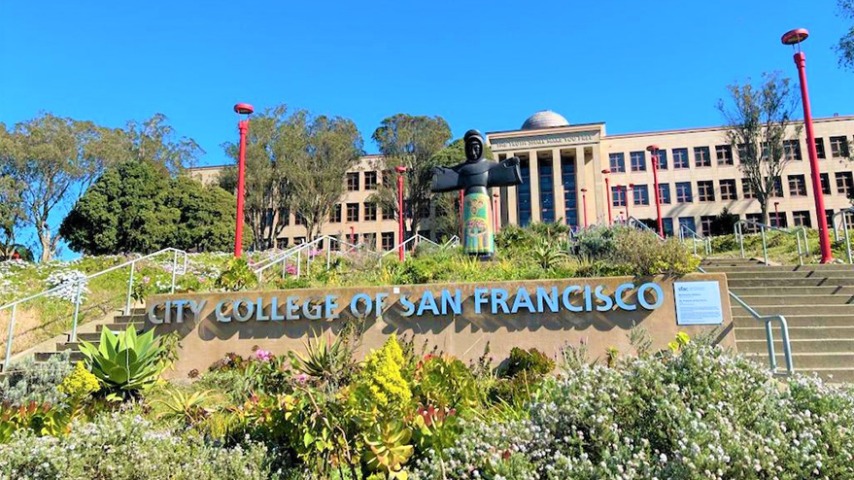
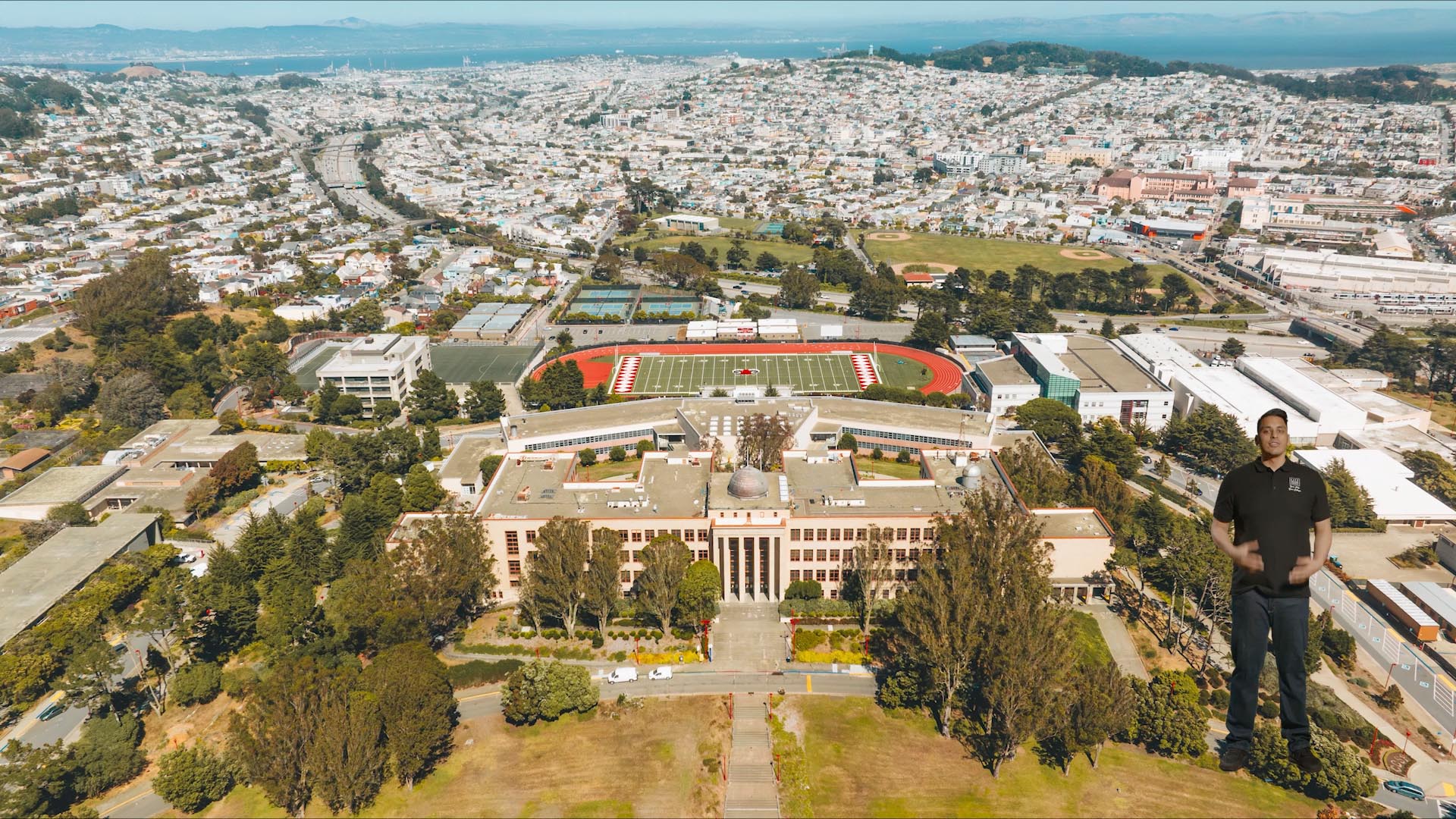
City College of San Francisco is not a selective university; it's the city's sprawling, democratic, and essential public square of higher education. With an open admissions policy serving over 60,000 students annually, it functions as a critical launchpad for transfer degrees, career certificates, and lifelong learning, all set against the backdrop of one of America's most dynamic and expensive cities. Its identity is forged from its staggering diversity, its role as a socioeconomic engine for San Francisco, and its no-nonsense mission to provide accessible, practical education.
More details
- Undergrad enrollment
- 17,348
- In-state tuition
- $1,696
- Out-of-state tuition
- $14,656
- Graduation Rate
- 37-44%
- Programs Offered
- 103 fields
- Student Body Size
- >60,000 annually
- Median Earnings (10yr)
- $45,805
- Top Ethnic Demographics
- Asian (29.55%), White (23.92%)
- Full-Time Retention Rate
- 70%
Outcomes & value
Outcomes & value
- Median earnings (10 yr)
- $45,805
- Value (earnings ÷ net price)
- 6.6×
- Median debt at graduation
- $8,218
- Reducing loan balance (3 yr)
- 38%
- Pell (lower-income) share
- 17%
- First-gen share (among federal-aid recipients)
- 55%
Earnings = median of students working ~10 years after entry; debt = median of graduates. Value divides 10-yr earnings by one year’s net price — read it as earnings per dollar of annual cost, not a full lifetime ROI; it favors lower-cost schools. Source: U.S. Dept. of Education College Scorecard. Figures lag ~2 years and reflect all students, not your intended major.
Campus & location
Campus safety
- On-campus violent crimes (2024)
- 9
On-campus criminal offenses classed as violent (murder/non-negligent manslaughter, rape, robbery, aggravated assault) for the most recent reported year. Source: U.S. Dept. of Education Campus Safety and Security (Clery Act). Counts reflect what’s reported to the school, and urban campuses often report more partly due to non-student incidents nearby — read alongside campus size and setting, not as a standalone safety verdict.
Climate
- Pleasant days / yr
- 178
- Summer high
- 63°F
- Winter low
- 46°F
- Annual rain
- 23.5"
- Natural-hazard risk
- Very High
Pleasant days counts days per year with a mean temperature of 55–75°F, a high at or below 90°F, a low at or above 45°F, and little precipitation — a transparent comfort measure, not a weighting we invented. Computed from Open-Meteo ERA5 daily history (2019–2023). Natural-hazard risk is the county’s composite rating from the FEMA National Risk Index.
Deep dive — research, future-scholar output & economic mobility
Research output
- Institutional h-index
- 66
- Scholarly works
- 1,677
Institutional research volume and impact from OpenAlex. The h-index reflects large research universities and will be low for teaching-focused liberal-arts colleges — not a measure of undergraduate quality.
Quick answers
- How much does City College of San Francisco cost?
- At City College of San Francisco, the average net price (after aid) is about $6,906 per year. Actual cost varies with financial aid and residency.
- How many undergraduates attend City College of San Francisco?
- City College of San Francisco enrolls approximately 17,348 undergraduate students.
- Where is City College of San Francisco located?
- City College of San Francisco is located in San Francisco, CA.
Admissions
Admissions at City College of San Francisco is defined by its open-access mission. The college reports a 100% , reflecting its role as a community college with minimal barriers to entry. Unlike selective four-year institutions, CCSF does not employ an Early Decision process or prioritize demonstrated interest; its admissions philosophy is centered on accessibility. The student body that results from this policy is exceptionally diverse: demographic data shows the enrolled population is 29.55% Asian, 23.92% White, and includes significant representation of Hispanic/Latino, Black, and multi-racial students. This open-door approach means the typical admissions anxieties surrounding test scores, GPA, and extracurriculars are largely absent here, replaced by a focus on placement processes to ensure students begin in courses suited to their preparation.
Academics
The academic landscape at CCSF is vast, pragmatic, and designed for mobility. Students can earn degrees and certificates in 103 different fields. The college's primary academic pathways are its transfer-focused Associate Degrees (AA-T and AS-T) and a wide array of career and technical education programs. Popular areas of study include Social Sciences, General Studies, and Biological and Physical Sciences. A major selling point, heavily promoted by the institution, is the potential for massive cost savings; students can save "tens of thousands of dollars" by completing their first two years at CCSF before transferring to a four-year university. The academic structure is built around "Academic and Career Communities" intended to help students navigate their options based on strengths and interests. The highest degree offered is an associate's degree, cementing its role as a stepping stone or a direct-to-workforce trainer.
Compare City College of San Francisco
vs University of North Georgiavs United States Air Force Academyvs North Carolina A & T State Universityvs Eastern Kentucky University
See colleges similar to City College of San Francisco →Sources
- Common Data Set: Home
- Common Data Set (CDS) | Institutional Research
- Common Data Set - GradGPT
- Common Data Set Repository - College Transitions
- The Common Data Set: What It Is & How to Use It In College ...
- [PDF] Common Data Set 2021-2022 - Colorado Department of Education
- CCSF Home | CCSF
- City College of San Francisco - Niche
- City College of San Francisco - Tuition and Acceptance Rate
- University of San Francisco Admissions - BigFuture College Search
- [PDF] Admission to the College 2022-23 - San Francisco - CCSF